Goa is abuzz with excitement as vintage bike and car owners, users, collectors and fans are decking […]
Old is Gold
October 4, 2016
AND a few more stray thoughts for yet another Saturday. For a Saturday following the week when the BJP Legislative party in Goa opted to discuss the Vande Mataram to the exclusion of the Birch Lane Romeo tragedy and the 10-point Citizens Charter presented by Justice Ferdino Rebello. For a Saturday following the week when remembering that it was the venerable Tata Group of Hotels which was the first to engage in rampant hill cutting in golden Goa way back in time. For a Saturday following the week when the Opinion Poll anniversary which is commemorated on January 16.
AND a few stray thoughts on when the BJP Legislative party in Goa opted to discuss the Vande Mataram to the exclusion of the Birch Lane Romeo tragedy and the 10-point Citizens Charter presented by Justice Ferdino Rebello. The Chief Minister Pramod Sawant even went to the extent of claiming that Vande Mataram inspired those fighting for the Liberation of Goa. It is very doubtful if most Goans could sing even the national anthem of India “Jana gana mana… ” let along the Vande Mataram in pre-Liberation times.
Vande Mataram remained in the background till recently when the Hinduatva brigade started resurrecting the controversy over the concluding lyrics of the poem by Bankim Chatterjee which featured in his novel. While the first two paragraphs of the poem are in praise of the mother and motherland, the concluding verses equate Bharat with goddess Durga. Which perhaps it not surprising considering that Bankim Chatterjee is a Bengali nationalist and Durga is the mother goddess of West Bengal.
The BJP and the RSS are insisting that the full version of the poem should be sung at all official functions. The poem-cum-song has been mandated in school assemblies in the BJP-ruled states now. It shows the totally slavish mentality of the Goa government that it chose to discuss Vande Mataram on the first day of the 5-day winter assembly session in Goa. Much to the anger and fury of Chief Minister Pramod Sawant over AAP MLA from Benaulim Capt Venzy using the debate on Vande Mataram to launch a fierce attack on the kind of nationalism promoted by the BJP and the RSS. Video images of assembly proceedings show a furious Pramod Sawant shouting at the AAP MLA. Vijai Sardessai of the Goa Forward added to the distress of Pramod Sawant by suggesting that no Goan MLA, including BJP MLAs, know even the name of the author of Vande Mataram, let alone being able to sing it. Babush Monseratte proved his point when he was confronted by the media outside the legislature hall and asked whether he knew who the author of Vande Mataram was? He retorted acidly, “Do not embarrass me.”
Attempts at imposing the Vande Mataram on Goan schools and educational institutions has not made much headway. There is resistance from the Catholic minority community to the full version of Vande Mataram which is devoted to mother goddess Durga. Never mind that Catholic schools have for many years been compelling their students to sing the hymns of Christianity. Not that we have anything against Christian hymns and in fact the favorite hymn of the Mahatma Gandhi was ma was “Abide by me…”
You cannot force pseudo patriotism down the throat of anyone. Unlike the national anthem “Jana gana mana…” nobody can be forced to sing Vande Mataram. However, Vande Mataram has become a formidable slogan for the BJP government. Never mind that the bullet train of India, the most luxurious train in the country now, is named Vande Bharat. A super luxury sleeper version of the Vande Bharat train was inaugurated recently by Prime Minister Narendra Modi. Most Indians still remember the good old Rajdhani trains which were the first elite trains of the Indian Railways and connected all the national capitals.
VENERABLE TATA GROUP
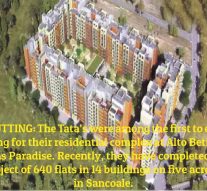
AND a few stray thoughts on remembering that it was the venerable Tata Group of Hotels which was the first to engage in rampant hill cutting in golden Goa way back in time. Way back in the ‘90s the Tata Group built the Tata villas paradise at Alto Betim, after massive hill cutting of the hills. Alto Betim itself refers in Portuguese to hills or higher places. The massive Tata villa project can be seen across the Mandovi river in Panjim amidst greenery on the Betim hills.
I still recall getting a call from my former “Onlooker” colleague Ajay Kumar who had become the brand custodian of the Tata Group, asking me about the negative fallout of the Tata Housing Project in Betim. The Goa Foundation had filed a PIL against the project, pointing out that all the permissions were violated and hill-cutting was illegally undertaken by the Tatas. The Supreme Court refused to stay the project but admitted that the project had violated environmental guidelines in the cutting of hills which are really water reservoirs of any region.
Since there has been rampant hill cutting across Goa in recent years, perhaps we may consider it was the Portuguese who first initiated the process of building on the hilly areas of Goa, the “altin” – out of a sense of entitlement. Those who lived atop the hills were dominant. Not surprisingly, the Bishop’s Palace in Goa is located at Altinho in Panjim.
Many important churches of Goa, particularly those dedicated to the three kings who visited baby Jesus, are on a hill or plateau land as seen in the case of the Reis Magos Church, also the Caunsaulim Church. Indeed, it is the Jesuits, not only in Goa but in all parts of the country, who chose the best locations for their educational and other institutions. The Jesuit Retreat House at Baga is a beautifully located on hills overlooking the Baga beach bay of the Arabian sea. Getting there means climbing some steep ways.
The Tatas continue to engage in mega realty projects in Goa, the most recent being the housing project in Sancoale where 670 flats have been built across 14 buildings on five acres of land at Vasco da Gama, they are ready for occupation. The Tatas should perhaps be called up for participating in the destruction of the fragile ecology of a coastal state like Goa. While the spotlight is on Delhi builders like DLF and the Bombay Lodha Group which started off with luxury apartments in Andheri West in Bombay, nobody dares to talk about the Tata mega housing projects in Goa.
OPINION POLL ANNIVERSARY
AND a few stray thoughts on the Opinion Poll anniversary which is commemorated on January 16. It was on January 16, 1967 that the final results of the Opinion Poll were announced, marking a clear cut victory for the anti-merger forces. Even before the Liberation of Goa there was a strong demand from senior Congress leaders of Maharashtra like YB Chavan, who was the defense minister at the Centre, that Goa should be merged with Maharashtra. The Maharashtra politicians got together to set up the Maharashtrawadi Gomantak Party in Goa which had only the one point agenda of merger of Goa with Maharashtra.
To the shock and surprise of the Congress which claimed the credit for the liberation of Goa, the party was wiped out in the first elections held in Goa in1963, with the voters favoring the Maharashtrawadi Gomantak Party or MGP. This prompted Jawarharlal Nehru to describe Goans as “ajeeb” or strange because they did not appreciate Nehru’s initiative in liberating Goa. The truth is that Nehru delayed the Liberation of Goa for over a decade after India’s independence, insisting that he was committed to peaceful resolution of disputes. Nehru believed that the Portuguese would voluntarily leave Goa just as the French had peacefully handed over Pondicherry. Nehru did not reckon with the obstinacy of Portugal’s dictator Salazar.
It must however be considered that the struggle for Goa’s liberation primarily was carried out by Maharashtrians as most of the Goan freedom fighters were either imprisoned or deported to Portugal. As a child growing up in Pune, I remember huge processions of the martyrs of Goa’s liberation struggle in Pune. They would be shouting “Goa Hindustan ka nahi kisika baap ka.” Several freedom fighters primarily belonging to the socialist parties were shot down mercilessly on the border of Goa.
The MGP, which came to power in the first election under the leadership of Dayanand Bandodkar, even passed a resolution in the Goa Assembly demanding merger of Goa with Maharashtra. Panicky senior leaders like Purshotamdas Kakodkar rushed to Indira Gandhi who had become the prime minister. Indira Gandhi agreed to honor the promise of her father that Goans would be permitted to decide their own destiny. A referendum could not be held as this had been refused in the case of Jammu & Kashmir by the Congress government. So the alternative was an Opinion Poll which was agreed on and it was conducted in January 1967. The people of Goa had only one option, merger with Maharashtra or to remain as a Union territory. The option of statehood was not on the table yet.
A titanic war took place between the pro-merger and anti-merger forces in Goa. It has been unfortunately interpreted as a battle between the Hindus and Catholics. This lie was nailed down in my book “The Triumph of Secularism” published by the House of Salgaocars. Even if all the Hindus of Goa had voted for merger they still would not have won because 40% of the population was Catholic at that time. However, almost 30% or more of the Hindu population of Goa also voted to protect the unique identity of Goa.
The Opinion Poll battle was unique in the fact that perhaps for the first time in the history of India, a major business house, that of VM Salgaocar, put its force behind a political movement to prevent the merger of Goa with Maharashtra. While the politician Jack Sequeira undoubtedly played a major role, it was VM Salgaocar who staked his entire business and future on the outcome of the Opinion Poll.
At the height of the battle the then chief minister of Maharashtra visited VM Salgaocar in his office, along with Vishwas Rao Chogule. They pointed out to Vasudev Salgaocar the avenues that would open up if Goa became part of Maharashtra. VM Salgaocar asked them a simple question. If Goa merged with Maharashtra it would be reduced to a taluka of Maharashtra and the Goan identity based on the Konkani language would completely be lost. Our book “Triumph of Secularism” is available on Goanobserver.in for those who would like to update themselves on the historic Opinion Poll.
MARATHI MANOOS CLAIMS
AND a few stray thoughts on the Shiv Sena attempting to reclaim Mumbai for the Marathi manoos ahead of the elections to the Mumbai Municipal Corporation. The two cousins Raj Thackeray and Uddhav Thackeray have came together to review the war against the south Indians and the Biharis alike. Raj Thakeray thundered at the Shivaji Park that he would kick out all the bhiayas of UP and Biharis from Mumbai. By the way, for some strange reason the majority of the newspaper vendors in Mumbai are Bihari. The wholesale distributor of the “Indian Express” in Mumbai is a Bihari bhaiya who used to operate from his charpoy at Crawfor Marekt, he even loaned money to the owner of the “Indian Express” Ramnath Goenka during the Emergency.
The south Indians and particularly the Udipi cafes were one of the early targets for the Shiv Sena when Bal Thackeray was still alive. Uddhav Thackeray renewed the slogan attributed to Bal Thackeray “lungi nikalo, pungi bajao.” All the fury against the south Indians was provoked by a statement by the former BJP chief of Tamilnadu, Annamalai. The former BJP chief rightly pointed out that Mumbai could not belong only the Maharashtrians as it was an international financial hub and home to all the billionaires of India, most of whom were Gujaratis or Marwaris.
Indeed, the greater Bombay Presidency was split into Gujarat and Maharashtra, following a prolonged agitation by the Samyukta Maharashtra for an independent Maharashtra which would be delinked from Gujarat. Bal Thackeray promoted the Shiv Sena as the champion of the Marathi “manoos” or man. Since the Udipi restaurants were all owned by south Indians Bal Thackeray promoted the “vada-pav” as the rival to the “idli-wada.” The Shiv Sena movement saw “vada-pav” outlets not only displacing “idli-wada” but also the “chole-bhatura” that used to be on the streets of Bombay.
The iconic Udipi and Madrassi eateries survived and I understand they are favorites with Aditya Thackeray, the grandson of Bal Thackery. The battle continue to range as the two cousins Raj and Uddav who split have come together raising the banner of reclaiming Mumbai for the Maharashtrians. Never mind that the Shiv Sena has now split with Ajit Shinde’s breakaway faction recognized by the Election Commission, as the inheritors of Bal Thackeray’s legacy.
RAJDEEP & SAGARIKA’S DAUGHTER WEDS
AND a last stay thought on the dignified marriage of the daughter of Rajdeep Sardesai and Sagarika Ghose at the Cidade de Goa Heritage in Dona Paula. For Rajdeep it was not a destination wedding but a return to roots, for is the son of the famous Indian Goan criket legend Dilip Sardessai, who was born and bred in Madgao down south Goa. Rajdeep and Sagarika’s daughter Tarini has got married to Zico Bahl, a corporate lawyer from Mumbai. The official registration ceremony was held in Bombay on Oct 27, 2025 while the “saat phera” took place at the Cidade De Goa Heritage. It was a full-fledged Gaud Saraswat Brahmin marriage with the feast catered to by Kokum Curry’s Sapna Sardessai, a GSB. We are happy to share a picture of the wedding here showing the bride garlanding the bride groom against the setting sun of Vaingunim beach. There are also pictures of a relaxed Rajdeep and Sagarika with t-shirts proclaiming “mother of the bride” and “father of the bride.” Dilip Sardessai’s most successful stint as a cricketer was in the West Indies. When asked about his phenomenal success in the West Indies he is supposed to have replied, “West Indies is like Goa and I feel at home here. The only difference is that in Goa it is feni and in the West Indies it is rum.”
 LETTERS TO THE EDITOR FOR ISSUE DATED FEBRUARY 28, 2026
 BORKAR ENDS FAST, ST ANDRE CONVERSIONS SUSPENDED!
 GOA’S ECOLOGY DESTROYED BY 39A! By Dean D’Cruz
 A PARCHED PARADISE! By Raaisa Lemos Vaz
 KARAPUR LOCALS PROTEST RANE LAND DEAL!
 WHEN IS ENOUGH IS ENOUGH? And here’s your chance to vote in a new CCP… If you’re interested!
 HOW MUCH I LOVE TAMARIND… Here are the gifts and joys of tamarind trees
 UTPAL TAKES ON BABUSH IN PANJIM!
 DEMENTIA SCREENING PROGRAM IN GOA! By Dr Amit Dias
 WEEKEND UPDATES
 LETTERS TO THE EDITOR FOR THE ISSUE DATED FEBRUARY 21, 2026
 UNLIKE GOA TOP TOURIST RESORTS PROTECT LOCAL LAND!
 NIZ GOENKAR WEDDING!
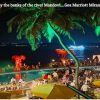 OUT AT THE VIKRAM & SHWEANA SHAADI OF THE YEAR…
 PANAJI THAT FLOODS AFTER ONE HOUR OF RAIN!By Sanjay Raiturkar
Goa is abuzz with excitement as vintage bike and car owners, users, collectors and fans are decking […]