Goa is abuzz with excitement as vintage bike and car owners, users, collectors and fans are decking […]
Old is Gold
October 4, 2016

Unlike Goa other hotspot destinations don’t sell their land, water and air to anyone…
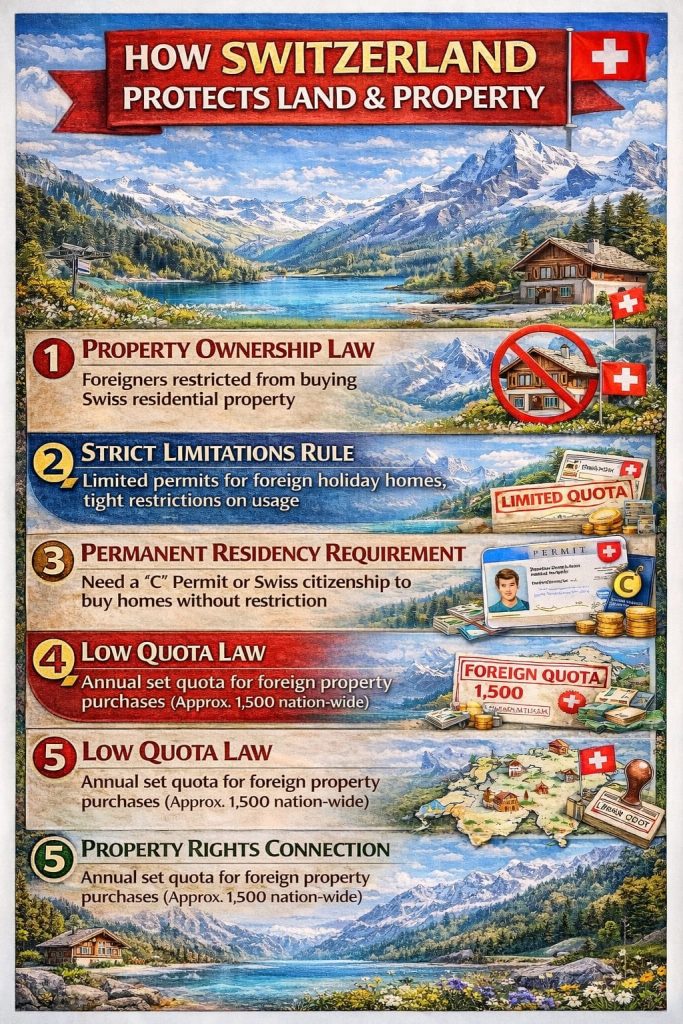
UNLIKE Goa which is a free for all Switzerland — with a population of only 90 lakh, earns Rs100,000 crore from tourism alone — has very strict rules for “baile” (outsiders, non-Swiss). Outsiders cannot buy land, real estate or even second homes. In the snow-capped Alpine paradise of Switzerland non-residents cannot freely buy homes in resort areas. There are strict quotas even for purchasing holiday homes and this is true not only for outsiders but even citizens of Switzerland. The written permission of the local canton (equivalent of the Goan panchayat) is necessary for approval of any real estate project, let alone hotels and any major development.
Indeed, Switzerland limits holiday homes to only 20% of the housing stock in tourist communes. In the equivalent of villages there can only be a maximum of 25% when it comes to non-primary residents – so unlike today’s Candolim and Calungute in Goa where 90%of the land is owned or leased out to non-Goans. However, in Switzerland after the 25% limit on outside homes is reached, only locals can buy houses. This prevents villages from becoming empty Air B&B colonies.
IN TERMS of water body protection zones and alpine conservation zones, no outsider is allowed to buy any property within two km of coast/river/lake land. Unlike in Goa where the limit from the ocean high tide line is 200 meters and for rivers, lakes and khazan lands just 80mts and even this may not be observed. Corporate investors may only lease land, they may not buy them, in Switzerland. Switzerland has introduced a naturalization process for purchase of land by outsiders or non-Swiss people. Switzerland does not give citizenship easily. This is designed to be intentionally slow with local community controls in place.
So you may become Swiss citizen only if the village accepts you. To become a citizen of Switzerland you need to live in Switzerland continuously for 10 years. If you are between eight and 18 years of age there is a residency requirement of 20 years. Citizenship after a decade must be approved by the local village or town, it should also be approved by the canton (state) and the federal government. If a village rejects, you cannot become a citizen of Switzerland.
Also, you have to be familiar with German in Zurich, French in Geneva and Italian in Ticino, and have both spoken and written skills. In terms of culturization terms you must be aware of Swiss history, local traditions, political system, ways of life and social behavior. The laws in Switzerland in terms of social behavior are much stricter than those seen in Sweden, as we saw in the Mrs Chatterjee Hindi film in which Rani Mukherjee is the star actor. You have to appear for an interview for acceptance as a citizen in a local commune. If the neighbors reject you, you are out. You have to prove you have no criminal record. That you are financially independent. That you will not be a burden on the Swiss welfare department for five years. For even traffic violations, citizenship may be denied.
This is not to say foreigners cannot live in Switzerland. They can but full rights and especially unrestricted property purchase comes only after permanent residential proof of 10 years and citizenship. Citizenship means acceptance by the community and not just legal paper work acquired by hook or by crook. Switzerland treats nationality as a membership of a local society, and not immigration status.
OTHER COUNTRIES
OTHER hot spot tourism destinations are more or less equally protected. For instance, Sikkim, which is part of the Indian Union, totally bans ownership of land by outsiders. No outsider can freely buy agricultural land even from locals offering to sell property. Locals are also barred from selling property to outsiders. Citizenship requires domicile for 15 years. No automatic Indian citizenship. State jobs and benefits are reserved for citizens of Sikkim only. Locals have to be given preference in business, tourism and settlement is restricted to meet the needs of 30% of the Himalayan ecosystem. The underlying principle is development protection and population preservation.
Come to Maldives which has a resident population of only 5 lakh compared to Goa’s 15 to 16 lakh; in the Maldives 100% of the land is reserved for Maldivians only. Foreigners may only lease, not buy. Tourist resorts are on separate islands and are isolated from local society. There are strict immigration rules and it is hard to get Maldivian citizenship. Migrant workers are on tight visa restrictions. Even marriage to a local does not allow property rights. Foreign spouses have no residency title. Nation thrives, locals remain dominant.
In Malaysia, all agricultural land may be only owned by citizens. Foreigners may buy only expensive property ranging from RM$1-2 million minimum. There are special rights for native locals, the “bumiputra.” When it comes to land sales and business and in terms of forest protection, over 50% land is protected. Forests are within tight limits in traditional areas. Resource wealth is defended, local rights are preserved.
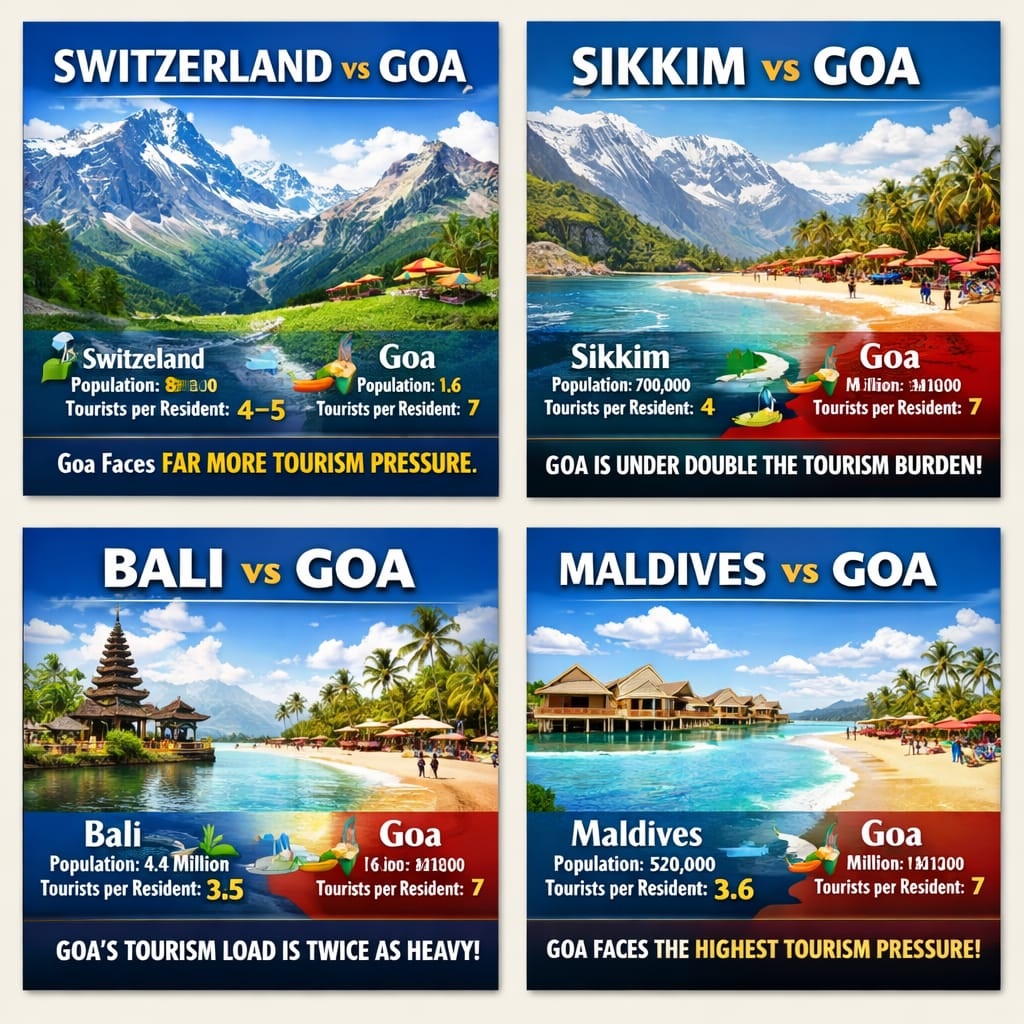
CONTRAST all the above said in terms of Goa’s obsession with high end tourism to increase foreign exchange earnings. The Maldives with a population of five lakh attracts 1.9 million tourists and earns Rs25,000 crore as foreign exchange. This is in sharp contrast to Goa which has a population of 1.6 million (16 lakh) with 10.8 million tourists annually earning foreign exchange of only Rs9,200 crore. Vietnam restricts tourists to sustainable levels. This country with has a population of 100 million attracts 18 million tourists but earns Rs40,000 crore. Coming back to Switzerland with a population of barely 9 million (90 lakh) attracts 40 million tourists and earns Rs100,000 crore (US$ 11.9 billion).
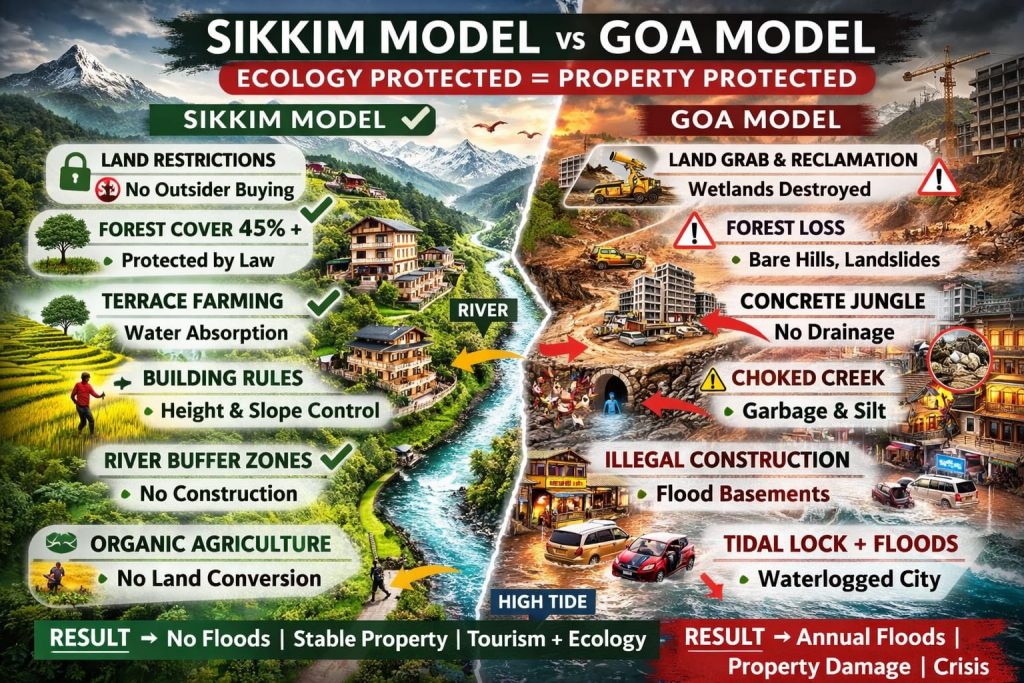
The moral of this story is tourism is for the benefit of locals and not outsiders or non-locals. Enough is enough. Goans must preserve the fragile ecology and vital eco-systems of Goa. As in the case of Switzerland we should adopt a naturalization process and allow non-Goans to buy property for personal occupation after they have lived in Goa for ten years and paid advance taxes (that’s what Switzerland does), at least Rs10 crore, to enjoy the unpolluted environment of sun, sea, sand, water, electricity and the green landscapes which naturally make Goa desirable and unique. Separately here we carry the laws and legislation of Switzerland which govern the ownership of property, even to the extent of holiday home applications. We hope that Justice Ferdino Rebello to whom the Swiss laws on property have been sent will frame a similar foolproof eco-friendly, Goa-friendly, out-of-the- box legislation framework to preserve and protect Goa for future generations.
 LETTERS TO THE EDITOR FOR ISSUE DATED APRIL 04, 2026
 REAL ESTATE BARONS OF GOA!
 THE SLOW VANISHING OF GOA’S GOLDEN BEACHES! By Raaisa Lemos Vaz
 WHO IS EXTRACTING GOA’S GROUND WATER? By Supriya Vohra
 PLANNING FOR RETIREMENT THE GOAN WAY! By Arvind Pinto
 WHEN `HOLY WEEK’ COMES LONG
 HPV Vaccine: PROTECTING INDIA’S DAUGHTERS FROM CERVICAL CANCER!By Dr Amit Dias, MD
 NO MORE PROTESTS AT AZAD MAIDAN?
 CURCHOREM SEX SCANDAL: Will the police really take action?By Olav Albuquerque
 WEEKEND UPDATESLETTER TO THE EDITOR FOR THE ISSUE DATED MARCH 28, 2026
 GOA’S GILDED HIGH RISE SLUMS!By Raaisa Lemos Vaz
 DIRTY TOWERS OF GOA!
 UNCLEAN WATER, CARRIER OF DISEASE! By Dr Amit Dias, MD
 LOOKING BACK AT GOA IN 60S! By Arvind Pinto
Goa is abuzz with excitement as vintage bike and car owners, users, collectors and fans are decking […]