Goa is abuzz with excitement as vintage bike and car owners, users, collectors and fans are decking […]
Old is Gold
October 4, 2016
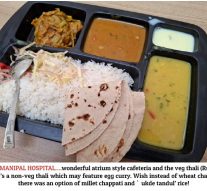
IF I’m at a hospital public or private I automatically tend to take an interest in what the patients eat and what their visiting relatives find to eat at the hospital canteens/cafeterias. Once in a way I feel like going to find out what they’re serving in today’s thali meal deal at the GMC’s old or new block cafeterias…and sometimes I’m surprised. Of course there’ll be the usual sundry junk foods of fryums, biscuits and indifferent sandwiches, but there’ll be the day’s menu of a freshly cooked thali meal deal featuring chappati-rice-dal-sabzi-beans-salad-dahi-dash of pickle for Rs100, sometimes one may find something extraordinarily interesting. If we may eat just a one meal like this mid-morning hunger pangs don’t strike you – at least it works for me every time.
At one time when the government of India was wasting money promoting eat millets campaign I remember taking delight in the sumptuous ragi millet idli and veggie redolent sambar served with it – but those days are gone. Recently, I realized anew that even an indifferent mini meal will feature sliced industrial bread and loaves of vile pau, which I assure you if you eat without any salad fillers will leave you constipated the next morning. Refined foods make for constipation big time so if you suffer from this most times it’s time you reviewed your everyday meals and snacks.
I have virtually stopped white breads except occasionally when I bring home a whole wheat or multigrain or sourdough loaf from a good bakery like Padaria or Marc Brown…Easter time I must confess I end up eating a couple of hot cross buns and I don’t know why sugar should be added in these to become virtually heavy density sweet buns close to cake. When Jesus lived there was no refined sugar, okay and folk may have put in golden raisins like good bakers still do today and not a slew of things to make their hot cross buns exotic!
Bread and rice are two things I wish I could now do away with in my life, haven’t succeeded so with rice at least. In any case India has a a most glorious repertoire of rice be it north, east or west and down south…all the curd rice, lemon rice, tamarind rice, tomato rice, bisi bili huli anna which is only sumptuous dal-laced rice so enriched with drumstick, tomatoes, radish, ladies finger, brinjals, etcetera. Dal-rice is generally considered a very good carb-protein combo in traditional wisdom just like roti-dal, a veggie added in for good measure and of course most thali meal deals will also offer a portion of the very many beans and peas we have in our markets.
ALL this is to say I happened to be at the Manipal Hospital and whenever I’m visiting there I never fail to drop in at its wonderful naturally lit up atrium cafeteria. It was lunch time and I asked for a thali meal – two thin atta chappaties, light dal, gavar fali sabzi, a sprinkling of salad and a liquidy milky kheer, papad. Good enough.
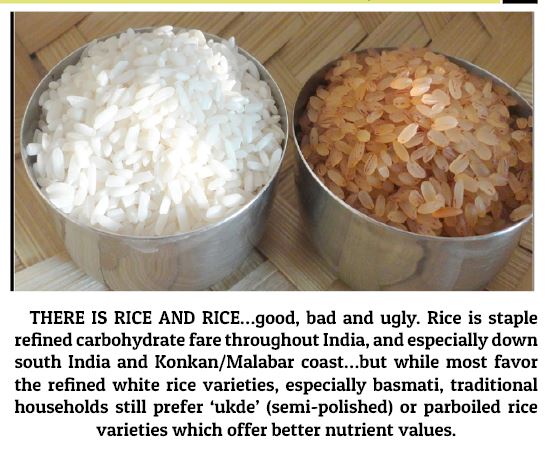
I usually ask if there is a millet roti or if I can get ukde tandul (unrefined rice) and of course the guys or girls out there at the counter look at me like I’m daft! I can ask and be told No. Which doesn’t mean I don’t every time wish that at least in hospital cafeterias one should get the millet chapattis and qualitatively better rice! I realized long ago that if a jowar chappati and ukde tandul combo meal in small portions I’m filled up very easily and do not get hungry again for hours…like I want to snack or crack on some junk fryum like samosa or onion bhoji…the nature of millet roti and ukde tandul is such that one is satiated with no hunger pangs for the rest of the day.
Well, think about all this my dears and plan to include some kind of primary complex food item in your daily eating habits. Millets are alkaline grains upon digestion while whole wheat tends to be acidic; millet porridges or khichadi are superlative good so I don’t understand why these are never served in hospital meals….well, for all the talk of promoting the goodness of millets nobody is really good enough to make it available in Goan eateries or hospital cafeterias. The besan ka cheela or Indian vegetarian tomato omlet is superlative food but hard to find too – some Udipi places do put it on the menu but the cook somehow tends to turn out fatso and tasteless cheela (savoury pancake) or it will be packed with green chilly bits which is terrible because then I’m trying to weed the bits out or end up with a burning tongue. Such are the travails of eating out and I wish I would not be tempted to eat out so often but make an effort to return to home cooking!
ALL of this reminds me they do some pretty good stuff at Terminal Banquets (above Caculo Mall) in Panjim. It’s becoming a soothing place for many to have a get-together, first time I went for a Rotary Panjim club meet and was surprised to see on the snack table a most amazing quinoa upma or upit (yes, southern Indian style), and medium-size batatvada not oozing with oil, perhaps done in an air-fryer — also not spicy, intrigued and with a few questions I searched for the banquet manager to ask about the chef who prepared the quinoa upma…alas, couldn’t find him.
Then a week ago again I was at Terminal Banquets for a Jashn-E-Eid celebration and they had a most agreeable biriyani veg and chicken with “chola” (chickpeas curry actually generously garnished with fresh yellow ginger slivers julienne style) and a most perfectly made mixed veg raita (diced fine salad mix in lightly flavored tart curd); to round off there was sweet something, a mildly sweet vermicelli (“sheer khurma”) for dessert, yummilicious. I don’t praise food easily but this here I’m full of praise! It just means their kitchen is more health-conscious, that’s all, that’s what I like to think. I wonder if they will do jowari and nachne millet chappati if I request them? By the way I’m told the Mexican quinoa is not a millet but just a cereal grain of old – the reason why we’re being encouraged to eat more millets is because they make for a more alkaline meal seeing how they’re low or zero in gluten. Gluten is now seen as a culprit for many health issues and also wheat has been so overwhelmingly genetically modified.
GOA CASHEW FESTIVAL FROM APRIL 10 – 12, 2026
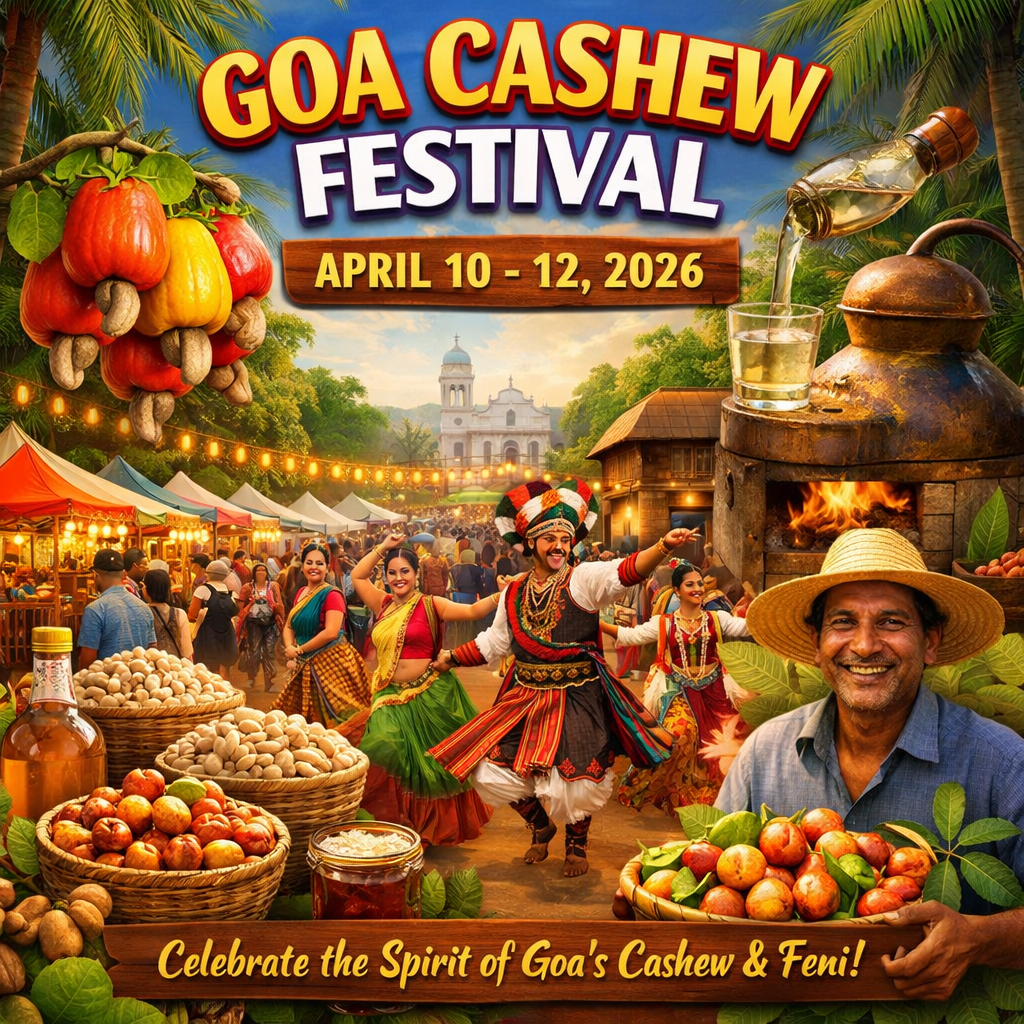
FINALLY, this is to tell you the Goa Cashew Festival has kicked off from April 10 and will be living it up till 12th at DB Grounds, down Campal promenade in Panjim. Agree or disagree, Goa is the country’s first cashew state and still is not withstanding rival states. Discerning tourists know that Goan cashews are best and not just because of history and pedigree but the sweet soil of Goa! Not to forget “niro, urak, feni.” Niro which is the fruit juice of the cashew apple or fruit is actually doing a good season this summer I notice, for I see bottles full retailing in Panjim market for Rs100-Rs150 per liter bottle. Elsewhere too one may find fresh niro to quench summer thirst. Better than any bottled sweet drink.
My dear Botanical Society of Goa friend Miguel Braganza tells me what I’m buying and relishing is just cashew apple diluted juice, “Real niro won’t have color, it is crystal clear and emerges after all the caju apple juice has been squeezed out…” Then, of course, the next best thing is urack, not as spirited as feni which is 100% liquor, but nowadays every other feni distiller is claiming GI certificate to promote sales – but Miguel tells me only brand “Launi” of Gurudatt Bhakta of Mapusa has the certificate for his Cazcar distillery!
Honey, there’s so much to the cashew tree – its exquisitely bright ornamental fruit, its nuts, and its fermented and distilled juices and spirits. The cashew tree was transported by the colonial Portuguese a couple of centuries ago to Goa where it bloomed happily, home away from home in far away Brazil.
Hey, if you love caju you must go celebrate the resilience and gifts of the cashew tree at the Goa Cashew Fest this weekend. See you there!
 LETTER TO THE EDITOR FOR ISSUE DATED APRIL 11, 2026
 DOUBLE ENGINE GOA GOVERNMENT DANCES TO ADANI TUNES!
 WHO IS FIXING THE SKY? The billionaires, the cops in SUVs, and the missing trees! By Raaisa Lemos Vaz
 UPHEAVAL OF THE SUSEGAAD!By Sumaiya Khan
 THE POWER AND THE POLITICS OF MINING IN GOA!By Arvind Pinto
 DEVA VANI DHRUPAD: Alchemy of Sound, Silence and Sanctity!By Prema Viswanathan
 WHEN DO WE NEED PALLIATIVE CARE?
 GODI MEDIA TRUMPS TRUTH IN WAR & PEACE!
 World Health Day 2026: TOGETHER FOR HEALTH – STAND WITH SCIENCE! By Dr Amit Dias, MD
 FCRA AMENDMENT WILL ENABLE GOVT TO TAKE OVER PROPERTIES!By Olav Albuquerque
 WEEKEND UPDATESLETTERS TO THE EDITOR FOR ISSUE DATED APRIL 04, 2026
 REAL ESTATE BARONS OF GOA!
 THE SLOW VANISHING OF GOA’S GOLDEN BEACHES! By Raaisa Lemos Vaz
 WHO IS EXTRACTING GOA’S GROUND WATER? By Supriya Vohra
Goa is abuzz with excitement as vintage bike and car owners, users, collectors and fans are decking […]