Goa is abuzz with excitement as vintage bike and car owners, users, collectors and fans are decking […]
Old is Gold
October 4, 2016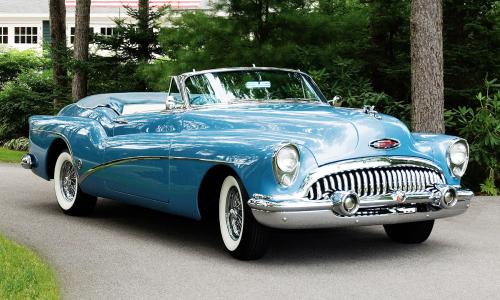
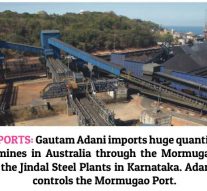
The Jindals and the Adanis are making huge profits because of the coal that is imported through the MPT, for the benefit of the steel and power plants of the Jindals in Vijaynagar in the Bellari District of Karnataka. The Adanis and Jindals are benefiting at the expense of Goa which has to bear the brunt of coal pollution.
THE double-engined BJP{ government steered by Narendra Modi and Pramod Sawant is clearly dancing to the tune of Gautam Adani. For the second time in two years the Goa government at the instance of Gautam Adani has sought clearance for double tracking the Southwestern railway line from Vasco da Gama to Bengaluru. Not because there is a huge increase in the number of tourists from Karnataka wanting to come to Goa or Goans wanting to go to Bengaluru for IT jobs.
The double tracking of the Southeastern railway has been undertaken entirely to more than double the transport of “black gold” from Vasco to the steel plants of the Jindals and the power plants of the Adanis in Karnataka.
Steel plants and power plants require massive quantities of coal. Hydroelectirc power capacity has been exhausted. Gas based steel plants are no longer viable. Coal reserves in the country are exhausted and the cost of mining is huge. For over a decade now steel plants and power plants have been depending on dirty cheap low quality imported coal from Christchurch in Australia. It will be recalled that Gautam Adani travelled with Narendra Modi to Australia where the deal was struck with considerable help from the State Bank of India which financed the acquisition of a major coal concession in Australia.
Most of the ports in the country in the south including Mangalore and Karwar refused to permit their ports to be used for importing coal which is considered as one of the dirtiest cargo. Ironically, presumably at the request of Narendra Modi the centrally managed Mormugoa port quietly agreed to be the entry point for the Adani imports of coal from Australia. The coal is not meant for the use of industries in Goa but it is meant for the steel plants of the Jindals in Hubli and Hospet in Karnataka. Ironically, “The Times of India” which broke the story on double tracking carried two pages of advertising about the expansion of the Jindal Steel Plant.
Steel is needed for the furnaces which are central to steel manufacturing. Huge lumps of ore are dropped into the coal-fires at very high temperature furnaces. The melted rivers of iron ore are converted into steel after they are purified, all impurities removed. They are then transferred into bars and rods and other steel products which are needed to build bridges and buildings and the infrastructure for steel plants.
I have had the good fortune of visiting the Tata Steel Plant at Jamshedpur over four decades ago. It is an amazing sight to see the huge streams of liquid steel which is then diverted to various moulds from which emerge the steel bars and rods. It is to meet the needs of the furnaces that huge quantities of coal are being imported.
Unfortunately, the site of the steel plants are not connected to any ocean or even a river. The closest port is the Mormugoa port in Goa. The first railway line to be laid in Goa was the Southwestern railway connecting Goa to Bengaluru which was laid by the British government in collaboration with the Portuguese regime. The railway line has always been the principle mode of transport of goods rather than people. Considering that historically Goa has depended onBelgaum for much of its supply of fruit, vegetables and meat products, the railway became a vital link. When mining developed in Goa the railways also started transporting iron ore to the steel factories.
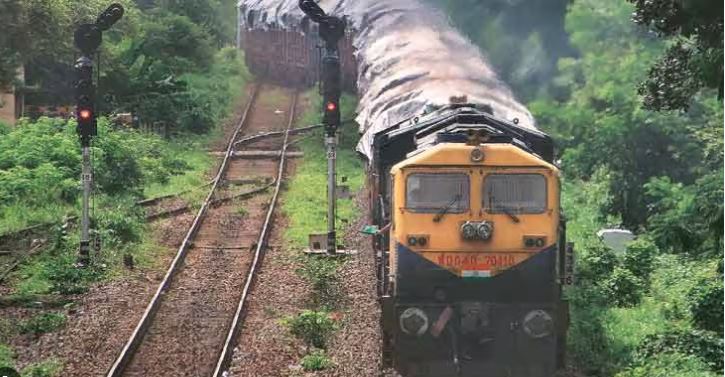
In the last decade or so the Mormugoa port has become the major source of ships unloading coal for transportation to the industrial units in Karnataka. As steel production expanded there were demands for double tracking the railway line. This implies a parallel railway line will be built along the existing solo railway track between Goa and Karnataka. This puts a limit on the quantity of coal and in future iron ore that can be transported. Having just a single track means the number of trains that can be operated is limited as they have to wait for the track to be freed at every railway station. With double tracking there can be dedicated lines for transporting to and fro between Goa and Karnataka.
The doubled tracking is already in progress despite strong opposition from several villages in Goa. The railway line originating in Vasco which is connected to the MPT passes through Cortalim, Majorda and many of the coastal villages in south Goa. The double tracking will mean additional land acquisition by the railways in Goa. There are limitations as the present railway line passes through heavily populated areas. I recall that several ancestral homes along the route, particularly in Majorda and Cavellossim are threatened by the expansion of the railway network.
But the biggest threat of double tracking is to the fragile ecology of the Western Ghats. The double tracking will mean further erosion of the forests. The railway line will pass through the Mahavir National Sanctuary in Mollem. The railway line if double tracked might convert the famous Dudhsagar falls into black river and black waterfalls. This is because the additional tracking and the huge amount of coal being transported would impact Collem and Mollem, which are part of the Western Ghat section of the Southwestern railway. The centrally empowered committee on environment had red flagged the double tracking project.
When Goa government approached the centre for speeding up the double tracking the environment ministry at the centre raised concerns. The Wildlife Institute of India was asked to do an environment impact assessment. The institute pointed out that the double tracking would adversely affect the habitat of wild animals in the Mollem forestes and in the Mahavir wildlife sanctuary. It would affect the flora and fauna and de-stabilize the fragile terrain ecology of the state. It also pointed out that the double tracking would affect the tiger corridor, the movement of the wild cats between sanctuaries will be hindered. The movement of wild elephant herds would also be affected between Goa and Karnataka Western Ghats. This is dramatized by Omkar, the confused wandering elephant which keeps moving back between Maharashtra and Goa and has reportedly now strayed into a residential area in Goa.
Goa apparently made a renewed request to the Union Environmental Regional Committee to allow diversion of forests for the Kulem- Madgaon section of double tracking. The committee deferred the proposal stating that the ecological impact had not been studied. The Wildlife Institute of India report is limited to proposing mitigation measures and does not include a detailed analysis of the impact of the project. The regional empowered committee has noted that the project impact on biodiversity and ecology of the protected areas of the Bhagwan Mahavir Wildlife Sanctuary should be studied with suitable measures to address the adverse impact of the project.
There have been complaints of dust pollution from the transportation of coal not only in Vasco but also the villages through which the coal is transported to Karnataka. Doctors have confirmed that the number of respiratory cases has increased exponentially in south Goa. Member of Parliament from south Goa Captain Viratao Fernandes has been leading the agitation against the double tracking. But clearly the economic forces seeking the double tracking are too strong for Goa to resist. The Adanis and Jindals who are the major beneficiaries have powerful patrons in the BJP. It was under pressure from them that the double tracking commenced anew in Goa.
Fortunately, the Central Environmental Committee has put a brake. The biodiversity spots of Goa are under sustained attack. This is all part of a larger national project by the BJP government to promote development at the cost of ecology and environment, the double tracking project is part of a larger exercise which includes widening of the national highway connecting Goa to Karnataka. There is also a pending proposal for laying additional power transmission lines through the Mahavir wildlife sanctuary and all this not even for the benefit of Goa but to drive up the profits of the Adanis and the Jindals. It is time the Enough is Enough movement is extended to the Mormugoa port and the double tracking and other projects which threaten the larger serenity of the environment of the state of Goa.
 LETTER TO THE EDITOR FOR ISSUE DATED APRIL 11, 2026
 WHO IS FIXING THE SKY? The billionaires, the cops in SUVs, and the missing trees! By Raaisa Lemos Vaz
 UPHEAVAL OF THE SUSEGAAD!By Sumaiya Khan
 THE POWER AND THE POLITICS OF MINING IN GOA!By Arvind Pinto
 DEVA VANI DHRUPAD: Alchemy of Sound, Silence and Sanctity!By Prema Viswanathan
 AT LEAST HOSPITALS CAN OFFER MILLET ROTI AND KICHADI!
 WHEN DO WE NEED PALLIATIVE CARE?
 GODI MEDIA TRUMPS TRUTH IN WAR & PEACE!
 World Health Day 2026: TOGETHER FOR HEALTH – STAND WITH SCIENCE! By Dr Amit Dias, MD
 FCRA AMENDMENT WILL ENABLE GOVT TO TAKE OVER PROPERTIES!By Olav Albuquerque
 WEEKEND UPDATESLETTERS TO THE EDITOR FOR ISSUE DATED APRIL 04, 2026
 REAL ESTATE BARONS OF GOA!
 THE SLOW VANISHING OF GOA’S GOLDEN BEACHES! By Raaisa Lemos Vaz
 WHO IS EXTRACTING GOA’S GROUND WATER? By Supriya Vohra
Goa is abuzz with excitement as vintage bike and car owners, users, collectors and fans are decking […]