Goa is abuzz with excitement as vintage bike and car owners, users, collectors and fans are decking […]
Old is Gold
October 4, 2016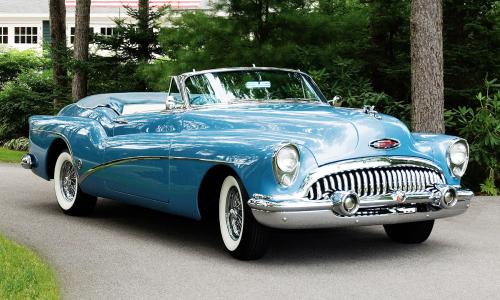

As the massive special intensive revision (SIR) of electoral roll gets underway in Goa, the fate of over 3 lakh or around 25% of the 11.85 lakh electors hangs in the balance till the final list is published on February 14 next year. Goan Observer spoke to Chief electoral officer (CEO) Sanjay Goel to get into his mind to understand what lies in wait for Goa’s voters
By Praveena Sharma
How far has the special intensive revision (SIR) reached?
In one week or so, digitisation will almost be over. Now, we are waiting for the next phase. Only 2% (of filling of the enumeration forms or EF and its digitisation) is left.
Recently, there was a case of a group of people in Campal polling station being completely left out of the exercise. It was only after it was brought to the notice of the election office that a booth level officer (BLO) visited them. I personally spoke to one of the persons and she said the BLO had been given wrong addresses. She is mystified by such an error as they have living at the same address for several decades and have voted the same ward. Can you explain how such errors are happening?
What (address) is on the EPIC card?
She said it’s the same address where she lives now..
It is a mystery how the address got changed. It (list of voters to be visited by BLOs) is computer-generated. There is no human interference. I am hearing (something like this) for the first time. I have been frequently meeting electoral registration officers (EROs) and representative of political parties but none of them brought up anything like that. Probably, it might have been some random case. If BLOs have already shown 100% distribution of EFs how come they came with EFs in this case.
And there is no second reprint of any EF.
Then, how was it done?
If she comes and tells us her entire story then we can call the BLO and ERO and get the clarification.
How do you confirm that an EF has been delivered?
BLOs are supposed to mark on their app how many forms are distributed on daily basis. This gets instantly digitised.
Secondly, booth level agents (BLAs) of all political parties are also part (of the whole process). We have nine recognised political parties. Out of that, at least two or three BLAs are there in every polling station. They (BLAs) are part and parcel of the entire exercise. They are supposed to even collect the filled up EFs and give it to the BLOs.
If something is amiss then the BLAs bring it to the notice of either the BLO or the assistant electoral registration officer (AERO) or ERO or their party representatives, who will then go to the DEO (district election officer) or me (chief election office). There were complaints of some BLOs asking people to come back to their office to collect forms. As soon as, we got to know about it, we acted on it.
Why are political parties involved in the exercise? Why can’t we have non-political volunteers? Why has it been given a political colour?
It is like walking a tight rope. If you do not involve them (political parties), they say everything is non-transparent and everything is happening in the air without our knowledge.
If you involve them then there is an allegation it is politicisation of the process. The thing is that it is not voting. So, there is no influence on the voter. It is just authentication of people whose names are there on the electoral roll. We have also given volunteers to every BLOs. Political parties are involved to assure them that everything is transparent. They act only as facilitators.
An elector, I interviewed, complained a BLO insisted on passport even though she was ready to produce one of the 13 documents permitted for verification of voters. Can a BLO decide what document an elector gives for verification?
We have not yet come to the stage where we ask for documents. It is the enumeration phase, where forms are distributed and collected with mapping details. If information on a form does not map with the 2002 electoral roll, then unmapped details will be collected.
Once the draft electoral roll is published (December 16), electors – whose EFs do not reconcile with the 2002 electoral roll – will be issued a notice. On receiving the notice, they will have to produce one of the 13 documents.
Those who have not submitted the EF or are not traceable or dead, their name will not be on the draft electoral roll. A separate list called ADSD (absent, dead, shifted, or duplicate) will be published on the (state election commission’s) website and notice board.
If anybody feels his name is wrongly deleted in the draft electoral roll he can fill Form-6 with his declaration. Then, his details will be scrutinised and if it is okay his name will be in the final roll.
What are the criteria for marking someone on the ADSD list?
If BLO goes to an address and he does not find the elector there then he (elector) is ‘absent’. If the BLO finds the elector is not living at the address but has now shifted out of country or out of the State then he is marked ‘shifted’. If some family member says a person is dead then he is marked ‘dead’.
Is a death certificate required for marking someone dead?
No. If they (family members) declare they (electors) are dead we mark them as dead. In case of duplicate, if somebody admits his name is in other State’s electoral roll or if somebody does not return the EF or when a BLO tries to map a person’s detail and finds he is already on other State’s (where SIR is going on) electoral roll then it is marked as ‘duplicate’.
Goa has a large portion of its voting population living abroad or outside the State. How are you ensuring they are not disenfranchised through this process?
They can fill the EF online. We have even given a provision, where any adult member of the family can fill their EF and give it to the BLO. So, if somebody is temporarily away then any member of his family can fill the EF or if all the family members are away then the EF can be filled online.
Again, if he is staying somewhere else for a very long time, he is supposed to be in that (other State’s) roll.
But isn’t it for the elector to decide where he wants to vote?
We assume it is a choice, but if somebody’s ecosystem is in some other State why will he vote here. You understand? Now, if I am serving somewhere else for two years, ideally my name should be on that roll because my entire welfare is looked after in the place I am living. But people keep their name on the electoral roll of the place of their birth or someplace like that. But we are not getting into all that.
The data put out by you says 90K electors have been identified as ADSD and 2.2 lakh of them could not be mapped to 2002 electoral roll – totalling to over 3 lakh voters facing the prospect of being disenfranchised. That is more than a quarter of the 11.85 lakh voters on Goa’s current electoral roll. As the CEO, your job is to protect every Indian citizen’s right to vote. This could see many of them losing that right. What are doing to protect it?
We are doing this (SIR) to protect the (voting) right. Ultimately, if somebody is ineligible (his name will be removed from the roll). The BLO is going house-to-house multiple (three) times.
What (else) can we do? We (can) assume that either he was a fake voter or he has disappeared somewhere or he temporarily came to Goa. He got an electors’ photo identity card (epic) because (sometimes) people get an epic card for submitting it in some office or something else. And, then he went back. Now, what can we do? Nothing.
In cases, where EF has come back without details and people say we do not have our detail. Where do we dig for details? The 2.2 lakh (unmapped voters) will submit documents because notice will be sent to them. If they do, their names will be in the final electoral roll. We have not deleted their names.
As far as the dead is concerned why should their name be there. If somebody has shifted why should their name be there. If somebody is untraceable why should their name be there. If somebody has a duplicate entry. These are illegitimate cases and so why should their name be there. That is the purpose (of SIR) – cleaning the electoral roll.
In Goa, temporary movement is high because of commercialisation, economic, real estate, and hospitality boom. Some come for labour, and others for business. They make epic cards just to show they are voters here. The psyche is ‘if I am a voter then my work in Panchayat or in any government office will be done fast’. But they also have their names, probably. somewhere else or once they go back, they retain the names here. They do not bother to delete it.
All this is happening for the last 20 years. That is why after 23 years this intensive revision is (being) done (in Goa).
How are you taking care of duplications?
If an elector is mapped once, he cannot be mapped again in the system. Then, after the (publication of) final rolls, there is a deduplication software, which is run by the commission. All similar photos and entries, which they (Central Election Commission) can find through AI (artificial intelligence), is sent to us. If we can establish, they are duplicate, we remove them.
But people try to dodge this by changing names and in some other ways. In SIR, because the BLO is going house-to-house and online mapping is done, it cannot be mapped again. So, largely duplication is taken care of.
In my chat with some electors, it is coming out that there is still low awareness about the nitty gritty of the SIR process. How are educating them on SIR?
We are already doing it. In INOX, our advertisement is run five times a day. We have tied up with some radio jockeys and State icons. These State icons have been asked to make videos on SIR and upload it on their social media handles.
I have done five press conferences. We have put 700 banners and 50,000 posters in every area. We have distributed them to government offices so that they can be displayed in their offices. We have also made training videos that are being circulated. We have even taken care of the minority community. We contacted the Catholic Association of Goa (Goa) and gave training to their members in North and South Goa.
They will now intimate and inform their members on how to fill the online form and how to see their names in the 2002 electoral roll.
You have said on public platform, 88 overseas citizens of India (OCI) cardholders are eligible to vote. OCI do not have voting rights ….
Not OCI, overseas electorate. We have given a clarification yesterday (November 2). Overseas electorate are those who hold Indian passports but are temporarily staying abroad because of their job or education. They can fill EF online or any member of the family can fill their form on their behalf.
Goa has a peculiar issue of Portuguese passport holders …
If you have a Portuguese passport or any other passport you cease to be Indian citizen. Ideally, you should delete your name from electoral roll but people are not doing that. Unless this thing comes to us, we cannot know. Now, we are taking this information from RPO (regional passport office) and FRRO (foreign regional registration office). We will see how many such cases are there.
Yesterday (November 2), we wrote to them (RPO and FRRO). We will get this information – people who have got Portuguese passport after surrendering Indian passport – but there are some people who never held an Indian passport. So, that information will not come to us.
In that case (where you never had Indian passport), you state ‘we got Portuguese citizenship out of lineage criteria’. In such cases, information will not be known unless it is self-declared.
In such cases, the ERO can issue notice to them and if there is no response, they can delete their names.
Will you initiate criminal action against them for not disclosing the information?
We will see whether to initiate (criminal action) or just sanitise the roll because right now it is about purity of the electoral roll, and clearing it of such entries as foreign nationals, duplicates, and others.
Is it a CEO’s job to prove the citizenship of voters?
We are saying it is not. But we must know whether somebody is a citizen or not. My job is to enrol every elector who is an Indian citizen or how will I do my duty. The criteria (for enrolment of elector) itself say he should be a citizen of India.
Isn’t Aadhar card enough to prove someone’s citizenship?
The Supreme Court has also said that Aadhaar card is not to establish citizenship or to establish the age. It is a document of identification. So, when an ERO has a doubt about a person’s citizenship or age, he can ask for additional documents to satisfy himself about his citizenship status.
But Aadhaar card is issued only to Indian citizens.
The issuing authorities are different. We do not have much idea of what documents they take for verification of identity. Ultimately, ERO is the custodian of the electoral roll. He must be satisfied. If somebody cannot tell us why his name or his parents’ name was not there in the last roll but his name is there in today’s roll, we must ask him to show us documents which state you or your parents were born on or before 1987 (reference of Citizenship (Amendment) Act, 1986, which requires at least one parent to be an Indian citizen for a person born in India to automatically become citizen by birth. The rule of citizenship by birth in India applies to only those born before July 1, 1987)
But someone can become Indian citizen through naturalisation too.
Yes, then they must give proof of that. That is why we said that these 13 documents are indicative. ERO is the custodian and the last word at the sub-divisional magistrate (SDM) officer level.
Were there challenges peculiar to Goa?
Everything went very well. It could be because Goa is a small state. Education and awareness levels are high among people. There was cooperation from the State government and even all political parties supported it. We did not face any hindrance at all with any of the political parties or the civil societies.
Why was this rush to finish the exercise?
After the Bihar SIR experience, the commission thought it can be done in short time. Now, they have extended the deadline by one week because some States were lagging. Even then, they have not extended it too much – just by seven days. Probably, they know or they have assurance from CEOs that they will finish it in one more week.
If you get more time then you spread the work. If anything must be done it is better to do it in crisp time. Otherwise, the entire machinery gets involved. BLOs are not doing any other work. They are just into this. Once, we finish they can go back to the department and do their routine work. We will relieve them after February 14 (2026), when the final roll is published. The hearing process will soon begin and they have a role in it too.
 LETTERS TO THE EDITOR FOR THE ISSUE DATED MARCH 07, 2026
 AMKA NAKA ‘NEW’ GOA: Our heritage is under a hammer!By Raaisa Lemos Vaz
 39A DELHI BUILDER DRIVEN!
 THE MORIBUND STATE OF THE GOAN ECONOMY! BY Arvind Pinto
 NEW HPV VACCINE TARGETS YOUNG GIRLS!By Dr RG Wiseman Pinto
 GLOBAL WAR CLOSER TO GOA!By Olav Albuquerque
 IF IT’S GREEN MANGO SEASON…
 WITH THE AMI PANJEKAR PANEL!
 PRAMOD SAWANT SAYS BIG BOAT WON’T COME!
 SPLASH THE COLOURS! FILL UP YOUR PLATE! By Dr Amit Dias
 WEEKEND UPDATES
 LETTERS TO THE EDITOR FOR ISSUE DATED FEBRUARY 28, 2026
 BORKAR ENDS FAST, ST ANDRE CONVERSIONS SUSPENDED!
 GOA’S ECOLOGY DESTROYED BY 39A! By Dean D’Cruz
 A PARCHED PARADISE! By Raaisa Lemos Vaz
Goa is abuzz with excitement as vintage bike and car owners, users, collectors and fans are decking […]