Goa is abuzz with excitement as vintage bike and car owners, users, collectors and fans are decking […]
Old is Gold
October 4, 2016

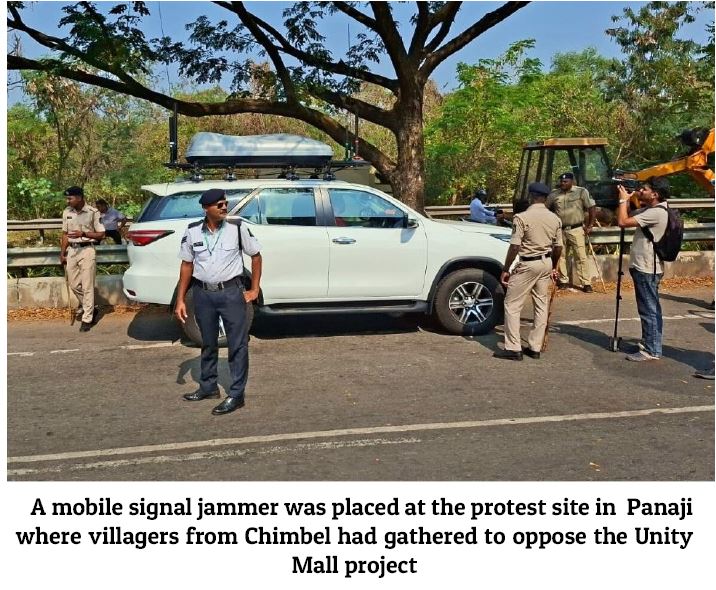
Even as people of Chimbel village took to the roads to protest the proposed mega government project – Unity Mall – close to Toyyar lake and notified wetland, there was a judgement delivered by Judge Irshad Agha on Wednesday in their favour in the North Goa District Court.
The civil revision application was filed by activist and Chimbel Biodiversity Management Committee chairman Govind Shirodkar and relates to jurisdictional illegality, panchayat powers, and rule of law.
Given below are the details of the order, culled out by Goan Observer for our readers.
Background and Nature of the Case
This case arose from a challenge to a proposed Unity Mall project at Chimbel village in Tiswadi Taluka, which was intended to be constructed on survey number 40/1. The project was promoted as part of a Central government– supported scheme, with funding to the tune of Rs100 crore, aimed at establishing “Unity Malls” across India.
The litigation concerns whether the statutory process under the Goa Panchayat Raj Act, 1994 was lawfully followed, and more specifically, whether the Block Development Officer (BDO) had jurisdiction to entertain an appeal against rejection of a construction licence by the Village Panchayat.
The case investigates:
The hierarchy of appellate and revisional remedies under the Panchayat Raj Act, the binding nature of conditions imposed by the Town and Country Planning (TCP) department, and the limits of administrative authority when environmental and infrastructure concerns are involved.
Chronology of Events
Goa Tourism Development Corporation (GTDC) sought to construct the Unity Mall at Chimbel.
For which various statutory permissions were obtained, including technical clearance from the TCP department cleared on August 21, 2025, subject to conditions.
A crucial condition (condition number 14) mandated that adequate infrastructure—particularly water supply and garbage management—must be ensured before issuance of a construction licence.
GTDC applied to the Village Panchayat, Chimbel for a construction licence.
On October 16, 2025, the Village Panchayat rejected the application.
Instead of appealing to the director/deputy director of Panchayats, GTDC filed an appeal before the Block Development Officer (BDO).
On November 28, 2025, the BDO allowed the appeal, set aside the Panchayat’s rejection, and directed issuance of the construction licence within 24 hours.
A revision was filed before the deputy director of Panchayats, which was dismissed on December 5, 2025, upholding the BDO’s order.
Acting on the BDO’s direction, the Village Panchayat issued the construction licence on December 6, 2025.
Shirodkar’s revision application under Section 201B was filed before the court challenging the BDO’s order, the deputy director’s order, and the subsequent construction licence.
Interim Stay Order on Construction
On Shirodkar filing the revision application, the Court granted ex-parte ad-interim relief, staying further action. It was disclosed that the construction licence had already been issued. The applicant was permitted to amend the revision application to include a direct challenge to the construction licence itself.
Core Legal Issues
The principal question questions by court were whether the order of the deputy director of Panchayats on December 5, 2025 was arbitrary, perverse, and illegal, and whether the BDO’s order on November 11, 2025 and the construction licence issued deserves to be quashed.
This raised several interconnected sub-issues:
Did the BDO have jurisdiction to hear an appeal against rejection of a construction licence?
What is the correct appellate authority under Section 66 of the Goa Panchayat Raj Act?
How should conflicting High Court judgments be reconciled?
Whether public infrastructure concerns can be deferred to the occupancy certificate stage?
Whether the revision under Section 201B was maintainable?
Arguments of the Applicant
The applicant challenged the entire process on jurisdictional and substantive basis.
On the question of lack of jurisdiction of the BDO, the applicant argued that Section 66 of the Act specifically governs construction licences. Appeals against grant or refusal of such licences are provided under Section 66(7). Therefore, section 201A (miscellaneous appeals to the BDO) does not apply and could be taken as the BDO acting on jurisdiction not vested in him.
The directorate of Panchayats’ citizen’s charter states that appeals under Section 66 must be made to the director.
Additionally, the applicant highlighted that condition number 14 of the TCP’s technical clearance, stresses on Chimbel facing a daily water shortage of nearly 2 million litres and garbage management facilities are already being overstretched.
It was argued by him that the BDO had diluted a mandatory pre-condition by pushing infrastructure compliance to the occupancy certificate stage.
Shirodkar also asserted the revision under section 201B lies to the District Court against any order by any ‘quasi-judicial’ authority under the TCP Act. He argued in his application that the earlier revision before the deputy director does not bar a statutory revision before the Court.
Arguments of GTDC
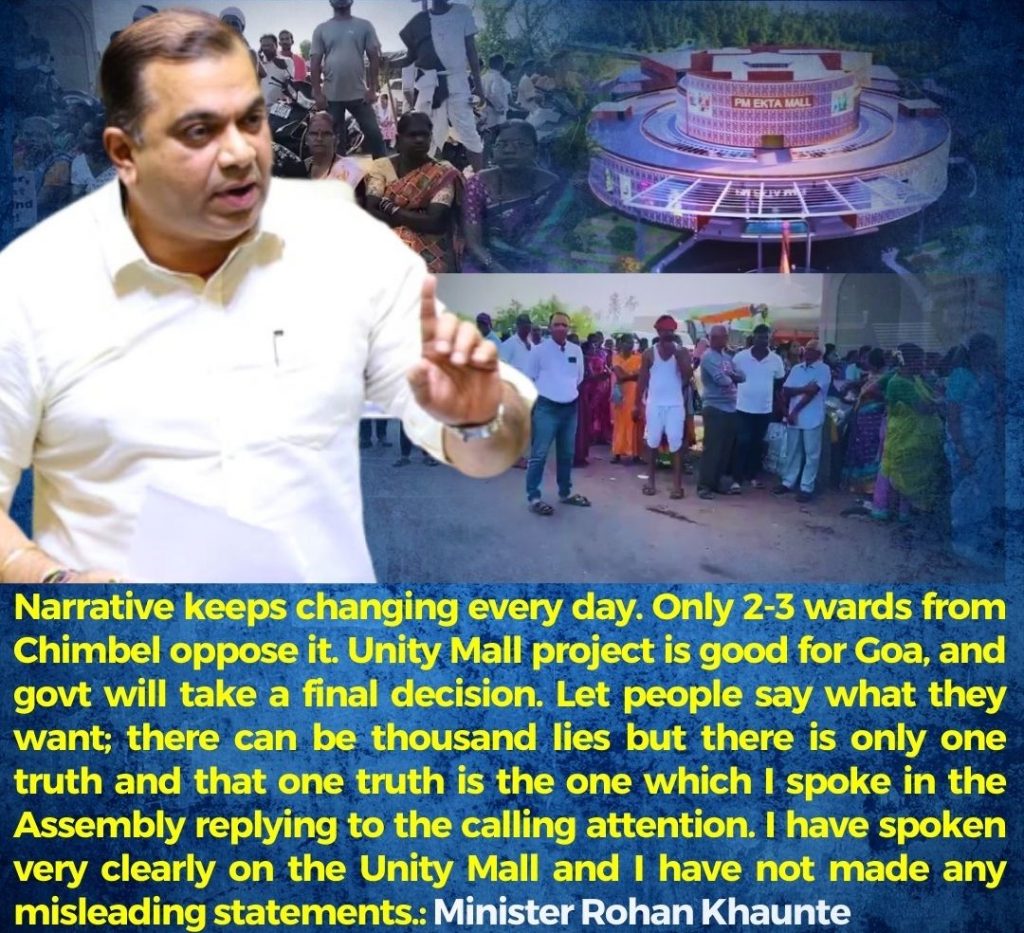
The GTDC defended the orders on several grounds and argued that BDO was the correct forum of appeal. It stressed on the fact that all statutory permissions were duly obtained by it and the project is beyond the wetland buffer zone.
The tourism authority maintained there was infrastructure sufficiency and that large public funds were involved, and delay could result in withdrawal of Central government funding, causing public loss.
It was also argued that Shirodkar lacked locus standi to maintain the revision.
Statutory framework analysed by the court
The court undertook a detailed examination of section 66 – regulation of erection of buildings, section 201A – appeals on miscellaneous matters and section 201B – revisions to the district court.
Its key findings were that section 66 is a self-contained code for construction regulation and section 66(7) provides a specific appellate remedy. It further stated that section 201A applies only where no appeal is otherwise provided and section 201B provides overarching judicial supervision over all authorities under the TCP Act.
Effect of 2023 amendments
The court clarified that the 2023 amendment to section 66(2) allowed appeal to the BDO only where the Panchayat remains silent but where the Panchayat actively rejects an application, the remedy had to be sought under Section 66(7).
Thus, the respondent’s appeal was filed before the wrong forum.
Maintainability of the Revision
The court rejected the objection to maintainability and held that section 201B empowers the district court to revise any order passed by any authority under the TCP Act. And, therefore, the revision was fully maintainable.
Final conclusions
The Court concluded that the BDO’s order on November28, 2025 was without jurisdiction and the deputy director’s order on December 5, 2025, which failed to correct this illegality, was also unsustainable. And, therefore any licence issued pursuant to such illegal orders cannot survive.
Significantly, the court held that even possession of multiple permissions cannot cure a foundational jurisdictional defect.
The Order
The court passed the directions for revision application to be allowed, and for the orders on November 28, 2025 (BDO) and December 5, 2025 (deputy director) to be quashed and set aside.
It also ordered the construction licence issued on December 6, 2025 by the Village Panchayat to revoked and GTDC was restrained from proceeding with the construction of the Unity Mall.
It directed that construction could be resumed only after obtaining a licence through due process of law from the competent authority.
Significance of the Judgment
This order is significant because it reinforces statutory discipline and jurisdictional boundaries, affirms that public interest projects are not above procedural law, strengthens local self-governance and environmental safeguards, clarifies appellate forums under the Goa Panchayat Raj Act, 1994, sending a clear message that administrative convenience cannot override legality.
 LETTERS TO THE EDITOR FOR ISSUE DATED FEBRUARY 28, 2026
 BORKAR ENDS FAST, ST ANDRE CONVERSIONS SUSPENDED!
 GOA’S ECOLOGY DESTROYED BY 39A! By Dean D’Cruz
 A PARCHED PARADISE! By Raaisa Lemos Vaz
 KARAPUR LOCALS PROTEST RANE LAND DEAL!
 WHEN IS ENOUGH IS ENOUGH? And here’s your chance to vote in a new CCP… If you’re interested!
 HOW MUCH I LOVE TAMARIND… Here are the gifts and joys of tamarind trees
 UTPAL TAKES ON BABUSH IN PANJIM!
 DEMENTIA SCREENING PROGRAM IN GOA! By Dr Amit Dias
 WEEKEND UPDATES
 LETTERS TO THE EDITOR FOR THE ISSUE DATED FEBRUARY 21, 2026
 UNLIKE GOA TOP TOURIST RESORTS PROTECT LOCAL LAND!
 NIZ GOENKAR WEDDING!
 OUT AT THE VIKRAM & SHWEANA SHAADI OF THE YEAR…
 PANAJI THAT FLOODS AFTER ONE HOUR OF RAIN!By Sanjay Raiturkar
Goa is abuzz with excitement as vintage bike and car owners, users, collectors and fans are decking […]