Goa is abuzz with excitement as vintage bike and car owners, users, collectors and fans are decking […]
Old is Gold
October 4, 2016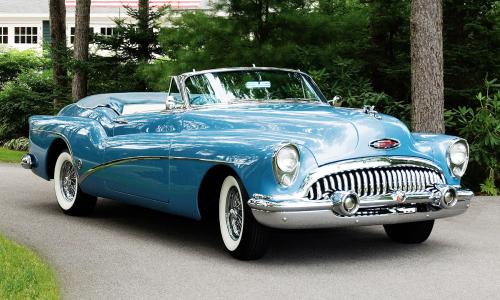
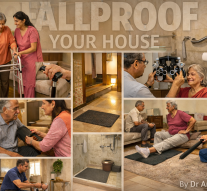
“Growing old is like climbing a mountain — you get a little out of breath, but the view is better.” — Ingrid Bergman
Dr Amit Dias
Falls are the single most preventable catastrophe that robs older people of independence, confidence and sometimes life itself. Humayun the son of Babur fell from the first floor of his library and died. In this article lets go through the checklist and fallproof our house. Let’s map the hazards, explain the fixes, and make staying home an act of security — not a risk.
How big is the problem?
Globally, falls are the second leading cause of unintentional injury deaths; adults older than 60 suffer the greatest number of fatal falls. Each year about 37 million falls are serious enough to require medical attention and hundreds of thousands die from them.
In high-income countries like the USA, falls are the leading cause of injury in those over 65, causing roughly 300,000 hospitalisations for hip fracture each year.
Clinically important: around 30–50% of falls produce minor injuries and about 10% produce major injury; hip fractures and traumatic brain injuries carry high morbidity and mortality. Fear of falling affects between one-fifth to almost half of older adults and leads to activity restriction, which paradoxically raises fall risk further.
The problem.is compunded bhbthe factvthat many of oir seniors live alone and neglect the home and delay fixing items as theybhave no assistance. This can increase their risk for falls.
The household risk:
Lets wall through oir own home from the older person’s perspective — slowly, with your phone torch on. Look for:
Poor lighting or glaring shadows on stairs and thresholds. Loose rugs, tiled thresholds, cluttered corridors.Slippery bathroom floors and unanchored mats. Furniture with low seats or unstable arms. Garden steps, uneven paving, tangled hoses, and uncovered drains.
Fixes are often cheap: replace bulbs with warm, non-glare lamps; secure rugs with non-slip backing; use contrasting tape on stair edges; repair uneven paving; remove extension cords from walkways.
Bathrooms and gardens: the hotspots
Bathrooms: Install grab rails by the toilet and in the shower (vertical + horizontal combination is best). Use a raised toilet seat if bending is difficult. Opt for a walk-in shower rather than a tub; use non-slip flooring and a sturdy shower chair. Hand-held showerheads reduce twisting.
Gardens: Make paths even, wide (at least 90 cm where possible), and free of trailing plants. Steps should have handrails on both sides when feasible. Consider gentle ramps for small height changes.
Grab rails must be correctly anchored into studs or solid fixings — a wobbly rail is worse than no rail. A rule of thumb: those rails should safely support the person’s full weight.
Postural (orthostatic) hypotension — the silent tripwire
Postural hypotension (a drop in blood pressure on standing) is a frequent and under-recognised cause of falls.
Simple clinical tips:
Check blood pressure lying, sitting and standing if older adults report dizziness or near-falls.
Review medications: antihypertensives, diuretics, antidepressants, antipsychotics and some Parkinson’s drugs can exacerbate orthostatic drops. Medication review is fall prevention.
Advise slow transitions (sit at the bedside first), adequate hydration and compression stockings if appropriate.
Medication reviews should be routine — deprescribe where possible and tailor therapy to balance symptomatic control with safety. Speak to your doctor about it.
Walkers, canes and assistive devices — use them well
Devices reduce falls only when matched and used correctly.
Canes: Single-point canes are fine for mild balance problems. Hold the cane in the opposite hand to the weaker leg (cane and weak side move together). Cane height should make the elbow slightly bent (~20–30°).
Walkers: Provide a wide base of support. Use rolling walkers with brakes that work and are regularly checked. Teach stepping to the walker: “move walker → step to the middle → repeat.” Never use a walker as a seat unless it’s sturdy and designed for sitting.
Wheelchairs and scooters: Ensure footrests and brakes are functional; train users and carers in transfers.
Referral to physiotherapy and occupational therapy for gait training, balance retraining, and home equipment prescription is invaluable.
Special conditions that amplify fall risk
Some conditions increase both frequency and consequences of falls:
Parkinson’s disease: Freezing of gait, festination and postural instability mean environmental cues and rhythm-based physiotherapy (cueing, stepping strategies) help.
Dementia (Alzheimer’s and others): Impulsivity, poor hazard recognition and wandering increase risk. Locks, alarms, and supervised, structured activity help; avoid physical restraint.
Visual impairment: Regular ophthalmology reviews, good lighting, high-contrast markings and removing small obstacles reduce falls.
Peripheral neuropathy, stroke, vestibular disease: Tailored rehab and assistive devices are core interventions.
Medication care — fewer pills, fewer spills
Medication is a double-edged sword. Sedatives, anticholinergics, opioids, some diabetes medicines (risking hypoglycaemia), and multiple concomitant drugs raise fall risk. Periodic deprescribing, simplifying doses, and timing drugs to avoid peak dizziness are effective. Always coordinate changes with the prescribing physician.
Exercise — the antidote to fear
Paradox: fear of falling causes reduced activity → muscle loss and worse balance → more falls. Exercise is the single best medicine for prevention. Emphasise:
Balance training (tai chi, tandem stance, single-leg stance)
Strength training (sit-to-stand, leg raises)
Gait training and functional practice (stairs, turns)
Group classes add social contact and confidence — prescribe them like a medicine: frequency at least 2–3 times/week, tailored intensity. Even small improvements dramatically lower fall risk and reduce the crippling psychological fear.
Here os a simmary of what needs ro be done to fall proof the house. — FALLPROOF
Use this checklist when assessing any home:
F — Floors clear (no clutter, loose rugs removed)
A — Aids fitted and used correctly (canes, walkers)
L — Lighting adequate (night lights, stair lighting)
L — Low thresholds and non-slip mats (bathroom focus)
P — Posture: check orthostatic BP and medication profile
R — Rails installed (toilet, shower, stairs)
O — Optics checked (vision review annually)
O — Occupational therapist and Physiotherapy referral for training
F — Fear addressed with exercise and CBT where needed
What can happen after a fall — the true costs
Beyond fractures and head injuries, falls lead to loss of confidence, social withdrawal, depression, increased dependency and higher healthcare use. Hip fractures commonly lead to reduced mobility and increased mortality within the first year; traumatic brain injury can produce lifelong cognitive and functional decline. The emotional and financial toll on families is substantial.
A few practical rules for families and caregivers
Ask about falls every clinic visit — not just “any pain?” but “any slips, trips or near-misses?”
Keep regular vision and hearing checks. Sensory imputs matter.
Carry out a medication reconciliation every 6 months. Involve the pharmacist.
Encourage exercise: start slow, celebrate small wins.
We would like our seniors to age with dignity, give them a home that’s safe. As clinicians and family members, our job is to make the path up the mountain less rocky — not to tie a harness to a walker.
“An ounce of prevention is worth a pound of cure” — but the best ounce is the one that includes a a visit to a physiotherapist, and a good pair of non-slip slippers.
 LETTERS TO THE EDITOR FOR THE ISSUE DATED MARCH 07, 2026
 AMKA NAKA ‘NEW’ GOA: Our heritage is under a hammer!By Raaisa Lemos Vaz
 39A DELHI BUILDER DRIVEN!
 THE MORIBUND STATE OF THE GOAN ECONOMY! BY Arvind Pinto
 NEW HPV VACCINE TARGETS YOUNG GIRLS!By Dr RG Wiseman Pinto
 GLOBAL WAR CLOSER TO GOA!By Olav Albuquerque
 IF IT’S GREEN MANGO SEASON…
 WITH THE AMI PANJEKAR PANEL!
 PRAMOD SAWANT SAYS BIG BOAT WON’T COME!
 SPLASH THE COLOURS! FILL UP YOUR PLATE! By Dr Amit Dias
 WEEKEND UPDATES
 LETTERS TO THE EDITOR FOR ISSUE DATED FEBRUARY 28, 2026
 BORKAR ENDS FAST, ST ANDRE CONVERSIONS SUSPENDED!
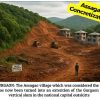 GOA’S ECOLOGY DESTROYED BY 39A! By Dean D’Cruz
 A PARCHED PARADISE! By Raaisa Lemos Vaz
Goa is abuzz with excitement as vintage bike and car owners, users, collectors and fans are decking […]