Goa is abuzz with excitement as vintage bike and car owners, users, collectors and fans are decking […]
Old is Gold
October 4, 2016
World Leprosy Day is observed every year on the last Sunday of January. This year, it was on January 25. In India, National Leprosy Day is observed on January 30, coinciding with the death anniversary of Mahatma Gandhi. These dates are more than markers on a calendar; they are reminders of an unfinished public health and social mission….
LEPROSY is among the oldest diseases known to humankind. Yet, it remains one of the most misunderstood diseases. Modern medicine has transformed leprosy into a completely curable disease, with effective treatment freely available through the public health systems. Despite this, leprosy continues to be associated with fear, silence and social exclusion. The World Leprosy Day 2026 theme, “Leprosy is curable: the real challenge is stigma,” captures this paradox perfectly. Today, the greatest damage caused by leprosy is not medical, but social.
What Is Leprosy?
LEPROSY, also known as Hansen’s disease, is a chronic infectious disease caused by the bacterium Mycobacterium leprae. The term “leprosy” comes from the Greek word “lepros,” meaning “scaly.” The disease was first scientifically linked to a bacterium in 1873 by Gerhard Hansen, making it one of the earliest diseases with a clearly identified microbial cause.
Leprosy primarily affects the skin, peripheral nerves, mucosa of the upper respiratory tract, and eyes. It progresses slowly, often over years, which means early symptoms may go unnoticed or ignored. Historically, the disease was feared because of its visible deformities and the absence of effective treatment in ancient times. It was often misunderstood as a curse or divine punishment, leading to isolation and discrimination — beliefs that still influence attitudes today.
Why is leprosy still a public health concern?
GLOBALLY, around 200,000 new cases of leprosy are reported every year, and India accounts for more than half of these cases. Although India achieved elimination of leprosy at the national level in 2005 — defined by the World Health Organization (WHO) as a prevalence of less than one case per 10,000 population — new cases continue to be detected annually. This indicates that transmission persists in certain pockets, particularly among marginalized and underserved populations.
States like Goa have achieved and sustained elimination, with very low prevalence rates. However, sporadic cases still occur, underscoring the need for continued surveillance, awareness, and early diagnosis. Elimination does not mean eradication; it means the disease is under control but not yet gone. During this Leprosy awareness week, I have provided answers to frequently asked questions — let’s understand it ourselves, spread awareness and fight stigma.
Frequently asked question about leprosy
Is leprosy contagious?
Leprosy is mildly contagious. It spreads through prolonged close contact with an untreated person, most likely via respiratory droplets. Importantly, more than 95% of people have natural immunity to the disease. Casual contact—such as shaking hands, sharing food, or sitting together—does not spread leprosy.
What are the early signs of leprosy?
Early symptoms include pale or reddish patches on the skin with loss of sensation, thickened peripheral nerves, numbness or tingling in the hands and feet, and muscle weakness. Because these symptoms are often painless, people may delay seeking care. Early detection is critical to prevent disability.
What happens if leprosy is not treated?
Untreated leprosy can lead to permanent nerve damage, resulting in deformities such as clawing of the hands, foot drop, chronic ulcers, secondary infections, blindness, and even amputations. These complications are largely preventable with timely treatment.
Is leprosy curable?
YES… this is the good news!! Today we have a cure for leprosy. Leprosy is completely curable with multidrug therapy (MDT), which is provided free of cost through national health programs with support from the WHO. Once treatment begins, the patient quickly becomes non-infectious.
The spectrum of leprosy
PEOPLE with leprosy may present and look different from each other as Leprosy presents as a spectrum of disease, depending on an individual’s immune response. At one end is tuberculoid leprosy, characterized by a strong immune response, few skin lesions, and limited nerve involvement. At the other end is lepromatous leprosy, where immune response is weak, leading to widespread skin lesions, nodules, and extensive nerve damage. Between these lie borderline forms, which can shift toward either end depending on immunity and treatment. Understanding this spectrum helps clinicians guide treatment and anticipate complications.
Stigma: The real disease we must cure
PEOPLE affected by leprosy consistently identify stigma as one of their greatest challenges. Stigma affects daily life in devastating ways. People may lose their jobs, be forced to leave their homes, or be excluded from family and community activities. Children may be denied admission to schools. Marriage prospects are affected. Women, in particular, face compounded discrimination.
Fear of stigma leads many individuals to hide symptoms and delay seeking medical care. This not only increases the risk of disability but also allows ongoing transmission within the community. In this way, stigma directly undermines public health efforts.
The path to eradicating leprosy
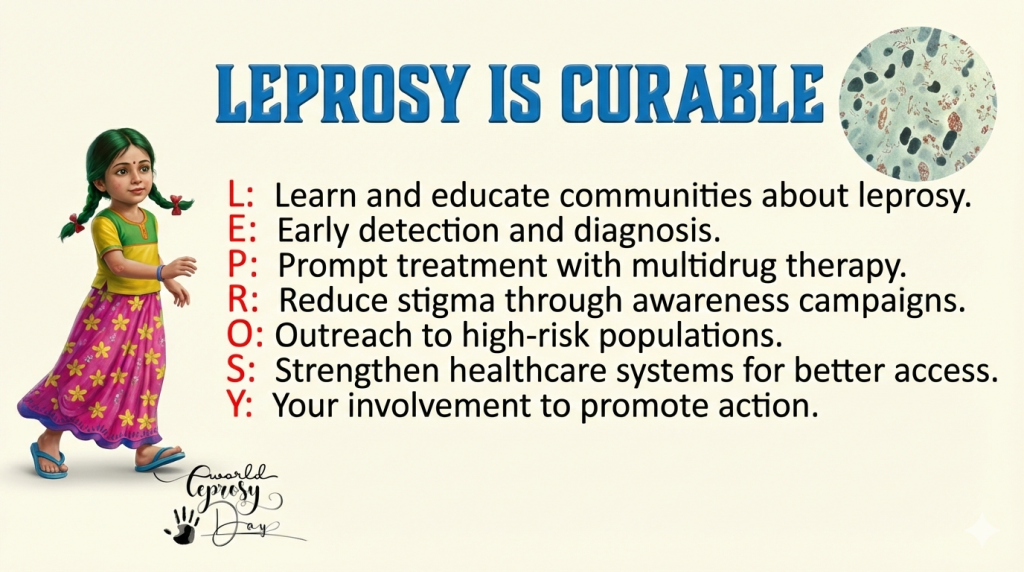
ERADICATING leprosy requires a comprehensive, people-centered approach that goes beyond treatment. A simple way to remember this pathway is embedded in the word LEPROSY:
• L – Learn and educate communities about leprosy to dispel myths and misinformation.
• E – Early detection and diagnosis, which is key to preventing disability and transmission.
• P – Prompt treatment with multidrug therapy.
• R – Reduce stigma through sustained awareness and advocacy.
• O – Outreach to high-risk and marginalized populations.
• S – Strengthen healthcare systems to ensure accessible and equitable care.
• Y – Your involvement, because elimination is a shared responsibility.
Gandhi’s legacy and the call to unite
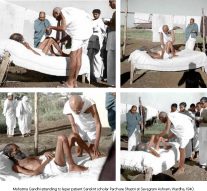
NATIONAL Leprosy Day in India is observed on January 30 to honor Mahatma Gandhi, who worked tirelessly to combat stigma associated with leprosy. He personally cared for individuals affected by the disease and challenged deeply entrenched social prejudices. His life reminds us that compassion, dignity, and equality are central to public health.
A shared responsibility
LEPROSY is preventable, treatable and curable. What remains difficult is changing mindsets shaped by centuries of fear and misunderstanding. As we observe World and National Leprosy Days, let us reaffirm that no one should suffer discrimination for a disease that modern medicine can cure.
Leprosy can be eliminated—but only when stigma is eliminated first.
 LETTERS TO THE EDITOR FOR ISSUE DATED MARCH 14, 2026
 TOWERING INFERNOS OF GOA COMING!By Raaisa Lemos Vaz
 MIRABAG GIFTED TO ADANI!
 DEPOSITS REFUND SCAM!WHO BENEFITS FROM THE RS 10.. By Misbah Quadri
 THE COST OF GST COMPLIANCE IN INDIA!By Arvind Pinto
 EATING FOR SUMMER TIME
 ACUTE SHORTAGE OF COMMERCIAL AND DOMESTIC LPG FORCES RESTAURANTS TO CLOSE
 NO KIDDING ABOUT YOUR KIDNEYS Healthy Kidneys, Healthy World! By Dr Amit Dias
 WEEKEND UPDATES
 LETTERS TO THE EDITOR FOR THE ISSUE DATED MARCH 07, 2026
 AMKA NAKA ‘NEW’ GOA: Our heritage is under a hammer!By Raaisa Lemos Vaz
 39A DELHI BUILDER DRIVEN!
 THE MORIBUND STATE OF THE GOAN ECONOMY! BY Arvind Pinto
 NEW HPV VACCINE TARGETS YOUNG GIRLS!By Dr RG Wiseman Pinto
 GLOBAL WAR CLOSER TO GOA!By Olav Albuquerque
Goa is abuzz with excitement as vintage bike and car owners, users, collectors and fans are decking […]