Goa is abuzz with excitement as vintage bike and car owners, users, collectors and fans are decking […]
Old is Gold
October 4, 2016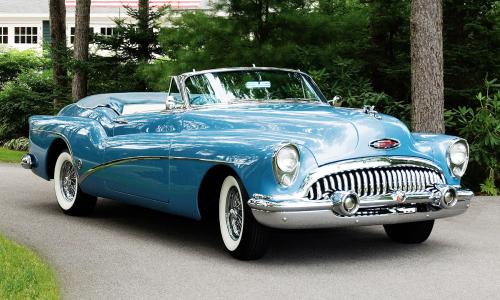
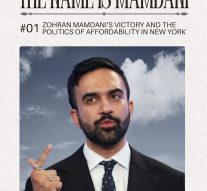
A profile of New York’s very upfront, genial and gutsy new mayor…a first in US history!
ON a frigid New Year’s Day, Zohran Mamdani placed his hand on the Quran as he took the oath of office, in a long-disused subway station beneath City Hall, becoming New York City’s newest mayor. Dressed in a dark overcoat against the cold, his posture was steady and his delivery measured. Beside him stood his wife, Rama Duwaji, drawing almost as much attention as the moment itself, in a brown frock coat trimmed at the hem and cuffs with chocolate-coloured faux fur. The scene, intimate yet symbolic, underscored a theme that would define Mamdani’s rise, a careful blend of personal narrative and political intent.
It was a moment that felt to many watching, like a once-in-a-lifetime turn in a democracy. An immigrant had not only been elected but publicly celebrated, his victory framed as a civic achievement rather than an exception. Such scenes are rare in India, where electoral success is still more often shaped by lineage, caste, or entrenched political networks than by the symbolic embrace of an outsider.
At 34, Mamdani is the youngest mayor New York has elected in more than a century. He is also the city’s first Muslim mayor, the first South Asian to hold the office, and the first mayor born in Africa. His victory over former Governor Andrew Cuomo was not merely an upset; it marked a decisive break from the city’s recent political inheritance.
50% PLUS OF TOTAL VOTE
ZOHRAN Mamdani won with 1,114,184 votes, amounting to about 50.78% of the total vote in the general election. He defeated former governor Andrew Cuomo, who received 906,614 votes, and Republican Curtis Sliwa, who received 153,749 votes.
Mamdani entered the race with little name recognition and without the backing of the Democratic Party’s institutional leadership. His campaign relied instead on a volunteer-heavy ground operation, small-dollar fundraising, and relentless in-person engagement across neighbourhoods often taken for granted in citywide elections. According to campaign officials, the average donation remained modest, a point Mamdani repeatedly emphasized as a contrast to Cuomo’s reliance on wealthy donors and corporate-aligned political committees.
The message was consistent: affordability. Mamdani framed the city’s housing crisis, childcare costs, transit fares, and grocery prices not as isolated policy problems but as symptoms of a broader economic imbalance. His proposals, such as universal childcare, free city buses, expanded rent protections, publicly owned grocery stores, and higher taxes on corporations and high-income earners, were ambitious, and critics quickly labelled them unrealistic. Supporters, however, heard something else. That was clarity.
Cuomo, by contrast, ran on experience and stability, positioning himself as a moderate bulwark against what he described as ideological excess. He warned that Mamdani’s victory would deepen a “civil war” within the Democratic Party, pitting pragmatic governance against progressive activism. His allies echoed those concerns, arguing that Mamdani’s affiliation with the Democratic Socialists of America and his outspoken support for Palestinian rights risked alienating swing voters and donors alike.
Those attacks intensified as Mamdani’s polling improved. Cuomo accused him of extremism and questioned whether his rhetoric crossed into antisemitism, charges Mamdani rejected, while also clarifying some of his earlier language. The dispute became one of the race’s defining fault lines, reflecting broader national tensions within the Democratic Party over foreign policy, identity, and the boundaries of acceptable dissent.
MAMDANI’S identity became inseparable from the campaign’s narrative. As a Muslim and an immigrant, he was both celebrated and scrutinized, his background amplified in media coverage and political messaging. Supporters saw representation; critics warned of polarization. Mamdani himself rarely foregrounded identity, returning instead to economics, insisting that affordability was a unifying concern that cut across race, religion, and ideology.
Strategists watching the race saw lessons beyond New York. “Voters care if you are disciplined and focused on their most pressing issue,” said a Democratic strategist, who argued that Mamdani’s campaign offered a template for reconnecting with working-class New Yorkers without abandoning progressive values.
GOVERNING TESTS AHEAD
YET governing will test that discipline. Mamdani faces resistance from state-level Democrats, including Governor Kathy Hochul, who has expressed opposition to tax increases central to his agenda. Federal relations may prove equally fraught, particularly with a Trump administration hostile to progressive urban governance.
History offers cautionary parallels. Bill de Blasio, elected mayor in 2013 on a similarly ambitious inequality-focused platform, left office with mixed results and diminished popularity. Mamdani’s supporters acknowledge the risk. “It’s up to him to prove us right,” said Samad Ahmed, a first-time voter from Queens. “Otherwise, he’ll be out the door very soon.”
For now, Mamdani’s victory stands as a political marker, not only of generational change, but of a shifting calculation in America’s largest city. Whether it becomes a model or a moment will depend less on symbolism than on execution.
“In New York, ideals may open the door. Results decide how long it stays open.”
 LETTERS TO THE EDITOR FOR ISSUE DATED MARCH 14, 2026
 TOWERING INFERNOS OF GOA COMING!By Raaisa Lemos Vaz
 MIRABAG GIFTED TO ADANI!
 DEPOSITS REFUND SCAM!WHO BENEFITS FROM THE RS 10.. By Misbah Quadri
 THE COST OF GST COMPLIANCE IN INDIA!By Arvind Pinto
 EATING FOR SUMMER TIME
 ACUTE SHORTAGE OF COMMERCIAL AND DOMESTIC LPG FORCES RESTAURANTS TO CLOSE
 NO KIDDING ABOUT YOUR KIDNEYS Healthy Kidneys, Healthy World! By Dr Amit Dias
 WEEKEND UPDATES
 LETTERS TO THE EDITOR FOR THE ISSUE DATED MARCH 07, 2026
 AMKA NAKA ‘NEW’ GOA: Our heritage is under a hammer!By Raaisa Lemos Vaz
 39A DELHI BUILDER DRIVEN!
 THE MORIBUND STATE OF THE GOAN ECONOMY! BY Arvind Pinto
 NEW HPV VACCINE TARGETS YOUNG GIRLS!By Dr RG Wiseman Pinto
 GLOBAL WAR CLOSER TO GOA!By Olav Albuquerque
Goa is abuzz with excitement as vintage bike and car owners, users, collectors and fans are decking […]