Goa is abuzz with excitement as vintage bike and car owners, users, collectors and fans are decking […]
Old is Gold
October 4, 2016
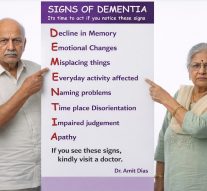
DEMENTIA is emerging as one of the most pressing public health challenges of our time. With increasing life expectancy, Goa — like the rest of India — is witnessing a steady rise in the number of older adults at risk of memory disorders. Recognising the urgent need for early detection and timely support, the Department of Social Welfare, Government of Goa, has launched a Dementia Screening Program aimed at identifying memory problems early and guiding families toward appropriate care.
This initiative reflects a growing understanding that dementia is not simply “normal ageing.” It is a medical condition that can be identified, evaluated, and in many cases, managed more effectively when detected early.
Why Screening Matters
INDIA is estimated to have over five million people living with dementia, yet a large proportion, almost 90% remain undiagnosed. The diagnostic gap is particularly significant because families often attribute early symptoms to ageing, stress, or personality changes. By the time medical help is sought, the condition may have progressed considerably.
Early screening offers several benefits:
• Identification of reversible causes of memory impairment (such as vitamin deficiencies, thyroid disorders, depression, medication side effects).
• Early treatment and lifestyle modification.
• Better planning for safety, finances, and caregiving needs.
• Psychological reassurance when no significant impairment is detected.
• Education for families on prevention and risk reduction.
Screening does not provide an immediate diagnosis. It is a first step that helps identify individuals who may need further evaluation.
Who Should Attend the Dementia Screening Camps?
The screening camps are open to the following groups:
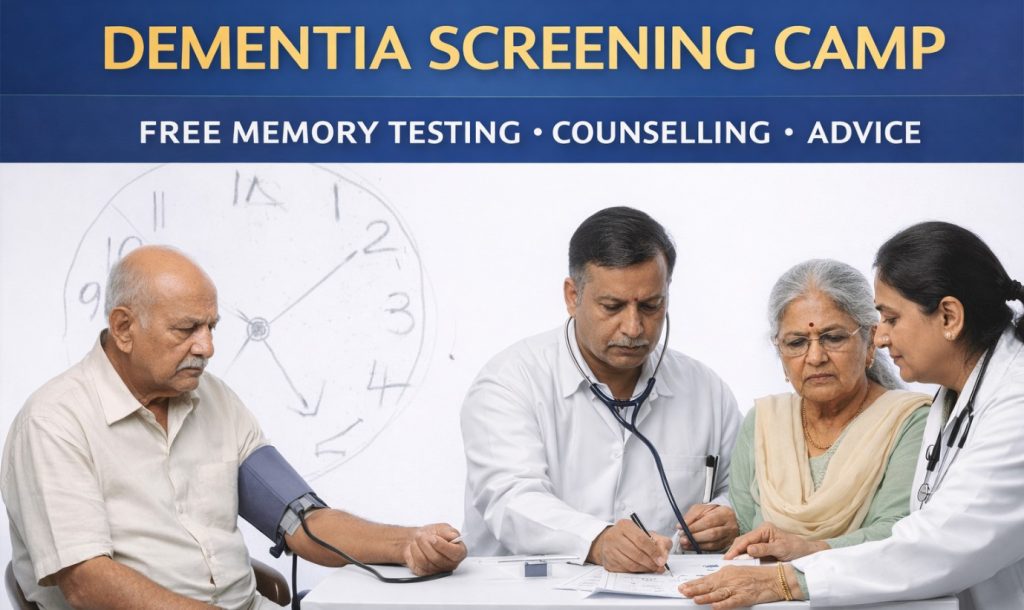
What Happens at the Screening Camps?
The camps will be conducted by trained personnel using validated screening tools. The process typically includes:
• A brief cognitive assessment
• Questions regarding daily functioning and recent changes.
• Input from a family member or caregiver, when available.
• Evaluation of non-communicable diseases including blood pressure and blood sugar
• Counselling and educational material on brain health and risk reduction.
The procedure is simple, respectful, and non-invasive. It usually takes a short amount of time.
Individuals who screen positive for possible memory impairment will be referred to appropriate centres for further workup and management. This may include evaluation by specialists in neurology, psychiatry, or geriatric medicine, along with laboratory tests and imaging where required.
A positive screening result does not mean a confirmed diagnosis of dementia. It indicates the need for further assessment.
Early Warning Signs of Dementia
D – Decline in Memory
Memory loss that disrupts daily life, especially forgetting recent events, appointments, or repeatedly asking the same questions. This is more than normal age-related forgetfulness.
E – Emotional Changes
Noticeable changes in mood or personality such as irritability, anxiety, depression, apathy, or suspiciousness. A calm person may become easily upset, or a sociable person may withdraw.
M – Misplacing Things
Frequently placing items in unusual locations and being unable to retrace steps to find them. Over time, the person may even accuse others of stealing.
E – Everyday Activities Affected
Difficulty performing familiar tasks at home, work, or in the community — such as managing finances, cooking routine meals, handling medications, or travelling to known places.
N – Naming Problems
New problems with speaking or writing, including difficulty finding the right words, calling objects by the wrong name, or stopping mid-conversation and not knowing how to continue.
T – Time and Place Disorientation
Confusion about dates, seasons, or the passage of time. The person may forget where they are or how they got there.
I – Impaired Judgment
Poor decision-making, reduced ability to plan or solve problems, financial misjudgments, neglect of personal hygiene, or falling prey to scams.
A – Apathy and Withdrawal
Loss of interest in hobbies, social activities, religious gatherings, or family functions. The person may avoid conversations because they find them difficult to follow.
Prevention: What Can Be Done?
Scientific evidence increasingly shows that dementia risk can be reduced. The latest update from the Lancet Commission has identified modifiable risk factors across the life course. These include:
• Limited early-life education
• Hearing loss
• Hypertension
• Diabetes
• Obesity
• Smoking
• Excess alcohol use
• Depression
• Physical inactivity
• Social isolation
• Traumatic brain injury
• Air pollution
• Untreated vision loss
• High LDL cholesterol
Addressing these risk factors through healthy lifestyle choices, cardiovascular risk control, sensory care (hearing and vision correction), social engagement, and mental stimulation can substantially reduce the likelihood of developing dementia.
Public health agencies globally, including the Centers for Disease Control and Prevention, have endorsed this life-course approach to brain health.
For Goa, integrating dementia prevention into existing non-communicable disease programmes, elderly welfare schemes, and community outreach services is an important step forward.
A Collective Responsibility
DEMENTIA affects not only the individual but also families, caregivers, and communities. Early screening empowers families with knowledge, provides clarity, and opens pathways for medical and social support.
The Department of Social Welfare’s initiative signals a strong commitment to elderly well-being in Goa. By identifying individuals early, referring them appropriately, and promoting prevention strategies, the programme aims to reduce suffering and improve quality of life.
Community participation is crucial. Families are encouraged not to dismiss persistent memory concerns as “just old age.” Seeking screening is a proactive and responsible step.
Conclusion
THE Dementia Screening Programme in Goa represents an important milestone in strengthening elderly care services. It combines awareness, early detection, referral, and prevention into a comprehensive public health response.
If you or a loved one is above 60 years of age and experiencing memory concerns — or if you simply wish to learn more about maintaining brain health — attending a screening camp could make a meaningful difference.
Early action can lead to better outcomes, informed planning, and improved quality of life.
 LETTER TO THE EDITOR FOR ISSUE DATED APRIL 11, 2026
 DOUBLE ENGINE GOA GOVERNMENT DANCES TO ADANI TUNES!
 WHO IS FIXING THE SKY? The billionaires, the cops in SUVs, and the missing trees! By Raaisa Lemos Vaz
 UPHEAVAL OF THE SUSEGAAD!By Sumaiya Khan
 THE POWER AND THE POLITICS OF MINING IN GOA!By Arvind Pinto
 DEVA VANI DHRUPAD: Alchemy of Sound, Silence and Sanctity!By Prema Viswanathan
 AT LEAST HOSPITALS CAN OFFER MILLET ROTI AND KICHADI!
 WHEN DO WE NEED PALLIATIVE CARE?
 GODI MEDIA TRUMPS TRUTH IN WAR & PEACE!
 World Health Day 2026: TOGETHER FOR HEALTH – STAND WITH SCIENCE! By Dr Amit Dias, MD
 FCRA AMENDMENT WILL ENABLE GOVT TO TAKE OVER PROPERTIES!By Olav Albuquerque
 WEEKEND UPDATESLETTERS TO THE EDITOR FOR ISSUE DATED APRIL 04, 2026
 REAL ESTATE BARONS OF GOA!
 THE SLOW VANISHING OF GOA’S GOLDEN BEACHES! By Raaisa Lemos Vaz
Goa is abuzz with excitement as vintage bike and car owners, users, collectors and fans are decking […]