Goa is abuzz with excitement as vintage bike and car owners, users, collectors and fans are decking […]
Old is Gold
October 4, 2016
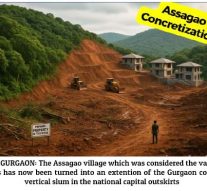
Dean D’Cruz fought the 2006 battle to scrap the RP2011 introduced by the then TCP minister Atanasio “Babush” Monserrate and was also associated with the formulation of Regional Plan 2021….
SURROUNDED by the Western Ghats to the east and the Arabian sea to its west, Goa’s geography consists of coastal landscapes, islands, wetlands, forests and the confluence of rivers — Mandovi, Zuari, Terekhol and Saleri, to become a biodiversity hotspot. These terrains, abundant in mineral resources and fertile alluvial soil, with their many fishing villages, inland settlements with expansive paddy fields, cashew and coconut plantations, had traditionally supported agriculture in becoming the backbone of the Goan economy.
In the 1970s, a boom in the tourism sector, also known as the “hippie trail,” started the shift from an agrarian economy to a tourism-driven one. Over the years, this type of tourism trend has led to a budding hospitality industry and a desirable quality of life, which attracted a lot of people from outside the state for second homes and investment opportunities.
Rising land values have turned homes into Airbnbs, and land is being purchased for luxury villas, gated communities, beachside apartments and countryside cottages, all of which has led to an explosive appreciation in property values and a slow degradation of natural ecosystems.
With a resident population of approximately 1.6 million slowly being priced out of their own land and an annual floating population of nearly 6 million, the tourism sector is witnessing growing external investment. How do we ensure that properties, opportunities and the natural ecology remain beneficial to the local population?
THERE are frameworks in place in the form of the Regional plan, the Goa Town & Country Planning (TCP) Act, Coastal Regulation Zone (CRZ) norms and national forest norms. These instruments were designed to ensure that development remains sustainable and village-centric. However, the introduction of legal mechanisms to convert agricultural and ecologically sensitive land against the planned framework, has led to the systematic depletion of fragile ecosystems for private gain.
Section 17(2) of the TCP Act was used to unilaterally change/correct the zoning of approximately 26.5 lakh sq mts of land without calling for suggestions and objections, which has been read down by the Bombay High Court. Alternatively, Section 39A was introduced and has come under public scrutiny. The real estate market is steadily overtaking what remains of Goa’s coasts, wetlands, and forests with minimal benefit to the public.
WHERE IS THE BALANCE
A BALANCE between development and environmental protection through effective governance must be established. For example, in 1961, to ensure that housing remained accessible to residents and shield the market from speculative international demand, Switzerland introduced the “Lex Koller.” The law restricts non-residents and non-Swiss citizens from purchasing residential real estate intended for secondary or holiday use, while permitting foreign investment in commercial property.
Section 118 of the Himachal Pradesh Tenancy and Land Reforms Act restricts the transfer of agricultural land to non-agriculturists (non-Himachalis) through sale, gift, lease, or mortgage. The Uttarakhand Bhoo Kanoon (Land Law Amendment Bill) further limits the purchase of agricultural land in 11 districts and caps residential plot sizes at 250 sq mts per family.
The reality of climate change is becoming undeniable, with visible rising temperatures, worsening air quality, loss of forest cover and the destruction of coastlines and marine ecosystems. This is a critical moment in time that demands our vigilance and collective responsibility. We should strive to maintain a balanced relationship between economic growth and environmental sustainability. Public institutions must be held accountable so that profits are not prioritised over the people and ecosystems they were established to protect.
 LETTER TO THE EDITOR FOR ISSUE DATED APRIL 11, 2026
 DOUBLE ENGINE GOA GOVERNMENT DANCES TO ADANI TUNES!
 WHO IS FIXING THE SKY? The billionaires, the cops in SUVs, and the missing trees! By Raaisa Lemos Vaz
 UPHEAVAL OF THE SUSEGAAD!By Sumaiya Khan
 THE POWER AND THE POLITICS OF MINING IN GOA!By Arvind Pinto
 DEVA VANI DHRUPAD: Alchemy of Sound, Silence and Sanctity!By Prema Viswanathan
 AT LEAST HOSPITALS CAN OFFER MILLET ROTI AND KICHADI!
 WHEN DO WE NEED PALLIATIVE CARE?
 GODI MEDIA TRUMPS TRUTH IN WAR & PEACE!
 World Health Day 2026: TOGETHER FOR HEALTH – STAND WITH SCIENCE! By Dr Amit Dias, MD
 FCRA AMENDMENT WILL ENABLE GOVT TO TAKE OVER PROPERTIES!By Olav Albuquerque
 WEEKEND UPDATESLETTERS TO THE EDITOR FOR ISSUE DATED APRIL 04, 2026
 REAL ESTATE BARONS OF GOA!
 THE SLOW VANISHING OF GOA’S GOLDEN BEACHES! By Raaisa Lemos Vaz
Goa is abuzz with excitement as vintage bike and car owners, users, collectors and fans are decking […]