Goa is abuzz with excitement as vintage bike and car owners, users, collectors and fans are decking […]
Old is Gold
October 4, 2016
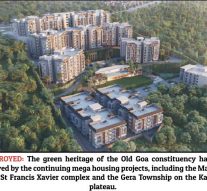
A detailed study of the conversions granted under the controversial article 39A of the TCP act show that over 1.7 lakh sq mtrs have been converted at the insistance of the real estate lobby from within an outside Goa. Goan Observer brings you the names of the builders who are destroying the heritage of Old Goa.
BEYOND the tips of its cathedrals and under the canopy of its trees, Old Goa’s landscape is being re-drawn — not by time but by strokes of a legislative pen. The driving force for this is Section 39A, of the Town & Country Planning Act, which was originally and ironically introduced as a “corrective” measure for zoning errors.
To average citizens Section 39A appears to look like a bureaucratic technicality but to developers, it is a “fast track” window. Introduced as an amendment to the TCP Act, it allows the government to alter the zoning of land parcels by citing “errors” in the existing regional plan or by arguing for “public interest.” It is a provision that has turned the state’s regional plan into a draft that can be edited plot by plot.
To understand the transformation, one must first decode the nomenclature of “Settlement.” When a developer moves land from Orchard (A2) or Natural Cover (NC) to a “Settlement” zone, they are essentially buying density.
S-1 (Urban Residential): The highest intensity, allowing for 100 FAR (Floor Area Ratio) and 15-meter heights. This is city-scale development.
S-2 (VP1 Settlement): Medium-high density (80 FAR, 12m height). This is where the majority of the Old Goa “mega-conversions” are occurring.
S-3 (VP2 Settlement): Rural residential (60 FAR, 9m height). While lower in density, it still replaces wildlife corridors with domestic infrastructure.
The data reveals that Section 39A is being used to jump from protected “Natural Cover” directly to S-2 Settlement, effectively granting urban building rights in the middle of orchards.
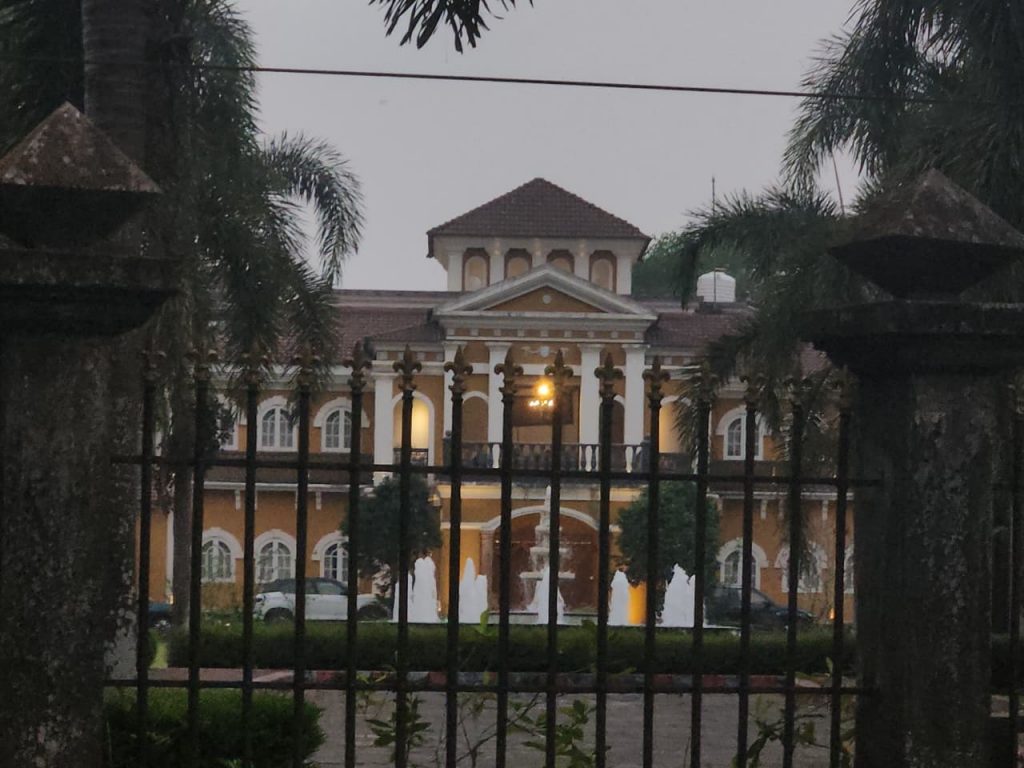
HABITAT FRAGMENTATION
FOR the residents of Cumbarjua, including Ella, Carambolim, Malar and Bainguinim, recent data reveals a disturbing pattern of habitat fragmentation, the erosion of our “green lungs” and a disappearing ecosystem. Ella and Bainguinim, have primarily emerged as a hotspot for re-zoning and the numbers are staggering! For instance, in the village of Ella alone, a single recommendation for Enigma Properties Pvt Ltd (Survey No. 68/1-C) saw the conversion of 1,64,015 square mts from Orchard to S-2 Settlement. This isn’t merely “incremental growth.” It is a tectonic shift.
The “Main Operating Base” of 39A lies in Ella. Ella, which serves as the physical and historical gateway to the Basilica of Bom Jesus, is seeing its traditional agricultural buffers dissolved and nowhere else can the repercussions of 39A be seen as it is seen here. This village has seen the single largest concentration of land conversions in the entire Cumbarjua constituency.
The name that looms largest in the data is Enigma Properties Pvt Ltd. This project on Survey No. 68/1-C represents a watershed moment in Goan planning. The conversion of 1,64,015 sq mts from orchard to a medium- density S-2 settlement. This is a scale of development that would typically require years of public consultation and environmental impact assessments. Alas, under 39A, it was fast tracked as a “map correction.”
Another 6,542 sq mts (Survey No. 65/3) and 39,481 sq mts (Survey No. 139/0) were re-zoned just down the road. Official TCP comments note the land is being converted specifically because it sits just outside the Archaeological Park bound around the church gated properties consisting of huge bungalows are “legally” well. This is called the “buffer zone” development. This “buffer zone” development is the cause of one too many persons’ cause of distress, most notably of Fr Patricio Fernandes, the Rector of The Basilica of Bom Jesus.
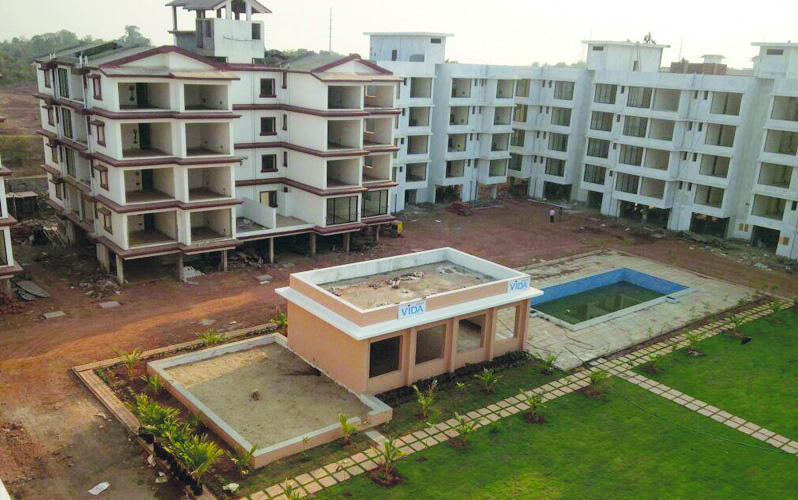
Fr Patricio has been one of the most consistent voices warning that these “spot-zoning” approvals are the “death warrants” for Old Goa’s UNESCO status and that we are witnessing the fragmentation of a sacred landscape. He has also mentioned before that when you allow a developer to build an urban colony in Ella, you aren’t just adding houses, you are inviting a level of traffic, waste, and noise that the Basilica’s 400-year-old foundations cannot withstand. He has also exclaimed that they have begged for a master plan for years, yet the only plan they have received is a plot-by-plot sell-off.
Fr Patricio’s statements are backed by data which also shows us that nearby Panelim, which is directly adjacent to the historic riverine entry to Old Goa, builders like Inorbit Malls India Pvt Ltd have successfully rezoned 23,497 square mts (Survey No. 13/1-B) and 16,839 square mts (Survey No. 12/1), moving land from Natural Cover to Settlement while promising to “maintain the heritage trail”, a concession the Rector views as dangerously vague. Not only this but the data also suggests that Section 39A is being used to facilitate “spot zoning,” where individual large-scale developers can bypass the comprehensive Regional Plan to create urban pockets in what were previously conservation zones.
In Bainguinim as well (Survey No. 17/1), 5,805 square mts of “Natural Cover” were swapped for building concrete blocks via S-2 Settlement. This density places immense pressure on the ancient drainage systems and the hydro-geological balance of the heritage site and also impacts our “green lungs.”
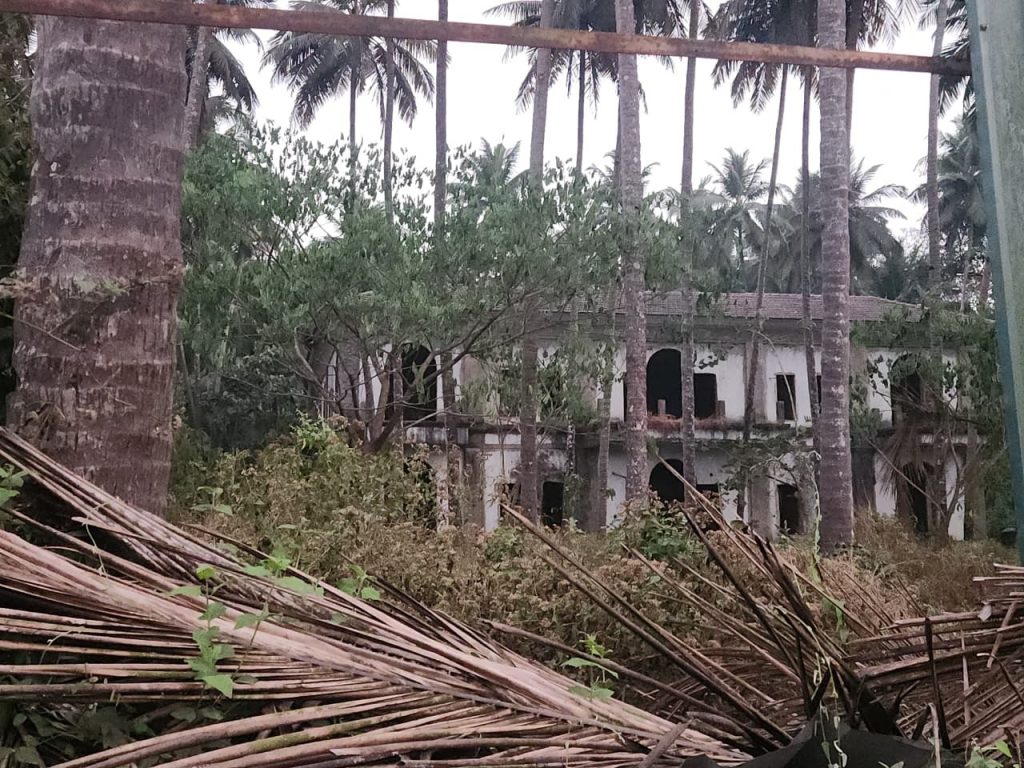
ENTER WATER SCARCITY
BEYOND the aesthetic and historical damage, the 39A conversions represent a severe threat to Goa’s water security. The villages of Old Goa sit on a complex hydrological system where orchards and agricultural fields act as natural sponges. They absorb the heavy monsoon rains and recharge the groundwater table that in turn feed the local wells.
When these 1.68 lakh sq mts in Se-Old Goa are paved over for S-2 settlements, the “sponge” is replaced by impermeable cement. The result is twofold: a catastrophic drop in the water table and an increase in flash flooding. Residents already report that wells that have remained full for generations are now drying up by mid-summer. By converting these green zones, the state is effectively manufacturing a permanent water crisis for the sake of temporary real estate rewards.
THE conversions in Carambolim and Malar are the most astonishing. These are not just “plots” but buffers for the Mandovi river and the wetlands of Carambolim. In Carambolim, orchards are being converted into S-3 settlements. Domestic runoff, light pollution, and the loss of traditional field-marsh filtration systems threaten the very biodiversity that defines these villages.
BEAUTIFUL DIVAR ISLAND
IF WE ferry over to Malar, located on the beautiful island of Divar, the data shows 2,650 sq mts (Survey No. 192/6) being recommended for conversion. On an island like Divar, where the ecosystem is extremely finite and delicate, every square meter of “orchard” lost to “settlement” represents a permanent break in the wildlife corridor and ecological devastation. These islands are the breathing lungs of the Mandovi estuary, and they are being choked slowly, by piecemeal re-zoning.
The transformation of these villages is not just ecological, it is deeply socio-economic. When land in Ella or Bainguinim is re-zoned to S-2, the land value skyrockets. While this may seem like a benefit for local landowners, it often leads to “displacement by design.” As luxury developments move in, the cost of living, property taxes, and basic services rise.
In late February 2026, following a massive public outcry and a hunger strike by local leaders, the Goa government announced that permissions under Section 39A would be kept “in abeyance.” But as activists and the rector point out — “abeyance” is not “abolishment.”
The data sheet shows that many of these conversions have already been gazetted. For instance, the Ella conversion for 1.64 lakh square mts was finalized in June 2025. Placing future permissions in abeyance does nothing to reverse the massive approvals already granted to projects like Enigma Properties. It may stop new applications, but it does nothing to reverse the nearly 6 million square mts already recommended for change across Goa.
ISLANDIZATION OF GOA
FOR the people of Old Goa, the structures in all of Cumbarjua, most notably Ella, are already a physical reality even if the law is currently on pause. What we are witnessing is the “islandization” of Goa — the creation of small, isolated pockets of greenery surrounded by dense, impermeable settlement. This fragmentation is the primary driver of biodiversity loss and local climate change. From a heritage perspective, we are turning a historic, globally significant precinct into just another high-end suburb. The move to “S-2” and “S-3” isn’t just a label, it is a mathematical license to build.
For instance S-2 (VP1 Settlement) allows for 80 FAR. On the Enigma Properties site, this translates to roughly 1.31 lakh square meters of total floor area and there is no provision in Section 39A to ensure that the roads, sewage lines, or water supply in a village like Ella can handle an “S-2” level of density. This is how a “high-end suburb” becomes an infrastructure nightmare.
PLEA FOR SOBRIETY
FR PATRICIO’S plea for a plan is ultimately a plea for sobriety. It is a plea to stop looking at Goa as a collection of survey numbers to be traded, and finally it is a plea to start looking at it as a living, breathing ecosystem that supports its history as well as its wildlife. The greenery left behind in places like Malar and Carambolim is too little to support the biodiversity that once thrived there. We are trading a living, breathing ecosystem for a series of gated communities.
The fight for Old Goa is not just about survey numbers or zoning codes. It is about a vision for the future. Do we want a Goa that is a collection of high-density S-2 enclaves, or do we want a Goa that honors its history, protects its water, and leaves its “green lungs” intact for the next generation? The road to Old Goa is narrow, but it is still leading to our souls. The greenery running through our veins. Whether that road ends in a heritage site or a high-end suburb is a choice we are making today. The question is no longer whether we can build in Old Goa. It is whether anything will be left of “Old” Goa once the builders are done with it.
 LETTERS TO THE EDITOR FOR THE ISSUE DATED MARCH 07, 2026
 39A DELHI BUILDER DRIVEN!
 THE MORIBUND STATE OF THE GOAN ECONOMY! BY Arvind Pinto
 NEW HPV VACCINE TARGETS YOUNG GIRLS!By Dr RG Wiseman Pinto
 GLOBAL WAR CLOSER TO GOA!By Olav Albuquerque
 IF IT’S GREEN MANGO SEASON…
 WITH THE AMI PANJEKAR PANEL!
 PRAMOD SAWANT SAYS BIG BOAT WON’T COME!
 SPLASH THE COLOURS! FILL UP YOUR PLATE! By Dr Amit Dias
 WEEKEND UPDATES
 LETTERS TO THE EDITOR FOR ISSUE DATED FEBRUARY 28, 2026
 BORKAR ENDS FAST, ST ANDRE CONVERSIONS SUSPENDED!
 GOA’S ECOLOGY DESTROYED BY 39A! By Dean D’Cruz
 A PARCHED PARADISE! By Raaisa Lemos Vaz
 KARAPUR LOCALS PROTEST RANE LAND DEAL!
Goa is abuzz with excitement as vintage bike and car owners, users, collectors and fans are decking […]