Goa is abuzz with excitement as vintage bike and car owners, users, collectors and fans are decking […]
Old is Gold
October 4, 2016
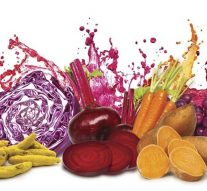
AS we celebrate Holi — the vibrant festival of colour — this week’s Mind, Body, Heart & Soul special offers some food for thought: the greater the natural variety of colours on your plate, the broader its nutritional spectrum. Inspired by this festival of hues, we invite readers to have meals that resemble a painter’s palette — featuring at least five naturally coloured foods. Drawing on nutritional science, we explore how embracing dietary diversity can help reduce the risk of conditions ranging from anaemia and cardiovascular disease to cognitive decline and Alzheimer’s disease
Why natural colour matters
PLANTS don’t just paint themselves to celebrate Holi — their pigments are survival tools. These colourful compounds shield plant tissues from ultraviolet radiation, neutralise oxidative stress, deter microbes, and attract pollinators. When we eat richly pigmented fruits and vegetables, we inherit many of these protective molecules — antioxidants, anti-inflammatory agents, and bioactive signaling compounds.
These substances help neutralise free radicals and reduce chronic inflammation, two biological processes linked to major non-communicable diseases. Diets abundant in natural plant pigments are associated with a lower risk of anaemia, cardiovascular diseases, certain cancers (including colorectal, breast, and prostate cancers), type 2 diabetes, age-related macular degeneration, cataracts, and even neurodegenerative disorders like Alzheimer’s disease.
By improving endothelial function, modulating lipid profiles, enhancing insulin sensitivity, and protecting DNA from oxidative damage, these compounds contribute to long-term cellular resilience.
Modern nutrition science classifies these pigments into families — carotenoids, flavonoids (including anthocyanins), betalains, chlorophylls, and organosulfur compounds — each with distinct chemical structures and well-studied physiological effects. In essence, every colour on your plate represents a different set of molecular defenders working quietly to reduce disease risk and promote healthy ageing.
In short: More natural colours in your plate = Wider health protection.
Yellow — Carotenoids (Turmeric, carrots, mango, pumpkin)
Chemistry: Carotenoids (β-carotene, lutein, zeaxanthin) are long chains of conjugated double bonds that absorb blue/green light and reflect yellow–orange.
Benefits: Antioxidant action, eye protection (lutein/zeaxanthin concentrate in the macula), immune support and potential reduction in chronic disease risk. Carotenoids also convert to vitamin A (retinol) in varying degrees, vital for vision and mucosal health.
Serve idea: A turmeric-spiced dal, carrot and pumpkin bhurta, and a mango salsa make a glorious yellow platter.
Blue / Purple — Anthocyanins (berries, purple cabbage, blue pea flower)
Chemistry: Anthocyanins are water-soluble flavonoids whose color shifts with acidity — from red (acidic) to purple/blue (neutral to alkaline). Their structures enable them to scavenge free radicals and modulate signaling pathways.
Benefits: Vascular protection, improved endothelial function, reduced inflammation, and emerging benefits for cognition and metabolic health. If you see a true blue food (butterfly-pea, some potatoes), give it a high-five — blue pigments are rare and powerful.
Serve idea: Blueberry raita, purple cabbage slaw, or a cooling butterfly-pea lemonade.
Red / Orange — Lycopene & more (tomato, red papaya, watermelon, red peppers)
Chemistry: Lycopene (a carotenoid) gives tomatoes and watermelons their red hue; other anthocyanins and betalains contribute too. These molecules are highly conjugated and lipophilic (fat-loving), so they’re absorbed better with healthy fats.
Benefits: Lycopene is linked to cardiometabolic benefits and may reduce oxidative damage; other red pigments often show anti-inflammatory and lipid-modulating effects.
Serve idea: Tomato-chili chutney with a drizzle of ghee, or watermelon and feta with mint.
Green — Chlorophylls (spinach, kale, green peas, coriander)
Chemistry: Chlorophyll contains a porphyrin ring with a central magnesium ion — the same aromatic system that makes blood red when iron sits in a similar ring. Chlorophyll and its derivative chlorophyllin show antioxidant potential and may support detoxification pathways.
Benefits: Green leafy veg are nutrient powerhouses (folate, K, fiber) and their pigments contribute to anti-inflammatory effects and overall metabolic health.
Serve idea: A bright palak sabzi, coriander-mint chutney, or a green lentil salad.
Deep Red / Magenta — Betalains (beetroot, prickly pear)
Chemistry: Betalains (betacyanins and betaxanthins) are nitrogen-containing pigments different from anthocyanins; they’re stable, vivid and biologically active.
Benefits: Antioxidant, anti-inflammatory and lipid-lowering effects have been reported in human and animal studies — beetroot juice also supports blood-pressure modulation via dietary nitrates.
White — Alliums, cauliflower, garlic, onions
Chemistry & benefits: “White” plant compounds like allicin (from garlic) and glucosinolates (in some pale brassicas) have antimicrobial and cardiometabolic effects. White doesn’t mean “nutrient-poor” — it can mean “sulfur-rich and potent.”
The “minimum five” rule: how to do it
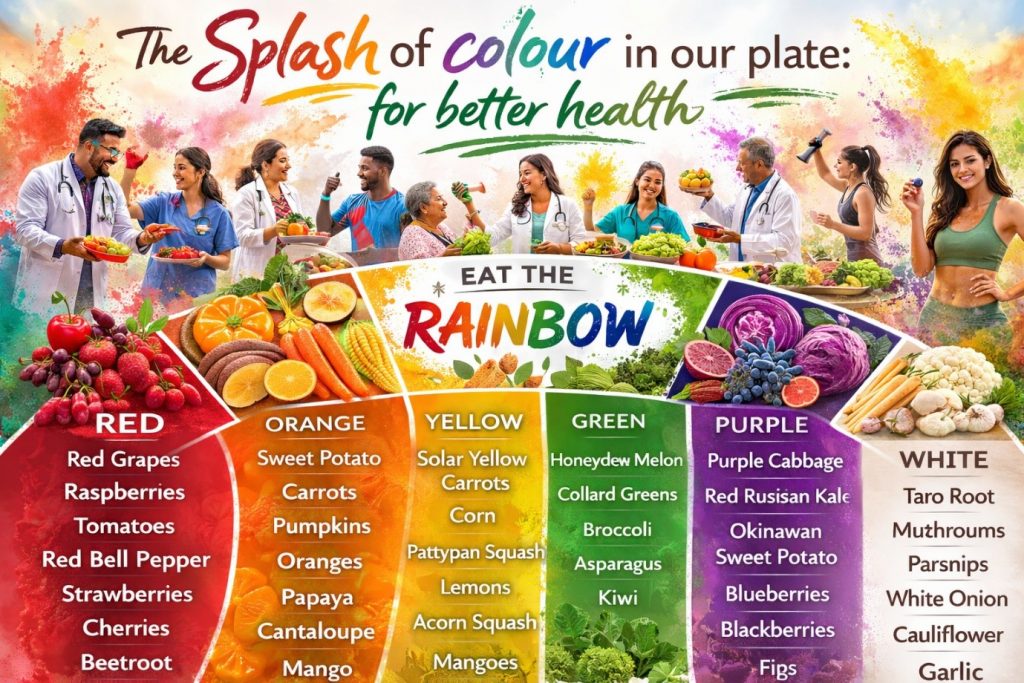
FOR a balanced Holi plate aim for at least five naturally coloured items across the palette: a green salad, a yellow dal, a red chutney, a blue/purple fruit, and a white/allium accompaniment — with healthy fat on the side to improve absorption of fat-soluble pigments. “Eat the rainbow” isn’t just pretty advice; it mixes phytochemical families to cover more protective mechanisms.
Refinement, ultra-processing and what gets lost
REFINED foods (white flours, polished rice, many packaged snacks) often lose fiber, vitamins and phytonutrients, and they can spike blood sugar — frequent intake is associated with cardiometabolic risk. Ultra-processed foods (UPFs) add emulsifiers, sweeteners and additives that correlate with worse health outcomes in multiple large observational studies. In short: shiny packaging ≠ colourful health.
Artificial colours: regulations and risks
NOT All colourants are created equal. In many jurisdictions, synthetic food colorants must be approved before use; regulators maintain lists and specifications (safety, permitted uses, and limits). The U.S. Food and Drug Administration (FDA) oversees colour additives and posts inventories and guidance for manufacturers. Recent regulatory moves (for example phasing out certain dyes) reflect ongoing safety reviews.
Health notes: while many approved synthetic dyes are considered safe at regulated levels, some have raised concerns (behavioural effects in children, allergic reactions, or carcinogenicity in older studies) — and regulators periodically re-assess the evidence. The safest rule for consumers: prefer natural pigments (fruit, veg, spices) over brightly coloured processed foods.
Artificial ripening: the bitter truth
SOME sellers use harmful chemicals (calcium carbide) to force ripening; this practice is banned in many countries because carbide may contain arsenic and phosphorous residues and is hazardous to handlers and consumers. Safer, approved ripening uses the plant hormone ethylene under controlled conditions — and regulators such as India’s FSSAI have issued guidance and prohibitions to protect consumers. (If in doubt, ripe aroma and even softening are better indicators than unnaturally uniform colour.)
Nutritive Colour tips: colour your plate wisely
The final splash: Colour is culture and science
HOLI teaches that colour brings joy — but the colours on your plate bring science. Natural pigments are not just cosmetic; they’re bioactive molecules that help us resist disease, protect vision, and keep our metabolism humming. This year, celebrate with the brightest, realest hues you can find. Your body will celebrate long after the powder has washed away.
 LETTERS TO THE EDITOR FOR THE ISSUE DATED MARCH 07, 2026
 AMKA NAKA ‘NEW’ GOA: Our heritage is under a hammer!By Raaisa Lemos Vaz
 39A DELHI BUILDER DRIVEN!
 THE MORIBUND STATE OF THE GOAN ECONOMY! BY Arvind Pinto
 NEW HPV VACCINE TARGETS YOUNG GIRLS!By Dr RG Wiseman Pinto
 GLOBAL WAR CLOSER TO GOA!By Olav Albuquerque
 IF IT’S GREEN MANGO SEASON…
 WITH THE AMI PANJEKAR PANEL!
 PRAMOD SAWANT SAYS BIG BOAT WON’T COME!
 WEEKEND UPDATES
 LETTERS TO THE EDITOR FOR ISSUE DATED FEBRUARY 28, 2026
 BORKAR ENDS FAST, ST ANDRE CONVERSIONS SUSPENDED!
 GOA’S ECOLOGY DESTROYED BY 39A! By Dean D’Cruz
 A PARCHED PARADISE! By Raaisa Lemos Vaz
 KARAPUR LOCALS PROTEST RANE LAND DEAL!
Goa is abuzz with excitement as vintage bike and car owners, users, collectors and fans are decking […]