Goa is abuzz with excitement as vintage bike and car owners, users, collectors and fans are decking […]
Old is Gold
October 4, 2016
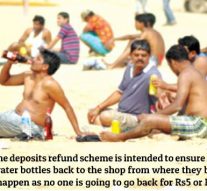
The Deposit Refund Scheme sounds like an ideal solution to tourists carrying liquor bottles to the beach and leaving them behind. In theory, all those who purchase anything in a plastic or glass bottle will get their deposit of Rs2 to Rs10 per bottle back. The ground reality is that it is a scam that will put a burden on the consumer for the benefit of a private company in Hyderabad.
THERE is a particular rhythm to governance in Goa, that those of us who have watched this circus long enough, can now predict with alarming accuracy. First comes the grand announcement, accompanied by glowing press releases and television sound bites about how this initiative will transform the state. Then comes the private entity quietly appointed as the sole beneficiary. Finally comes the public: They are asked to open their wallets and trust the process.
Take the Deposit Refund Scheme which is launching from April 1, 2026. It is akin to the latest symphony in a well-rehearsed opera and the date couldn’t be more poetic, because if you believe this is about environmental stewardship — you are the punch line.
Let us state the obvious upfront. This scheme is not a government gift. It is not even a government scheme in the traditional sense. It is a privately operated float system where every Goan consumer will pay an additional refundable deposit of Rs2 to Rs10 on every beverage container purchased, only to have their own money locked with a Hyderabad -based private agency called Recykal, while they jump through hoops to get it back.
The government has mandated this infrastructure to a private entity that will sell QR code stickers and control the entire recycling value chain. When news channels project this as Chief Minister Pramod Sawant’s welfare initiative they are either deliberately misleading you or they have not read the fine print. Possibly both.
The scheme sounds simple on paper: Pay deposit, return bottle, get money back. But the devil as always resides in the operational details that conveniently remain fuzzy weeks before launch. Tourists who constitute a significant chunk of Goa’s consumer base cannot claim refunds because the system assumes residency and bank account access.
Elderly Goans without smartphones face the prospect of navigating digital payments or forfeiting their deposits entirely. Damaged QR codes, which are inevitable in a state with humid and monsoon weather, plus rough handling, will mean only one thing. Forfeited deposits time and again.
And if you think the average person will drive to a designated center to collect back Rs5, you underestimate how valuable people’s time is and overestimate how much they trust this government with their money.
THE industry bodies representing the Brewers Association of India, the International Spirits and Wines Association of India and the Confederation of Indian Alcoholic Beverage Companies, have done the math we apparently were not meant to see. They warn that the current timeline is unrealistic and could cost the state exchequer over Rs100 crore in excise revenue losses. Production efficiency is projected to drop by 20% to 30% because existing applicator systems on production lines need reconfiguration for those fancy QR codes. With summer peak season approaching breweries have limited operational bandwidth to experiment. Yet the government pushes ahead.
Anthony De Sa, heading the DRS Administration Committee, claims breweries agreed to comply. The breweries say they demanded deferment until October. Somebody is lying and given the pattern of this government’s communication, it is not the industry representatives who have their production schedules and balance sheets at stake.
What makes this entire spectacle particularly galling is the selective amnesia about where our money has already gone. Remember when crores were paid to agencies including Recykal to install dustbins every 50 meters across Goa? Remember the cleaning machines, the infrastructure, the promises of a super spotless state? Where are they? The Comptroller and Auditor General in its report tabled January 2026 laid bare the reality of solid waste management in Goa. Urban Local Bodies did not prepare SWM plans despite notification of the State Policy. On average only 78% of collected waste was treated, the remainder dumped untreated, creating new dumpsites.
Margao Municipal Council had a five ton per day facility against 35 tons of waste collected daily. The Goa State Pollution Control Board failed to maintain comprehensive inventories or effectively implement e waste rules.
This is not a government that has earned the right to ask for more money or more patience.
The panchayats themselves are in the dark. Assagao Sarpanch Hanumant Naik admitted he was totally unaware of the government’s plan to install Reverse Vending Machines in every village. He pointed out that his panchayat is already grappling with routine waste management challenges and this would become an additional burden requiring dedicated personnel. Parra Sarpanch Daniel Lobo questioned the financial impact on citizens already reeling under inflation. Several rural panchayats have received no communication from their Block Development Officers about any of this. So while Chief Minister Dr Pramod Sawant poses for photo ops the ground level implementation machinery is either clueless or overwhelmed.
THEN there is the pattern that should concern every Goan old enough to remember promises made versus promises kept. The Building and Other Construction Workers Welfare Fund had collected Rs600 crore as of June 2025. Official data accessed by the “Times of India” revealed that not a single rupee had been spent on creating physical infrastructure or basic facilities for construction workers. Not one rupee on crèches, canteens, rest rooms, drinking water health camps or temporary accommodation as mandated by law. The CAG audit found that social security schemes were poorly implemented, beneficiary numbers were abysmally low, and key decisions including setting up transit sheds and awareness campaigns were simply not implemented. Rs600 crore rupees sitting idle while workers wait.
The education sector tells a similar story. The education complex at Davorlim was announced over a decade ago. Educationists now say it is a challenge for the government to complete even 5% of the announcements made in the recent budget. Infrastructure like laboratories and playgrounds are severely lacking in schools where the National Education Policy is being implemented. Interest free loans for higher education have not been provided for years leaving students to borrow from family and friends. Announcements sound good but time bound implementation remains a concept this government treats as optional.
The Congress recently accused the BJP government of a Rs304 rupee scam alleging public funds were misappropriated and contracts awarded to private entities without competitive bidding. Projects under the Smart Water Supply IoT initiative Public Works Department contracts highway consultancy agreements all awarded on nomination basis bypassing every rule in the procurement manual. Whether you believe the political accusation or not the pattern of private entities benefiting from public mandates is consistent enough to demand scrutiny.
SO here we are with the Deposit Refund Scheme. Another loud announcement, another private beneficiary, another burden on the public kitty. The scheme requires consumers to pay a refundable deposit on bottles and cans which can be reclaimed upon return of packaging at designated collection points. Sanjit Padhi, CEO of ISWAI, has already pointed out that the proposed deployment of 300 return vending machines is grossly inadequate to manage the volume of bottles recycled monthly in Goa. The flat Rs10 deposit on every bottle regardless of retail price is impractical. There is no clarity on bottle recovery pricing payment timelines turnaround rates or commercial terms. The entire supply chain from manufacturers to distributors to retailers operates in uncertainty.
What the government calls environmental stewardship looks remarkably like an interest free loan from the people of Goa to a private system. You pay upfront, your money sits with Recykal, and they earn whatever float and interest accrues on millions of transactions. If you fail to return the bottle with an undamaged QR code within the specified window your money is forfeited. If you are a tourist you will likely never see it again. If you are elderly and digitally excluded you navigate a system not designed for you. This is not a gift. This is not even governance. This is financial engineering dressed in green clothing.
Meanwhile Mapusa Municipal Council faces severe waste management crises with labourers not resuming work and five plastic collection centers set up with much fanfare now turned into garbage dumps themselves. Residents point to civic inefficiency while the municipality blames migrant workers on leave. The centers were an absolute waste of taxpayers money, according to a local resident. Inaugurated with much fanfare collection happened for two months and then silence. Does that trajectory sound familiar?
The Deposit Refund Scheme will launch April 1, 2026 because the government insists on a deadline that every stakeholder except the private beneficiary has called impossible. The industry has requested deferment until October to allow meaningful consultation and system readiness. The Brewers Association Director General warned that current timelines risk causing significant supply chain disruptions and an undercooked economic disruption rather than genuine environmental impact. The DRS Administration Committee formed a joint task force to address issues but that requires time the government refuses to grant.
So what is the rush? Why force a scheme with operational gaps inadequate infrastructure and zero public awareness when the stated goal is environmental protection? The answer probably lies in contracts signed and timelines committed between the government and Recykal. The public was not party to those negotiations but the public will bear the cost.
We have Rs600 crore sitting unused while construction workers wait for basic amenities. We have education infrastructure promised for over a decade still unbuilt. We have waste management contracts awarded with great fanfare that produced nothing but dumpsites. We have contracts awarded on nomination basis bypassing competitive bidding to what the Congress calls “Mini Adanis” benefiting from government patronage. And now we have a Deposit Refund Scheme that asks every Goan consumer to finance the recycling system with their own money locked in every purchase.
The scheme may be projected as a government initiative for public welfare but the fine print reveals the truth. It is your money, not a gift. It is a private system, not a public service. It is another entry in a long list of announcements that sound good on television and collapse on contact with reality.
Goa does not need more schemes that make citizens pay twice once in taxes and once in deposits. Goa needs the dustbins which were promised. Goa needs the cleaning machines that were supposedly purchased. Goa needs the basic waste management infrastructure that crores of rupees were meant to deliver. Goa needs accountability for where that money went before being asked to lock more money in a system designed by private consultants for private profit.
The Deposit Refund Scheme is not sensible. It is not feasible. It is not backed by clarity or preparation. It is the latest chapter in a governing philosophy that treats public money as venture capital for private enterprise and treats citizens as ATM machines that dispense both cash and patience. The ATM is running low on both.
As April 1 approaches ask yourself who benefits from your Rs2 to Rs10? Ask yourself where the dustbins went which EcoStan Infra was paid crores for? Ask yourself whether you trust this government with your money locked in a QR code that might fade in the rain? The answers will tell you everything you need to know about whether this is environmental stewardship or just another beautifully branded withdrawal from your pocket.
(MQM New network)
 LETTERS TO THE EDITOR FOR ISSUE DATED MARCH 14, 2026
 TOWERING INFERNOS OF GOA COMING!By Raaisa Lemos Vaz
 MIRABAG GIFTED TO ADANI!
 THE COST OF GST COMPLIANCE IN INDIA!By Arvind Pinto
 EATING FOR SUMMER TIME
 ACUTE SHORTAGE OF COMMERCIAL AND DOMESTIC LPG FORCES RESTAURANTS TO CLOSE
 NO KIDDING ABOUT YOUR KIDNEYS Healthy Kidneys, Healthy World! By Dr Amit Dias
 WEEKEND UPDATES
 LETTERS TO THE EDITOR FOR THE ISSUE DATED MARCH 07, 2026
 AMKA NAKA ‘NEW’ GOA: Our heritage is under a hammer!By Raaisa Lemos Vaz
 39A DELHI BUILDER DRIVEN!
 THE MORIBUND STATE OF THE GOAN ECONOMY! BY Arvind Pinto
 NEW HPV VACCINE TARGETS YOUNG GIRLS!By Dr RG Wiseman Pinto
 GLOBAL WAR CLOSER TO GOA!By Olav Albuquerque
 IF IT’S GREEN MANGO SEASON…
Goa is abuzz with excitement as vintage bike and car owners, users, collectors and fans are decking […]