Goa is abuzz with excitement as vintage bike and car owners, users, collectors and fans are decking […]
Old is Gold
October 4, 2016
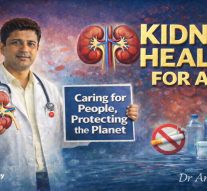
“No Kidding About Your Kidneys!” says Dr Amit Dias, as he shares fascinating facts about kidney health, cautions about foods to avoid in kidney disease, dispels common myths, and highlights simple yet powerful steps to prevent kidney disease and protect these vital organs for life.
World Kidney Day is observed every year on March 12. It is a global campaign to raise awareness about the importance of our kidneys and to reduce the impact of kidney disease worldwide. Chronic Kidney Disease (CKD) is a major and growing public health problem, affecting 1 in 10 people globally. Alarmingly, CKD is often silent in its early stages and may go unnoticed until advanced damage has occurred.
Beyond individual suffering, kidney disease places a heavy burden on families, health systems, and the environment. Dialysis and transplantation, while life-saving, are resource-intensive therapies. This year’s theme — “Caring for People, Protecting the Planet”– highlights the need to integrate patient care with environmental responsibility.
Understanding Kidney Diseases
Kidney disorders are not limited to one condition. They include:
• Chronic Kidney Disease (CKD) – Progressive loss of kidney function over months to years, often due to diabetes and hypertension.
• Acute Kidney Injury (AKI) – Sudden decline in kidney function due to infections, dehydration, toxins, or medications.
• Glomerulonephritis – Inflammation of the kidney’s filtering units.
• Hereditary Kidney Diseases – Such as polycystic kidney disease.
• Obstructive Uropathy – Kidney damage due to urinary obstruction (stones, prostate enlargement).
• Environment-related and Occupational Nephropathies – Linked to heat stress, dehydration, agrochemicals, heavy metals, and water quality concerns.
What is Chronic Kidney Disease?
AS mentioned above it is a progressive and chronic condition. CKD is defined as abnormalities of kidney structure or function lasting more than 3 months, with implications for health. It increases the risk of:
• Cardiovascular disease
• Stroke
• Anemia
• Bone disease
• Kidney failure requiring dialysis or transplantation
High-risk groups include people with:
• Diabetes
• Hypertension
• Cardiovascular disease
• Obesity
• Family history of kidney disease
Simple blood tests (serum creatinine, eGFR) and urine tests (albumin) can detect early CKD.
Foods to avoid in kidney disease
DIETARY modification is central to CKD management. Patients should avoid:
1️ High Sodium Foods
• Pickles, papad, salted snacks
• Processed meats
• Instant soups and noodles
• Bakery products
Excess sodium worsens hypertension and fluid retention.
2 High Potassium Foods (in advanced CKD)
• Bananas
• Oranges
• Coconut water
• Potatoes
• Tomatoes
High potassium may cause dangerous heart rhythm disturbances.
3️ High Phosphorus Foods
• Processed cheese
• Cola beverages
• Packaged foods with phosphate additives
Leads to bone disease and vascular calcification.
4️ Excess Protein (in advanced CKD)
• Red meat
• Protein supplements
Increases workload on damaged kidneys.
5️ Sugary and Ultra-processed Foods
• Increase risk of diabetes and obesity.
Dietary advice must always be individualized under medical supervision.
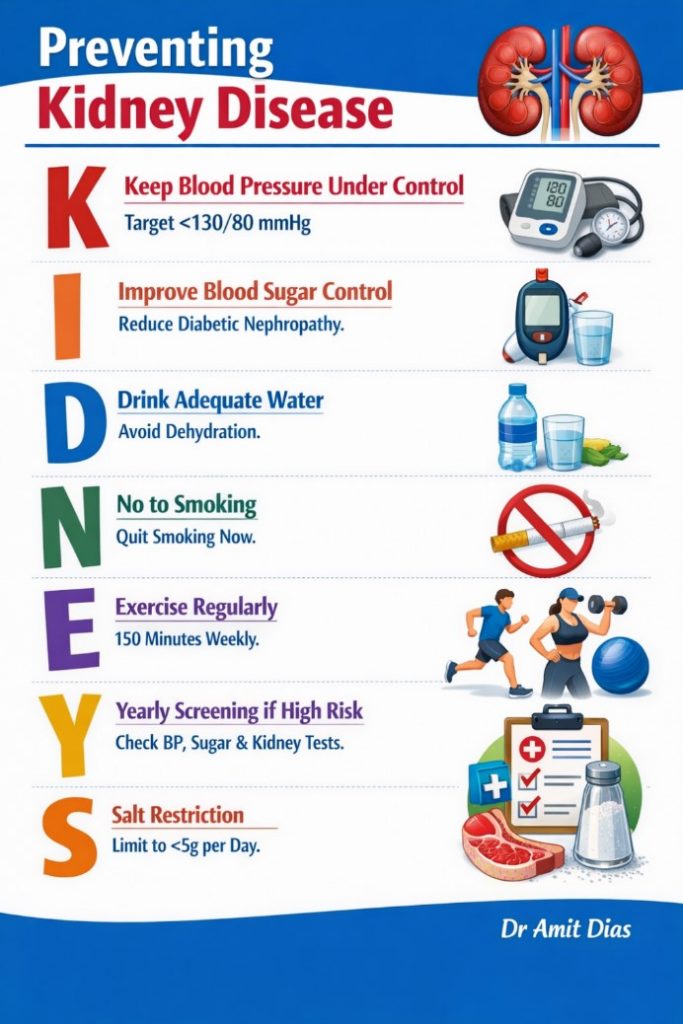
Preventing Kidney Disease
K – Keep Blood Pressure Under Control
Target <130/80 mmHg (as per clinical guidance).
I – Improve Blood Sugar Control
Strict glycemic control reduces diabetic nephropathy.
D – Drink Adequate Water
Avoid dehydration, especially in hot climates.
N – No to Nephrotoxic agents- Smoking, drugs
Smoking accelerates kidney damage and cardiovascular risk. Certain pain killers can cause kidney damage- consult your doctor.
E – Exercise Regularly
At least 150 minutes of moderate physical activity weekly.
Y – Yearly Screening if High Risk
Check blood pressure, blood sugar, serum creatinine, and urine albumin.
S – Salt Restriction
Limit sodium intake to <5 grams of salt per day.
Kidneys and the environment
Emerging global evidence suggests that environmental factors can influence kidney disorders. Heat stress, recurrent dehydration, air pollution, exposure to heavy metals, and agrochemicals have been associated with kidney damage in several regions worldwide.
Dialysis is environmentally intensive. A single hemodialysis session may have a carbon footprint comparable to driving a car nearly 240 km. Sustainable innovations and energy-efficient machines are crucial to align kidney care with environmental responsibility.
In Goa, a higher prevalence of renal disorders has been observed in Canacona taluka, which warrants further systematic investigation and research. Understanding possible environmental, occupational, lifestyle, and genetic factors is essential before drawing conclusions. Continued surveillance and scientific studies will help guide preventive and public health interventions.
Myths About Kidney Disease
Myth 1: Kidney disease always causes pain.
Fact: Early CKD is usually silent.
Myth 2: Only elderly people get kidney disease.
Fact: It can affect all ages, especially people with diabetes and hypertension.
Myth 3: Drinking lots of water can cure kidney disease.
Fact: Hydration helps prevention but cannot reverse established CKD.
Myth 4: Dialysis cures kidney disease.
Fact: Dialysis replaces some kidney functions but does not cure CKD.
Myth 5: Herbal remedies are always safe for kidneys.
Fact: Many herbal products can be nephrotoxic.
Things to do:
To build a healthier and more equitable future:
• Prioritize early detection and screening.
• Spread awareness on kidney disease
• Expand access to transplantation.
• Promote sustainable dialysis practices.
• Integrate environmental considerations into kidney care.
• Strengthen public awareness and policy commitment.
Kidney health is not just a medical issue — it is a social, economic, and environmental priority. Let’s join hands and prevent kidney disease and spread awareness.
 LETTERS TO THE EDITOR FOR ISSUE DATED MARCH 14, 2026
 TOWERING INFERNOS OF GOA COMING!By Raaisa Lemos Vaz
 MIRABAG GIFTED TO ADANI!
 DEPOSITS REFUND SCAM!WHO BENEFITS FROM THE RS 10.. By Misbah Quadri
 THE COST OF GST COMPLIANCE IN INDIA!By Arvind Pinto
 EATING FOR SUMMER TIME
 ACUTE SHORTAGE OF COMMERCIAL AND DOMESTIC LPG FORCES RESTAURANTS TO CLOSE
 WEEKEND UPDATES
 LETTERS TO THE EDITOR FOR THE ISSUE DATED MARCH 07, 2026
 AMKA NAKA ‘NEW’ GOA: Our heritage is under a hammer!By Raaisa Lemos Vaz
 39A DELHI BUILDER DRIVEN!
 THE MORIBUND STATE OF THE GOAN ECONOMY! BY Arvind Pinto
 NEW HPV VACCINE TARGETS YOUNG GIRLS!By Dr RG Wiseman Pinto
 GLOBAL WAR CLOSER TO GOA!By Olav Albuquerque
 IF IT’S GREEN MANGO SEASON…
Goa is abuzz with excitement as vintage bike and car owners, users, collectors and fans are decking […]