Goa is abuzz with excitement as vintage bike and car owners, users, collectors and fans are decking […]
Old is Gold
October 4, 2016
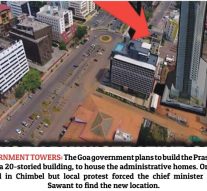
ALONG the serene coast of Anjuna and lush hinterlands of Socorro, an environmental real-estate storm is brewing. As of January 2025, a massive accumulation of land data has revealed a startling trend in Goa’s urban planning: the systematic granting of “Additional FAR” (Floor Area Ratio) that pushes total development potential to a staggering 80 to 300% or more – with the horrifying result that many of our lovely old homes will be surrounded by 10+ storied buildings towering above them on all sides.
This data serves as the backbone of a high-stakes legal challenge by the Goa Foundation, with the next crucial hearing scheduled for April 15, 2026. At the heart of this battle is the concept of Goan Asmitai, our identity as Goans; a sense of belonging tied to the land, the unique architecture of our villages, and a sustainable way of life that is now being buried under layers of concrete.
The Annexure 6 petition details numerous projects where the Town & Country Planning (TCP) Board has sanctioned “New Total FAR” values reaching absurd numbers like 300.00%! Under standard building regulation rules, FAR is the ratio of a building’s total floor area to the size of the land. A 200% FAR effectively allows a developer to build twice the square footage of the actual plot area and anything above that effectively signs us up for the wrecking of our ancestral lands and along with the erosion of our identity or asmitai. An entire peaceful way of living with our land will be gone with the wind.
The key applicants granted this significant capacity all over Goa include Wilfred Marius D’souza and Akhil Gupta in Calangute gaining total FAR of 200.00.
Srichand Shamandas Aswari in Anjuna has been granted an additional FAR of 140.00 totalling 200.00. Agnelo Nicholas Fernandes possessing multiple plots reached a total FAR of 200.00 and M/s PKM Project (P) Ltd has been granted a total FAR of 200.00 in Candolim.
AKMB Infra LLP in Saligao has been granted an additional FAR of 140.00 totalling 200.00.
Tahir Vasanali Isani in Socorro has been granted an additional FAR of 140.00 totalling 200.00.
Royal Builders in Canacona have multiple projects reaching a total of 200.00.
Manik T Shirodkar (Hotel Satyaheera) in Mapusa has been granted total FAR of 300.00!
And many more such examples have got their dizzying FAR without any understandable rhyme or reason. What this kind of FAR generosity will do to the existing homestead around about here for years and years is anyone’s guess. They will be dwarfed out of existence maybe. Old Goenkars may cry their eyes out come lately new residents may smile. The data also reveals a concentrated surge in the Panaji-Taleigao corridor where the cumulative effect of these grants, threaten to erase the traditional character of capital Panjim. In these areas, FAR is frequently pushed to 300.00 with heights scaling up to 40.00m. The most prominent applicants in this urban epicentre are:
M/s Caculo Enclave Co-op Housing Society in Panjim who are granted a total FAR of 300.00 with a height of 42.00m.
Swapneel Nachiaolcar/ M/s. Priority Constructions in Taleigao possess multiple projects with a total FAR of 300.00 and heights of 40.00m.
India Ocean World Pvt Ltd in Taleigao reaches a total FAR of 300.00 with a height of 40.00m.
Vanarai Co-operative Housing Society in Panaji Cited as C-1 (spl) in ODP2021 with a total FAR of 300.00 and height of 40.00m
Many more applicants not mentioned have contributed to making the GRAND total of Panaji a whopping 9768.79!! Keep in mind these are only the applicants who have crossed 200 total FAR. Taleigao as well is home to 10+ storied infernos with a staggering total of 6270.69 FAR! Mostly contributed by Rajdeep Builders.This “Urban Epicenter” serves as a warning for the rest of the state. When FAR reaches 300%, the building regulation rules designed to protect the “Goan” scale of the capital are essentially discarded in favor of vertical city sprawl. Who is going to live in these vertical skyscrapers when there is no commensurate infrastructure in place of water, power, transportation, services? Or will all that come with the magic of a wand, whose wand?
We must ask some important questions:
What is the ecological toll our Goa must bear?
The most immediate concern for these massive residential complexes and buildings is the depletion of Goa’s water table all around. Our Goan identity is inextricably linked to our natural springs and wells which have sustained Goan families for generations.
Hydrological Pressure: Large-scale projects, such as those by M/s Kamat Construction (Taleigao) covering 52,513 sq mts at 300% FAR, place a staggering demand on local aquifers, how many are still left, anyone knows and would like to tell us?
Borewell Dependency: These mega-complexes often turn to deep bore wells, draining the traditional open wells of neighbouring villagers and causing a direct conflict with the local community’s first right to water surely.
Loss of Hill Cover: The permissions often coincide with “hill cutting” — where natural topsoil acts as a water sponge, if this goes to accommodate massive foundations, it will lead go rapid runoff rather than recharge.
Saltwater Ingress: As the freshwater lens is depleted by high-density pumping, saltwater from Goan estuaries will continue to seep in more and more into the ground landwards and permanently ruining agricultural soil and drinking water.
Infrastructure Collapse: Goan villages designed for small populations are now struggling with sewage and traffic that the narrow roads cannot support, fracturing the peaceful communal life that defines Goa’s hitherto happy culture.

Where does the money go?
A major point in the Goa Foundation case is the status of developed buildings and the transparency of the “Premium FAR” fees.
If the court finds these FAR grants were illegal, already-constructed floors could be declared unauthorized, placing Occupancy Certificates at risk.
Buyers face a “non-compliant” status, plummeting resale values, and potential refusal of home loans.
Developers pay heavy fees for “Additional FAR” to the state. However, in many Goan villages, this money does not translate into better roads or power grids, which fail under the weight of thousands of new inhabitants.
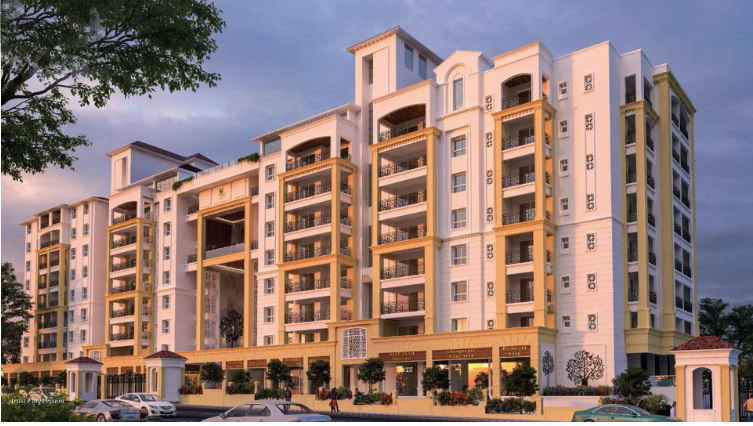
What happens to the people who have invested in these buildings? What happens to their hard earned life’s money?
Across Goan villages, from Moira to Nagoa, the skyline is changing. Heights that were traditionally 9.00m are being pushed to 15.00m, 21.00m, and beyond. These are not just numbers; it is the loss of sunlight for a neighbour’s kitchen garden, the blocking of a breeze that once cooled a balcao, and the silencing of the birdlife that thrives on low-slung green landscape canopies.
As the hearing on April 15, 2026 approaches, all the data serves as a startling reminder of what is at stake. Who will protect our dearly beloved asmitai and the biodiversity of our villages? Or are we just going to allow Goa to become a collection of high-density high-rise skyscraper colonies where all history and identity will be buried under 200% FAR?
 LETTERS TO THE EDITOR FOR ISSUE DATED MARCH 14, 2026
 MIRABAG GIFTED TO ADANI!
 DEPOSITS REFUND SCAM!WHO BENEFITS FROM THE RS 10.. By Misbah Quadri
 THE COST OF GST COMPLIANCE IN INDIA!By Arvind Pinto
 EATING FOR SUMMER TIME
 ACUTE SHORTAGE OF COMMERCIAL AND DOMESTIC LPG FORCES RESTAURANTS TO CLOSE
 NO KIDDING ABOUT YOUR KIDNEYS Healthy Kidneys, Healthy World! By Dr Amit Dias
 WEEKEND UPDATES
 LETTERS TO THE EDITOR FOR THE ISSUE DATED MARCH 07, 2026
 AMKA NAKA ‘NEW’ GOA: Our heritage is under a hammer!By Raaisa Lemos Vaz
 39A DELHI BUILDER DRIVEN!
 THE MORIBUND STATE OF THE GOAN ECONOMY! BY Arvind Pinto
 NEW HPV VACCINE TARGETS YOUNG GIRLS!By Dr RG Wiseman Pinto
 GLOBAL WAR CLOSER TO GOA!By Olav Albuquerque
 IF IT’S GREEN MANGO SEASON…
Goa is abuzz with excitement as vintage bike and car owners, users, collectors and fans are decking […]