Goa is abuzz with excitement as vintage bike and car owners, users, collectors and fans are decking […]
Old is Gold
October 4, 2016
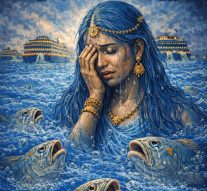
The half-a-dozen casino vessels parked permanently in the river Mandovi are suffocating the river
FOR centuries the Mandovi River has been the lifeline of Goa’s identity, its aquatic fauna, mangroves and birds. Its waters have carried the tales of dynasties and the livelihoods of thousands of fishing families who call its banks their home. Flowing from the Sahyadri Ghats to the Arabian Sea, the Mandovi is more than just a river, it is a sacred ecological waterway corridor. Yet today, this silver lifeline is being strangled. As the neon lights of Panaji’s offshore casinos — Deltin Royale, Deltin Jaqk, Majestic Pride, Big Daddy, and the new Delta Corp mega-vessel shimmer on the surface, they mask a grim reality of administrative failure, systemic pollution, fecal contamination and a microbial crisis that has turned the river into a stinking public health hazard.
The most damning evidence of the river’s decline comes directly from the Goa State Pollution Control Board (GSPCB). In data tabled during the March 2026 session of the Goa Legislative Assembly, it was revealed that fecal coliform levels in the Mandovi have exceeded permissible limits every single month since 2022, the permissible limit for fecal coliform being 100 or less MPN (Most Probable Number).
While the Central Pollution Control Board (CPCB) technically removed the Mandovi from its “Priority IV” polluted river list in September 2025 citing improvements in heavy metal concentrations like zinc and iron, this “improvement” is a dangerous half-truth. The microbial reality is catastrophic. In peak monitoring periods, such as July and December 2024, the fecal coliform count reached a staggering 2,300 MPN/100ml!
The waters surrounding the casino hub are currently 23 times more contaminated than what is considered safe for human contact. This “microbial soup” is a direct result of untreated or partially treated sewage entering the ecosystem, turning a historic river into what activists describe as an “open sewer” for the elite.
The government maintains that offshore casinos follow strict protocols, using “night soil tankers” to transport sewage to Treatment Plants (STPs) at Patto and Tonca. However, local activists, led by former CCP councillor Patricia Pinto, have exposed massive discrepancies that suggest these logs are far from accurate.
Recently during a public awareness meeting of the “Ponjekars Against Casinos” group in February 2026, Pinto brought forward documentation that shocked the capital. Records for a single casino operator in January 2025 showed a reported biodegradable waste output of 850 kg. However, the actual waste that arrived at the Corporation of the City of Panaji (CCP) facility from that same operator was 39,890 kg! This 47-fold discrepancy raises a petrifying question: If the solid waste reporting is this inaccurate, what is the true volume of liquid sewage being generated by these mini floating cities that house thousands of players and staff 24/7? The sheer volume of waste — nearly 40 tons from one ship in a single month, highlights an infrastructure strain that the narrow streets of Panaji and its limited Sewage Treatment Plants were never designed to handle.
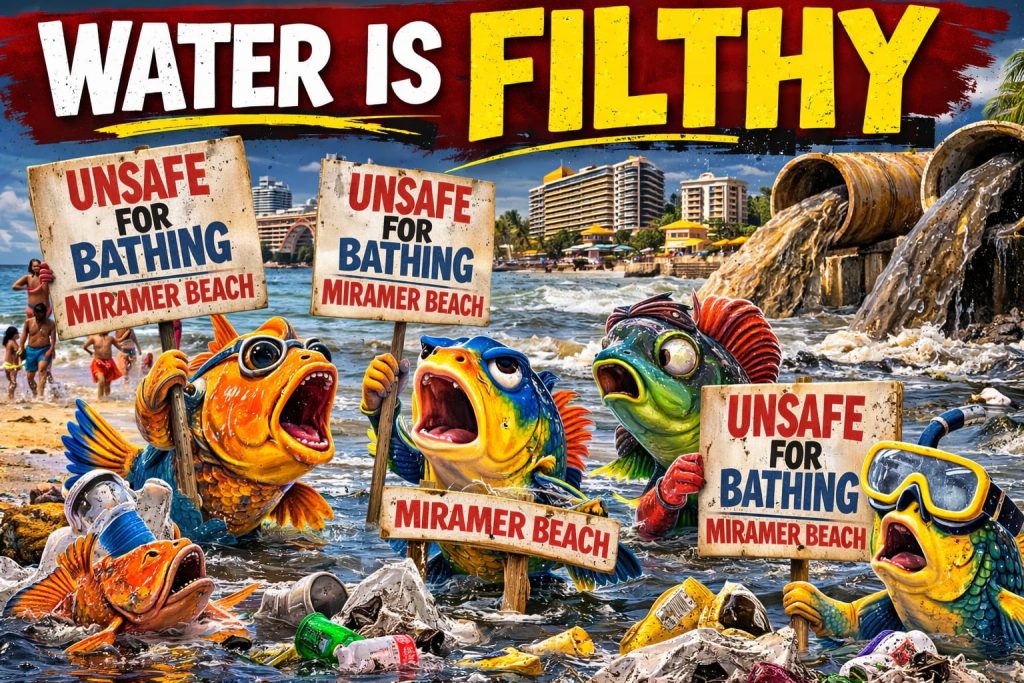
This environmental crisis has not gone unnoticed and has invited a barrage of protests and social movements. A notable one being the protest headed by Sabrina Martins, a veteran human rights activist and educator, who has emerged as a central figure in the resistance. Leading the ‘Ponnjekars Against Casinos” banner Martins has organized massive signature campaigns and public rallies to demand the removal of casinos from the river.
During a high-stakes protest at the CCP in February 2026, Martins confronted authorities over the arrival of a new 112-meter-long, 30-meter-high casino vessel by Delta Corp. This behemoth, which replaces the smaller M.V. Royale Floatel, has a capacity of over 2,000 people- more than all five existing offshore casinos combined.
“We are not just fighting for a cleaner river; we are fighting for the soul of our city,” Martins stated during a press briefing. “The government is turning our heritage capital into a ‘sin city,’ where the health of residents is sacrificed for gambling revenue. This new vessel is bigger than most buildings in Panaji. Where will the waste go? How will our narrow roads handle the traffic?”
Martins and her team have also highlighted the illegal discharge of sewage into the St Inez Creek, a vital tributary of the Mandovi. Citizens have also captured video evidence of night soil tankers discharging raw sewage directly into the creek, which then flows straight into the Mandovi, bypassing any formal treatment.
The Mandovi is not just a commercial corridor, it is a complex estuarine ecosystem. The constant presence and operation of these massive casino vessels have a detrimental impact on the once rich and very much alive flora and fauna of marine linked with riverine biodiversity.
 LETTER TO THE EDITOR FOR THE ISSUE DATED MARCH 21, 2026
 LOOK BACK IN ANGER, LOOK AHEAD WITH RESOLVE!By Gautam Patel
 GARDEN SUBURB TO MONSTER TOWERS…Chembur then and now!
 PROTESTS PART OF GOAN DNA!
 `FISH CURRY AND RICE’ FOR GOANS
 OF IT IS GUDI PADWA…
 MIRABAG DAM WORK HALTED!
 THE WAR AGAINST TB Yes, we can end TB… By Dr Amit Dias
 70 ILLEGAL STRUCTURES USURP PRIME BEACH SPOTS FOR ILLICIT AIMS!By Dr Olav Albuquerque
 WEEKEND UPDATES
 LETTERS TO THE EDITOR FOR ISSUE DATED MARCH 14, 2026
 TOWERING INFERNOS OF GOA COMING!By Raaisa Lemos Vaz
 MIRABAG GIFTED TO ADANI!
 DEPOSITS REFUND SCAM!WHO BENEFITS FROM THE RS 10.. By Misbah Quadri
 THE COST OF GST COMPLIANCE IN INDIA!By Arvind Pinto
Goa is abuzz with excitement as vintage bike and car owners, users, collectors and fans are decking […]