Goa is abuzz with excitement as vintage bike and car owners, users, collectors and fans are decking […]
Old is Gold
October 4, 2016
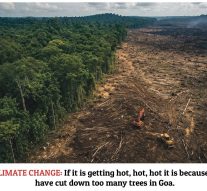
IN the quiet coastal villages of Goa, the rhythm of life has long been dictated by the monsoon and the sea tides. But today this once familiar and soothing rhythm is stuttering and going for a toss. As the world grapples with the existential threat of climate change, the discourse has shifted from simple “conservation” to “climate intervention” — deliberate, often forcible attempts to re-wire the earth’s primary natural cycles and systems
While global powers debate high-tech geo-engineering, a more grounded and localized tragedy is unfolding in Goa: a series of “acts of omission and commission” that are trading the state’s ecological future for administrative luxury.
At the heart of the global climate crisis lie two types of human failure: Acts of Commission which are the aggressive, visible scars we leave, that include, the burning of fossil fuels and the bulldozing of forests and Acts of Omission are the silences, which consist of the failure to regulate, the refusal to act, and the diversion of resources meant for protection.
On the horizon of these failures sits geo-engineering, or “Climate Intervention.” These are the world’s most radical “forcible attempts” to change the climate with one prominent method being Solar Radiation Management (SRM) – this entails injecting reflective particles into the stratosphere to mimic the cooling effect of a volcanic eruption.
The framing of “forcible geo-engineering” often centers on high-profile figures like Bill Gates. Since 2007, Gates has funded research initiatives, including Harvard’s Solar Geoengineering Research Program (SGRP), which explores whether SRM could play a role in managing climate change. While critics often fear a private “deployment” of these technologies, the verified truth is more nuanced: Gates is funding research, not actively altering the sky.
FAMOUS EXPERIMENT
THE most famous experiment, SCoPEx, sought only to release a tiny amount of non-toxic dust from a weather balloon to collect data for computer models. However, the project was cancelled in March 2024 following intense opposition from the Indigenous Sami people and environmental organizations. Their concern? That such research risks catastrophic consequences, including Termination Shock — a sudden, dangerous spike in global temperatures if a solar blanketing program were ever started and then abruptly stopped.
With regard to a nation like India, these “fixes” could be terrifying. The Indian monsoon, that is the life of our agriculture and economy, is driven by the delicate temperature gradient between the landmass and the ocean. Verified scientific models suggest that SRM could disrupt this balance, potentially weakening the winds that bring rain.
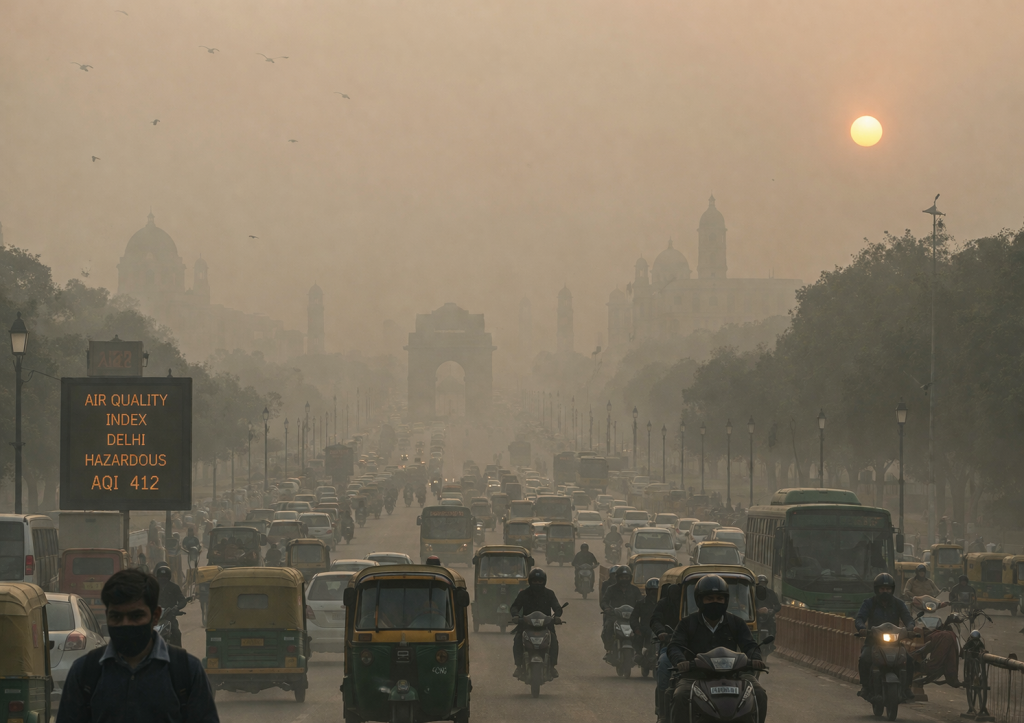
We are already seeing the “natural” version of this disruption in our capital. In Delhi, the weather has shifted into a cycle of extremes that scientists call the “New Normal.” In early 2026, Delhi saw the near-disappearance of spring, with March temperatures skyrocketing to 36.8°C — roughly 7°C above the seasonal average. This was immediately followed by “unseasonal” and violent western disturbances in April, bringing hailstorms and thunderstorms that flattened wheat crops across north India.
For the Delhi residents, climate change is no longer a future threat; it is a “thermal trap.” In winter, cold air acts as a lid, trapping toxic pollutants near the ground. In summer, the heat becomes so intense that labor productivity is already dropping by 4%. If global geo-engineering shifts the monsoon, these extremes will only intensify, leaving cities like Delhi in a permanent state of atmospheric crisis.
While Goa may seem far removed from Delhi’s smog, it is in the frontline of climate “commission.” The state is witnessing a “hard” geo-engineering of its own coastlines. As sea levels rise, the response has often been to “force” the coast to remain invariable using interventions like concrete sea walls. These interventions often backfire, causing increased erosion further down the beach and destroying the natural resilience of the shoreline.
KHAZAN LAND TRAGEDY
IN the interior, the khazan lands — a traditional, sophisticated system of estuarine agriculture — are being compromised. Modern attempts to “fix” these ancient embankments with concrete rather than traditional silt and clay represent a fundamental misunderstanding of the local ecosystem, leading to saltwater intrusion that renders fertile land barren.
Perhaps the most egregious “act of omission” in Goa today concerns the District Mineral Foundation (DMF). Established to use mining royalties to benefit mining-affected communities and restore the environment, this fund was supposed to be our shield against climate change.
However, recent reports have revealed a “shocking” diversion of these funds. In south Goa, instead of being used for massive reforestation drives to act as natural carbon sinks and cool the local climate, the DMF has been tapped to purchase high-end SUVs and 4×4 pickup trucks for the police and disaster management authorities.
The irony is bitter. While global billionaires fund research to study “artificial cooling,” and Delhi struggles with a vanished spring, the funds meant to plant actual trees in Goa, which is naturally the most effective cooling system we have been blessed with, are being used to buy internal combustion engine vehicles for the state.
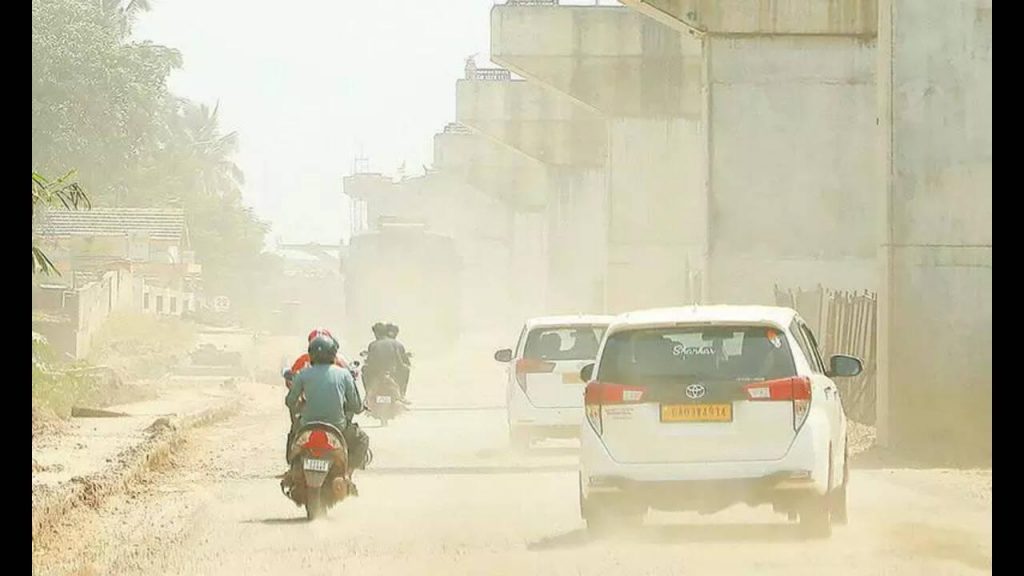
India cannot afford to be a passive observer of global geo-engineering experiments, nor can Goa or Delhi afford the local “omissions” that drain restoration funds. When we choose SUVs over saplings, we are the ones making a forcible attempt to change our climate for the worse.
True climate action for India does not require stratospheric aerosols or mechanical scrubbers. It requires the honest application of existing laws and the transparent use of environmental funds. It requires prioritizing the restoration of the Western Ghats and the greening of Delhi’s urban heat islands over the convenience of the bureaucracy. The climate is changing, and we are indeed forcing its hand.
The question for the people of Goa and India is whether we will force our homeland toward a restored, resilient future, or continue to watch as the funds meant for our survival are driven away in a fleet of new SUVs?
 LETTER TO THE EDITOR FOR ISSUE DATED APRIL 11, 2026
 DOUBLE ENGINE GOA GOVERNMENT DANCES TO ADANI TUNES!
 UPHEAVAL OF THE SUSEGAAD!By Sumaiya Khan
 THE POWER AND THE POLITICS OF MINING IN GOA!By Arvind Pinto
 DEVA VANI DHRUPAD: Alchemy of Sound, Silence and Sanctity!By Prema Viswanathan
 AT LEAST HOSPITALS CAN OFFER MILLET ROTI AND KICHADI!
 WHEN DO WE NEED PALLIATIVE CARE?
 GODI MEDIA TRUMPS TRUTH IN WAR & PEACE!
 World Health Day 2026: TOGETHER FOR HEALTH – STAND WITH SCIENCE! By Dr Amit Dias, MD
 FCRA AMENDMENT WILL ENABLE GOVT TO TAKE OVER PROPERTIES!By Olav Albuquerque
 WEEKEND UPDATESLETTERS TO THE EDITOR FOR ISSUE DATED APRIL 04, 2026
 REAL ESTATE BARONS OF GOA!
 THE SLOW VANISHING OF GOA’S GOLDEN BEACHES! By Raaisa Lemos Vaz
 WHO IS EXTRACTING GOA’S GROUND WATER? By Supriya Vohra
Goa is abuzz with excitement as vintage bike and car owners, users, collectors and fans are decking […]