Goa is abuzz with excitement as vintage bike and car owners, users, collectors and fans are decking […]
Old is Gold
October 4, 2016
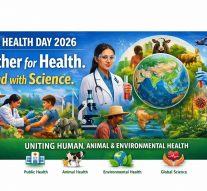
“This year’s World Health Day campaign is the beginning of a sustained global movement that emphasizes scientific collaboration, evidence-based policymaking, and the integration of the One Health approach to safeguard the health of people, animals, plants, and the environment,” explains Dr Amit Dias, as he simplifies the road to good health in this informative article.
Every year on April 7 the world comes together to observe World Health Day — an opportunity to reflect on pressing global health challenges and renew our commitment to improving health outcomes for all. The theme for 2026 is “Together for Health, Stand with Science.” This is both timely and urgent. In a decade marked by pandemics, climate change, antimicrobial resistance, and misinformation, science and only science must remain the cornerstone of public health action.
What is the aim of observing World Health Day?
World Health Day serves several critical purposes:
Awareness: It highlights emerging and existing public health challenges.
Advocacy: It mobilizes governments, institutions, and communities to act.
Accountability: It reminds stakeholders of their responsibility toward equitable health care.
Action: It encourages individuals and systems to adopt healthier practices.
In today’s world, where misinformation can spread faster than disease, reaffirming trust in science is essential. Observing this day helps bridge the gap between scientific knowledge and public understanding.
Significance of the theme
The theme “Together for Health, Stand with Science” underscores three key principles:
Why Do We Need a Scientific and Evidence-Based Approach to Health?
A scientific approach ensures that health interventions are:
• Effective: Based on rigorous research and clinical trials
• Efficient: Optimal use of limited resources
• Equitable: Designed to benefit all sections of society
• Adaptable: Able to respond to emerging threats
Evidence-based medicine and public health reduce guesswork and prevent harm. For example, vaccination programs, sanitation initiatives, and disease surveillance systems have dramatically improved life expectancy because they are rooted in science.
What is One Health?
One Health is an integrated, unifying approach that recognizes that the health of humans, animals, and ecosystems are interconnected.
It promotes collaboration across sectors such as:
• Human health (medicine, public health)
• Animal health (veterinary sciences)
• Environmental science
This approach is especially relevant in today’s context, where ecological disruption and human behaviour contribute to disease emergence.
Diseases Addressed Through the One Health Approach
ON the road to good health, the One Health framework is crucial in addressing:
• Zoonotic diseases: COVID-19, Rabies, Nipah virus, Avian influenza
• Vector-borne diseases: Dengue, Malaria, Chikungunya
• Antimicrobial resistance (AMR): Due to misuse of antibiotics in humans and animals
• Food safety issues: Contamination across the food chain
• Climate-sensitive diseases: Heat-related illnesses, water-borne infections
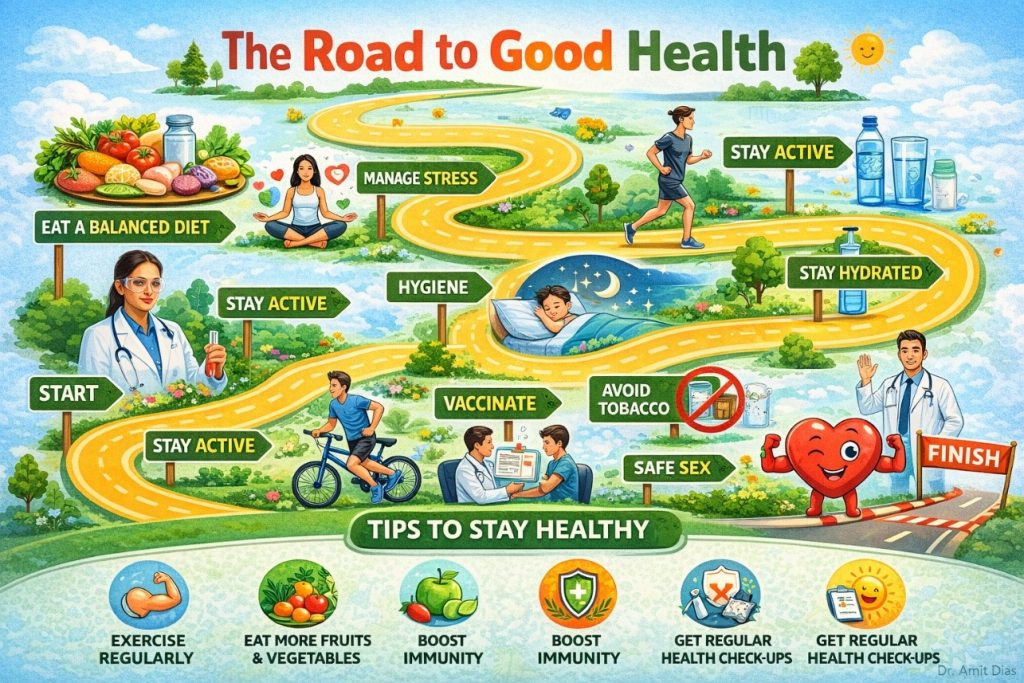
What does the road to good health look like?
The road to good health is not a single destination but a continuous, well-guided journey shaped by daily choices and supportive environments. It begins with healthy habits — balanced nutrition, regular physical activity, adequate sleep, and good hygiene — and is strengthened by preventive care, including vaccination, screening, and regular health check-ups. Along the way, it requires mental well-being, stress management, and meaningful social connections. Avoiding harmful behaviour such as tobacco use, excessive alcohol, and unsafe practices is equally crucial.
This road is also influenced by broader determinants — clean water, safe sanitation, unpolluted air, and a healthy environment—highlighting the importance of a One Health Approach that integrates human, animal, and environmental health. Importantly, the journey must be equitable and evidence-based and supported by strong health systems and informed by science.
Ultimately, the road to good health is a lifelong, collective journey, where individuals, communities, and systems work together for health and stand by science for a more resilient future.
Changing Health Scenario in India
India has made significant strides in health indicators, yet challenges remain:
Achievements:
Increased life expectancy
Expanded immunization coverage
Decline in maternal and infant mortality
Ongoing Challenges:
Dual burden of communicable and non-communicable diseases
Rising prevalence of diabetes, hypertension, and cancers
Environmental health issues such as air pollution
Health inequities between urban and rural populations
India’s large population and diversity demand context-specific, evidence-based solutions, making the 2026 theme particularly relevant.
Achieving Good health and the Sustainable Development Goals
Health is central to the Sustainable Development Goals (SDGs), especially SDG 3: Good Health and Well-being. Achieving these goals requires:
• Strengthening primary health care systems
• Investing in research and innovation
• Promoting inter-sectoral oral collaboration (One Health)
• Ensuring universal health coverage
• Encouraging community participation and health literacy
Science-driven policies and global partnerships are key to accelerating progress
Achieving “health for all” requires a comprehensive, equity-driven, and evidence-based approach that strengthens health systems while addressing the social determinants of health. Universal Health Coverage (UHC) must be prioritized to ensure that every individual has access to affordable, quality healthcare without financial hardship. This includes investing in strong primary healthcare, preventive services, and health promotion, alongside robust disease surveillance and research systems. Multisectoral collaboration—through the One Health approach—integrating human, animal, and environmental health is essential to tackle emerging and re-emerging diseases. Governments must also focus on improving nutrition, sanitation, education, and living conditions, while leveraging technology and data for informed decision-making. Community participation, health literacy, and trust in science are equally vital, empowering individuals to make healthier choices. Ultimately, achieving health for all depends on political will, sustained investment, and a commitment to equity, ensuring that no one is left behind.
Conclusion
World Health Day 2026 is a call to action for all — governments, scientists, healthcare providers, and citizens — to stand united in support of science. In a rapidly changing world, where health threats are complex and interconnected, only a collaborative, evidence-based approach can ensure a healthier and safer future.
By embracing the One Health concept and strengthening trust in science, we can build resilient health systems and improve quality of life for generations to come.
 LETTER TO THE EDITOR FOR ISSUE DATED APRIL 11, 2026
 DOUBLE ENGINE GOA GOVERNMENT DANCES TO ADANI TUNES!
 WHO IS FIXING THE SKY? The billionaires, the cops in SUVs, and the missing trees! By Raaisa Lemos Vaz
 UPHEAVAL OF THE SUSEGAAD!By Sumaiya Khan
 THE POWER AND THE POLITICS OF MINING IN GOA!By Arvind Pinto
 DEVA VANI DHRUPAD: Alchemy of Sound, Silence and Sanctity!By Prema Viswanathan
 AT LEAST HOSPITALS CAN OFFER MILLET ROTI AND KICHADI!
 WHEN DO WE NEED PALLIATIVE CARE?
 GODI MEDIA TRUMPS TRUTH IN WAR & PEACE!
 FCRA AMENDMENT WILL ENABLE GOVT TO TAKE OVER PROPERTIES!By Olav Albuquerque
 WEEKEND UPDATESLETTERS TO THE EDITOR FOR ISSUE DATED APRIL 04, 2026
 REAL ESTATE BARONS OF GOA!
 THE SLOW VANISHING OF GOA’S GOLDEN BEACHES! By Raaisa Lemos Vaz
 WHO IS EXTRACTING GOA’S GROUND WATER? By Supriya Vohra
Goa is abuzz with excitement as vintage bike and car owners, users, collectors and fans are decking […]