Goa is abuzz with excitement as vintage bike and car owners, users, collectors and fans are decking […]
Old is Gold
October 4, 2016
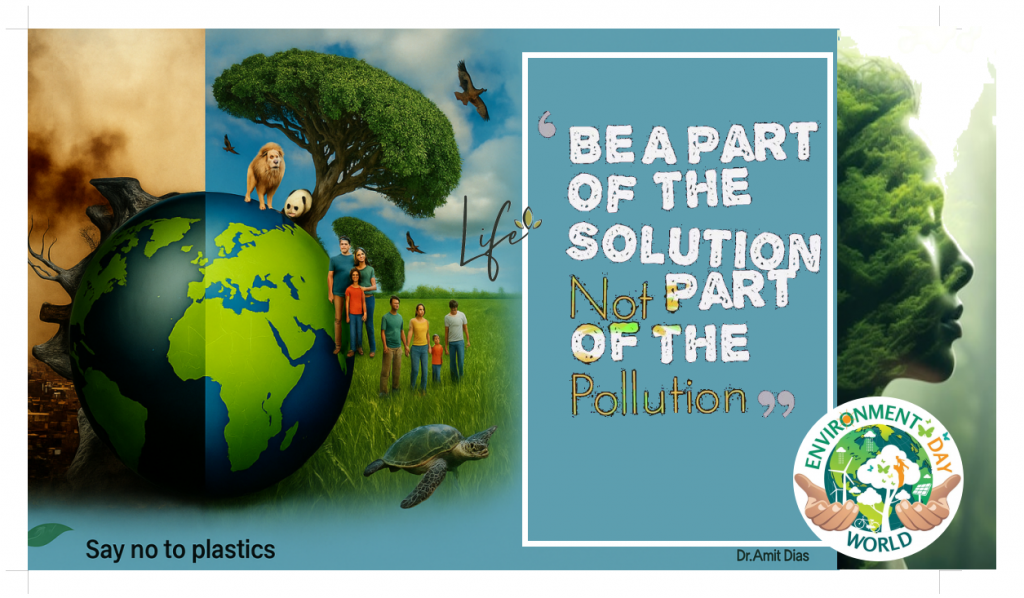
Q&A interview with Dr Amit Dias on World Environment Day
As we mark World Environment Day on June 5, we spoke to Dr Amit Dias, a public health specialist, educationist and researcher, to throw light on the intricate balance between health and the environment “The environment is not a separate chapter in the book of public health — it is the very foundation,” he says as he makes the connects the dots between environment, health and the UN sustainable development goals. We need to see the red alert and go green.
Goan Observer: Doctor, why should public health personnel be concerned about the environment?
Dr Amit Dias: That’s a great starting point. The environment is a critical determinant of health. Clean air, safe water, proper sanitation, and sustainable ecosystems are not luxuries — they are prerequisites for good health. When these systems are disrupted, we see a surge in diseases. As public health professionals, our job is not just to treat illness, but to prevent it at the source — and that often means starting with the environment.
We won’t have a society if we destroy the environment. We are literally choking the earth, and it’s starting to choke us back.
Q: What is the current situation with regards to the environment?
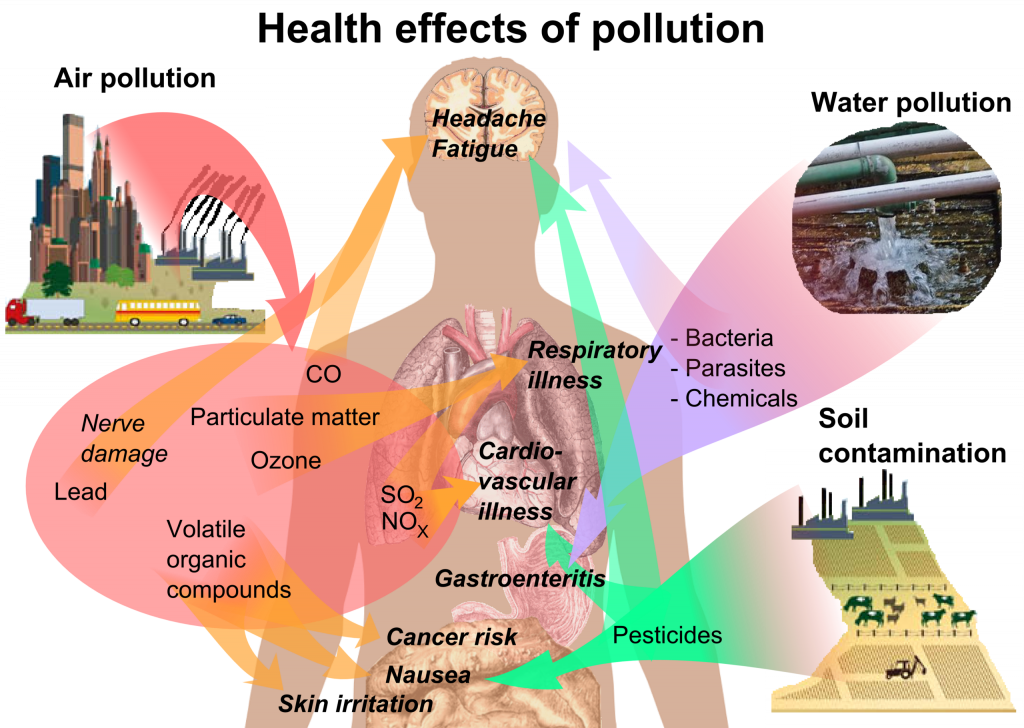
A: The environmental crisis is no longer a distant threat — it is a present and pressing reality, with profound implications for public health. According to the World Health Organization (WHO), nearly one in four global deaths — that’s approximately 13 million lives lost each year — can be attributed to environmental risks. These include unsafe air, water, and sanitation, exposure to chemicals, climate change, and rapidly degrading ecosystems.
Q: That’s an important point… Can you explain simplify this further?
A: Yes surely, let’s break this down:
Air pollution is one of the leading causes of premature deaths globally. Tiny particulate matter (PM2.5) penetrates deep into our lungs and bloodstream, leading to heart disease, stroke, chronic respiratory illnesses, and lung cancer. Outdoor air pollution is responsible for millions of deaths annually, and indoor air pollution, particularly from the use of solid fuels for cooking, disproportionately affects women and children in low- and middle-income countries.
Unsafe water, poor sanitation, and lack of hygiene contribute significantly to infectious diseases such as diarrhoea, cholera, and parasitic infections. These issues are particularly acute in vulnerable communities and are preventable with better infrastructure and governance.
Climate change is intensifying the burden of disease. It is altering rainfall patterns, increasing the frequency and severity of extreme weather events like floods, heatwaves, and cyclones, and shifting the range of disease-carrying vectors like mosquitoes. These changes fuel outbreaks of dengue, malaria, chikungunya, and other vector-borne diseases.
Other environmental risks, such as chemical contamination, unsafe occupational environments, noise pollution, and urban overcrowding, further erode the foundation of human health.
In fact, in one of our own recent studies, by the Lancet commission, published in The Lancet, we explored the link between environmental pollution and neurodegenerative diseases such as Alzheimer’s disease. The evidence continues to mount that what harms the planet ultimately harms our brains, our hearts, and our communities.
Coming closer to home, Goa is not immune. The increasing reports of garbage mismanagement, plastic waste choking our waterways, and the growing number of heatwave days are all symptoms of an environmental system under strain. We often hear about garbage piles in our cities and villages. Like the chronic problem at Sonssodo garbage dump. — They’re not just an eyesore; they’re breeding grounds for disease and ecological disaster.
This environmental damage isn’t happening in isolation — it is directly undermining our ability to meet the United Nations Sustainable Development Goals (SDGs). Several SDGs are deeply intertwined with environmental health.
Q. That is also a significant statement. Which Sustainable Development Goals are related to the environment?
A: The UN SGDs are goals o be achieved by 2030.
SDG 3: Good Health and Well-being — cannot be achieved if environmental determinants of health remain unaddressed. Clean air, water, and a stable climate are the foundations of good health.
SDG 6: Clean Water and Sanitation — essential for preventing waterborne diseases and promoting hygiene.
SDG 11: Sustainable Cities and Communities — addresses urban air quality, green spaces, and waste management.
SDG 12: Responsible Consumption and Production — aims to reduce waste generation and improve resource efficiency.
SDG 13: Climate Action — urges us to take immediate steps to combat climate change and its impacts.
If you look minutely, all 17 goals are directly or indirectly related to the environment.
SDG 7: Affordable and Clean Energy, SDG 14 & 15: Life Below Water & Life on Land are all connected.
The environment forms the backbone of sustainable development. Without safeguarding our natural systems, none of the other goals can be truly realized. A healthy environment is not a luxury — it is a prerequisite for progress.
We must remember that we are not inheriting the Earth from our ancestors; we are borrowing it from our children.
Q: What is causing this environmental crisis?
A: It’s a global issue- a lethal cocktail human activity, poor governance, ignorance, and apathy. Rampant urbanization, industrial emissions, overdependence on fossil fuels, deforestation, and the throwaway culture are major contributors.
I look at it as the “triple planetary crisis” — climate change, pollution, and biodiversity loss — all feeding into each other.
Q: Why is plastic such a menace?
A: It is a major problem. In fact it is the central theme of this year’s World Environment Day — “Ending Plastic Pollution Globally”. Over 400 million tons of plastic are produced every year, and nearly half is single-use. Plastic finds its way into our oceans, soil, and even the food we eat. Microplastics have been found in human blood and organs — and we’re only just beginning to understand the full extent of the damage. Here is how it harms:
It’s non-biodegradable: It stays for hundreds of years.
Microplastics: Found in our food, water, and even human blood.
Ocean pollution: Kills marine life and enters our food chain.
Burning plastic: Releases dioxins and furans – known carcinogens.
Clogs drains: Leads to urban flooding and waterborne diseases.
Toxic leaching: Chemicals from plastics leach into soil and groundwater.
A plastic bottle used for 5 minutes may haunt the planet for 500 years. That’s not a legacy we want to leave behind.
Q: How can we end plastic pollution, and what steps has the government taken so far?
A: It will take a multi-sectoral approach:Ban single-use plastics (many states including Goa have started).
Promote alternatives: cloth, jute, biodegradable packaging.
Extended Producer Responsibility: Manufacturers must manage plastic waste.
Public awareness: Change starts with citizens.
Strict enforcement: Fines and penalties must be implemented.
Globally, countries are working on a UN treaty to curb plastic pollution — a promising step. But let’s not wait for top-down changes. “Be the change you wish to see,” as Gandhiji said.
Q: Which diseases are related to the environment?
A: There’s a long list and I have mentioned some of them before.
Respiratory diseases: from air pollution (e.g. asthma, COPD)
Vector-borne diseases: malaria, dengue, chikungunya
Water-borne diseases: cholera, typhoid, hepatitis A
Skin and eye conditions: due to contaminated water or exposure to UV rays
Cancers: linked to environmental toxins and plastic exposure
Let’s not forget the mental toll of living in degraded, unsafe environments.
Q: How can the community help?
A: The community makes the difference – What you do makes a difference, and you have to decide what kind of difference you want to make. Raise your voice if you notice any violation.
We must act — not out of fear, but out of responsibility. Let us stop seeing the environment as something outside of us. We are a part of it in our own little way. Support policies that protect nature, Say NO to single-use plastic, Recycle, reuse, and reduce waste, Consume mindfully, Reduce your carbon footprint, Support local and sustainable products.
Let’s strive not just for eco-friendly lifestyles, but for eco-responsible societies. As health professionals, citizens, and caretakers of this planet, the time to act is now.
Q: Can you share some examples of promising environmental practices that offer hope?
A: Around the world — and right here in India — we’re seeing inspiring examples of environmental stewardship. I like to call these initiatives “works in progress” rather than finished success stories, because addressing environmental issues is a continuous journey, not a destination. But they give us hope, and more importantly, they show us that change is possible.
Take Sikkim, for instance — India’s first fully organic state. By banning chemical pesticides and fertilizers and promoting sustainable farming, Sikkim has improved not just soil and food quality, but also public health and the local economy. It’s a model that proves environmental consciousness and economic development can go hand-in-hand.
Another example is Rwanda, which made headlines for banning plastic bags as early as 2008. This bold policy has led to cleaner cities, better drainage systems, and reduced urban flooding — a clear win for both health and the environment.
Here in Goa, we’ve made encouraging progress in waste management, especially through segregation and garbage collection drives at the panchayat level. These community-led efforts have led to cleaner neighborhoods, reduced disease vectors, and better hygiene. It’s a sign that when local governance and public participation come together, we can create cleaner and healthier living environments.
Q: What is your message to our readers on World Environment Day?
A: The environment is not a separate chapter in the book of public health — it is the very foundation. As we observe World Environment Day 2025, let this be more than a reminder. Let it be a call to action. The key takeaway is this: Leadership matters. Whether it’s at the level of national policy or a village panchayat, leaders must recognize environmental health as a priority. And equally, communities must be empowered to take ownership of their environment. Small steps in the right direction can lead to big changes over time – We need to see the red alert and go green!
 LETTER TO THE EDITOR FOR THE ISSUE DATED OCTOBER 24, 2026
 THERANOS MULTI-BILLION US PATHOLOGY COMPANY EXPOSED!
 INDIA’S PATHOLOGY LABORATORY SCANDAL! By Our Special Correspondent
 MUKESH, ADANI CONTROL MODI?By Our Special Correspondent
 “FRANCE KE SCHOOL THIK KARO”By Paris Correspondent
 INTEGRITY MUST BE CONDiTION FOR POWER!By Ranadhir Mukhopadhyay
 A PARADIGM SHIFT: POWER MOVES FROM POLITICS TO TECHNOLOGY AND TACTICS! By Arvind Pinto
 HI MUMBAI, MERI JAAN BUT…
 VILLAINOUS MUSK, ALTMAN, ZUCKERBERG, HOLMES!
 OPTOGENETICS AND THE RAY OF HOPE: LIGHT MEETS THE BRAIN! By Dr Amit Dias
 WEEKEND UPDATES
 LETTER TO THE EDITOR FOR THE ISSUE DATED OCTOBER 17, 2026
 AZAD MAIDAN NO LONGER FREE!
 AZAD MAIDAN CRACKDOWN! Goa’s crackdown on protesters raises grave questions about democracy! By Our Special Correspondent
 INDIAN WOMEN ARE ON THE STREETS AGAIN. EVERYTHING HAS CHANGED BUT NOTHING HAS CHANGED!By Shilpa Phadke
Goa is abuzz with excitement as vintage bike and car owners, users, collectors and fans are decking […]