Goa is abuzz with excitement as vintage bike and car owners, users, collectors and fans are decking […]
Old is Gold
October 4, 2016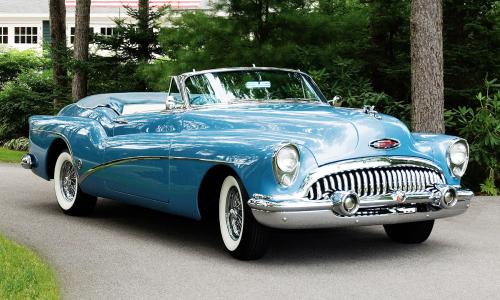
The once coveted medal of honour for Goa’s police has turned into a fest of loyalty contest, stripping it of credibility and failing to distinguish between ‘gadhe and ghode’
By Bosco George (former DIG)
In 1992, the government of Goa instituted the chief minister’s police (gold) medal with a clear and honourable intent. It was meant to boost morale and recognise the dedication of Goa police personnel who, despite years of hard and often thankless service, rarely found themselves considered for national honours like the President’s medal awarded by the ministry of home affairs (MHA).
The reality then was simple. Many deserving Goa police officers retired without any formal recognition, while the limited number of medals from the centre largely went to IPS officers, who had the advantage of serving across multiple States in the Arunachal Pradesh-Goa-Mizoram-Union Territories (AGMUT) cadre.
The CM’s police gold medal was conceived to correct this imbalance. It was an appropriate response to a genuine grievance and a long-overdue acknowledgement of the commitment of local officers who spent their entire careers policing Goa.
Instituted to coincide with Goa Liberation Day on December 19, the medal carried both symbolic and emotional value. One of its earliest recipients was deputy superintendent of police (DySP) Santoba Desai, a distinguished Goa police officer, who played a key role in the introduction of the medal itself.
In the initial years, the award went to officers with exemplary service records. The eligibility criteria were deliberately stringent, to separate the truly deserving from the merely visible, what we colloquially describe as knowing the difference between “gadhe aur ghode” (donkeys and horses).
That distinction, unfortunately, began to blur in 2015. A dangerous and demoralising precedent was set when, in clear violation of the rules, an IPS officer was awarded the CM’s police gold medal despite not fulfilling the basic eligibility requirement of a minimum of 10 years of service in Goa.
There were no recommendations from police headquarters, and yet the medal was secured, reportedly due to proximity to the ruling regime of the day. This was not a minor procedural lapse. It struck at the very soul of the award.
Since then, it has almost become routine for young IPS officers, many with less than three years of service in Goa, to line up for this medal. The result has been predictable. The morale of the Goa police has taken a hit, and the integrity of an award meant exclusively for recognising sustained local contribution has been steadily eroded.
Victor Hugo, famously, said that nothing can stop an idea whose time has come. Late former Prime Minister Manmohan Singh often quoted it during the years of economic reform. But as prominent journalist Shekhar Gupta once observed, nothing can stop a bad idea once it has been introduced.
This dilution of the CM’s police gold medal is precisely that – a bad idea that has now acquired momentum. A police medal is not meant to reward a single operation or a short posting. It is meant to assess an officer over time, to weigh integrity, competence, leadership and consistency across years, if not decades.
In a career that spans over 33 years, a three-year posting in Goa, is no basis for an overall judgment. One swallow does not make a summer. Lobbying political bosses and claiming quick visibility cannot substitute for long-term contribution to policing in the state.
If this continues, the medal will lose not just its glitter, but its credibility. In my view, the CM’s police gold medal should be reserved exclusively for Goan police officials. Its numbers should also be rationalised. Five medals a year would be more than adequate – two for gazetted officers and three for non-gazetted personnel. Scarcity gives an award its value. Only then will its sanctity be restored.
Over the years, I have personally seen capable officers decline to even apply for the medal. Many told me bluntly that it had become less an honour and more a loyalty test to whoever occupied the chair of power. That, for any professional police force, is a deeply troubling signal.
The irony is striking. At one point, personnel of the India Reserve Battalion (IRBn) were denied eligibility on the grounds that only Goa police staff could receive the medal, despite IRBn being an integral part of the department. This anomaly was later corrected.
Yet, at the same time, clear violations of the rules were overlooked when it came to IPS officers. Rules, it seems, are flexible only for some.
Goa police is a relatively young force. It should have benefited enormously from the exposure and expertise of officers from the AGMUT cadre. Sadly, that promise has remained largely unfulfilled. Many of the best officers came reluctantly or left at the earliest opportunity, their hearts elsewhere.
The outcome has been adhocism in policing. Even after decades, Goa does not have a comprehensive police manual, a robust long-term policing plan, or a fully developed forensic science ecosystem.
This compels us to rethink the larger cadre structure. In hindsight, a Goa-Maharashtra cadre might have served the State better. We already fall under the Bombay High Court, our officers train in Maharashtra, and the socio-cultural and crime patterns along the Konkan coast are far closer to Goa than many parts of the AGMUT region.
A shared cadre, on the lines of Assam-Meghalaya, could have been mutually beneficial. Officers from the Konkan would find Goa closer to home, and Goan officers posted in Maharashtra would face fewer cultural and professional disconnects.
I am not advocating this as an agenda, only as a reflection after decades of experience. Goa should certainly not become an independent cadre, as that risks insularity and a frog-in-the-well mindset. But the cost-benefit balance of the current arrangement does deserve honest evaluation.
On the eve of Goa Liberation Day and Goa Police Founding Day, I extend my best wishes to the new recipients of the CM’s police medal. I also salute the service I once proudly belonged to and to which I remain emotionally attached. Its motto, “Shanti Seva Nyaya”, must mean more than mere words engraved on an emblem.
For that to happen, honours must once again honour merit.
 LETTER TO THE EDITOR FOR THE ISSUE DATED MARCH 21, 2026
 LOOK BACK IN ANGER, LOOK AHEAD WITH RESOLVE!By Gautam Patel
 OUR WOUNDED MANDOVI RIVER MAI! By Raaisa Lemos Vaz
 GARDEN SUBURB TO MONSTER TOWERS…Chembur then and now!
 PROTESTS PART OF GOAN DNA!
 `FISH CURRY AND RICE’ FOR GOANS
 OF IT IS GUDI PADWA…
 MIRABAG DAM WORK HALTED!
 THE WAR AGAINST TB Yes, we can end TB… By Dr Amit Dias
 70 ILLEGAL STRUCTURES USURP PRIME BEACH SPOTS FOR ILLICIT AIMS!By Dr Olav Albuquerque
 WEEKEND UPDATES
 LETTERS TO THE EDITOR FOR ISSUE DATED MARCH 14, 2026
 TOWERING INFERNOS OF GOA COMING!By Raaisa Lemos Vaz
 MIRABAG GIFTED TO ADANI!
 DEPOSITS REFUND SCAM!WHO BENEFITS FROM THE RS 10.. By Misbah Quadri
Goa is abuzz with excitement as vintage bike and car owners, users, collectors and fans are decking […]