Goa is abuzz with excitement as vintage bike and car owners, users, collectors and fans are decking […]
Old is Gold
October 4, 2016
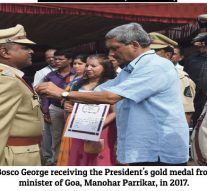
Mindlessly done bulk promotions in the police force carry the danger of shaking the foundational pillars of institutional discipline, and bequeathing a legacy of disillusionment among sidelined and frustrated officers…
THE recent administrative fiat to elevate 19 officers to the rank of superintendent of police (SP) in a single, sweeping stroke, has reverberated through police departments, eliciting profound consternation.
What is a hallmark of career progression and individual excellence is instead being decried as a “tamasha”— a theatrical artifice that prioritises administrative expediency over the sanctity of the rank.
By orchestrating such a mass elevation, the authorities risk devaluing the post, transforming a mantle of strategic leadership into a mere administrative commodity.
This “blanket promotion” paradigm fundamentally disregards the nuance of meritocratic distinction. When the system fails to differentiate between the “gadha aur ghoda”— the plodding journeyman and the spirited thoroughbred — true meritocracy is stifled.
If advancement is decoupled from individual brilliance or a distinguished tactical record, the impetus for excellence evaporates. Such a dilution of standards represents more than a blow to morale; it constitutes a direct threat to the calibre of leadership within the highest echelons of the constabulary.
The first cardinal error was to merge the India Reserve Battalion (IRBn) with Goa Police with ulterior motives. Perhaps the most egregious consequence of this manoeuvre is the perceived disenfranchisement of the IRBn.
By saturating the SP vacancies with a substantial cohort from the civil wing, the administration has effectively throttled the career trajectories of IRBn officers, whose vacancies have been “usurped.” These personnel, who often operate under arduous conditions, now find their legitimate promotional avenues blocked to facilitate this mass movement.
This perceived inequity fosters a deep-seated sense of injustice and risks engineering a permanent schism between the various wings of the force.
The long-term impact of such a policy is the cultivation of a climate defined by subservience and servility rather than professional autonomy. When promotions are dispensed with the frequency of participation trophies, officers may infer that their progression is contingent upon their sycophancy and adherence to the status quo, rather than any professional integrity or decisive leadership.
Professionalism necessitates a framework that incentivises courage and competence; when superseded by mass distribution, the result is an institution preoccupied with placating superiors rather than upholding the rule of law.
Ultimately, this development signals a sombre departure from the traditional ethos of the uniformed services. The rank of SP should be the definitive mark of a seasoned leader, attained through rigorous vetting and incontrovertible merit.
By converting the promotion process into a conveyor belt of mass production, the administration is not merely filling vacancies but is undermining the foundational pillars of institutional discipline and bequeathing a legacy of disillusionment among sidelined and frustrated officers.
By Rajan Narayan
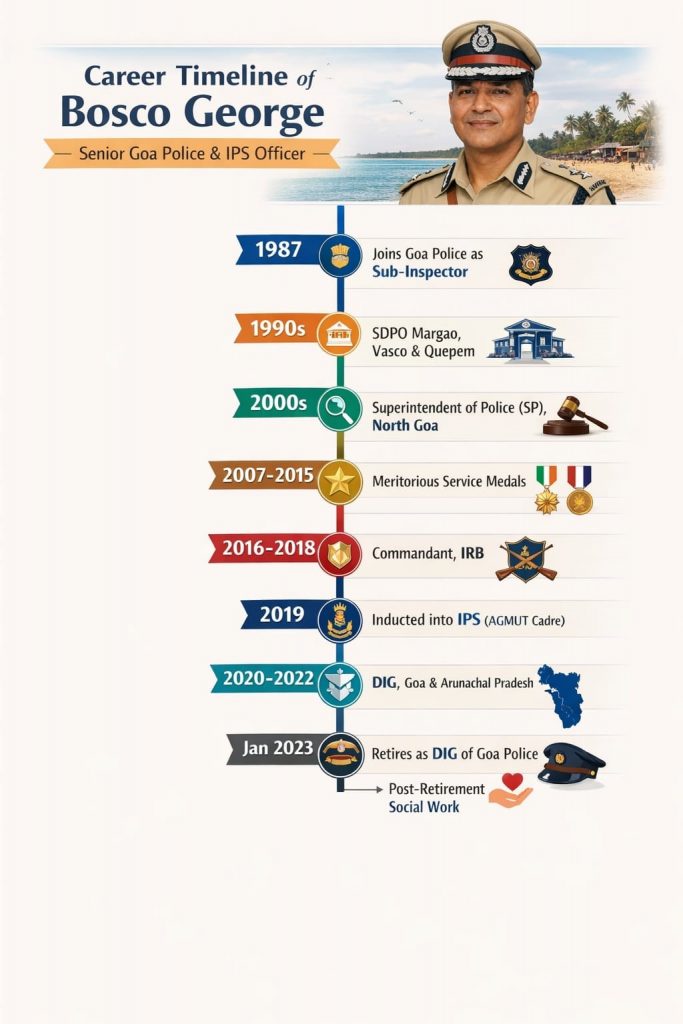
IT took three decades of grit and determination for Bosco George to join the elite ranks of the Indian Police Service And over 20 years to become superintendent of police (SP). Bosco joined the police at the tender age of 25 years as a police sub-inspector.
While he was just a sub-inspector he applied when the government announced direct recruitment to post of Deputy SP. He passed with distinction and leap- frogged his colleagues to become the youngest DYSP. Bosco was rewarded for his diligence and honesty when he was appointed SP in his early 40s.
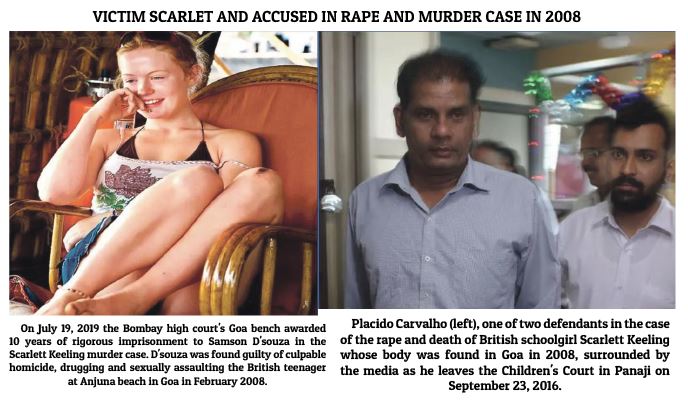
This is a position of leadership and responsibility in the police force The challenge to his integrity came in the wake of the Scarlet Keeling rape and murder case in 2008. The 15-year-old British teenager was on an extended six month holiday with her mother Fiona. Interestingly, the Anjuna police dismissed the dastardly act as “accidental drowning.”
There was an international uproar. UK even issued an advisory that Goa was unsafe for women. This was a major challenge as the Anjuna police had destroyed the evidence. By dint of painstaking investigation Bosco managed to gather enough evidence to prosecute Samson and Piedade Fernandes who were implicated. To his chagrin, the public prosecutors did not cooperate in framing fail-proof charges against the accused.
Due to the weak case put up by the law department the three accused were acquitted by the Sessions Court This intensified charges of cover up. The case was transferred to the CBI which was assisted by Bosco George to create a fool-proof case. The CBI challenged the sessions court verdict. In 2019, the Bombay high court convicted Samson and sentenced him to 10 years in jail.
Bosco did not rest on his laurels. At 50 plus he took on the challenge of the Indian Police Service He passed with flying colors and kept up with much younger colleagues in the rigorous training. As an IPS officer he was posted on ultra-sensitive postings. Arunachal Pradesh and then afterwards he was appointed Secretary to Governor of Manipur Satyapal Malik, where there was a war between the two major tribes, allegedly instigated by the BJP. Bosco returned to Goa and retired as DIG-in-charge-of security.
Indeed, Bosco George has lived and he still lives a life well worth living.
 LETTER TO THE EDITOR FOR ISSUE DATED OCTOBER 03, 2026
 GEN-Z BLOCKED FROM VOTING BY GYANESHWAR MODI!
 THE FORAL OF 1526 Five Hundred Years Later, What Does Goa’s Oldest Village Charter Really Mean?
 20 YEARS IN ‘HERALD’, 43 IN GOA!
 THE DEGRADATION OF JNU – MY ALMA MATER! By Arvind Pinto
 THE WOMEN WHO LOOK BACK! By Prema Viswanathan
 GOA IS CELEBRITY STATE!
 HI MUMBAI MERI JAAN BUT…
 WEEKEND UPDATES
 LETTER TO THE EDITOR FOR ISSUE DATED SEPTEMBER 26, 2026
 DIVIDED EVEN IN DEATH!By Rajan Narayan
 IF YOU CLAIM THE CREDIT, TAKE THE RESPONSIBILITY!By Joquim Goes
 8 EMAILS IN 7 DAYS, BUT VALID GOA VOTERS STILL LEFT OUT: EC’S FLAWED SYSTEM!By Ritika Chopra
 MAKE IN INDIA: UNITED PAYMENTS INTERFACE India’s digital local leap to global benchmark…By Arvind Pinto
 BRING BACK THE FLATBREADS OF INDIA!
Goa is abuzz with excitement as vintage bike and car owners, users, collectors and fans are decking […]