Goa is abuzz with excitement as vintage bike and car owners, users, collectors and fans are decking […]
Old is Gold
October 4, 2016
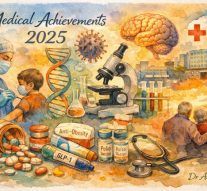
A Year of Science, Strides and Struggles
As we wind up yet another exciting year in health and medicine, Dr Amit Dias takes stock of the greatest achievements, near-wins and sobering realities of 2025, from promising new drugs to the ongoing battles against age-old diseases.
By Dr Amit Dias
As we wrap the curtain on 2025, this has been a year that deserves a standing ovation and a reality check. New drugs have hit the market. Policies have shifted in step with evidence. Long-stigmatized conditions like Alzheimer’s disease are finally recognized as part of the non-communicable disease (NCD) agenda. Yet, the hot pursuit of eradication goals reveals both triumphs and unfinished business. Welcome to Milestones in Medicine in 2025 — where bold science meets every day public health in India.
A Year of Drug Discoveries: Precision Meets Practicality
One of the defining features of 2025 was the maturation of drug development from a focus on novel molecules to novel impact. Regulatory agencies in the US, EU and India approved several agents that are not just marginally better, but potentially transformative — long-acting biologics for inflammatory disease, targeted cancer therapies with better safety profiles, and convenient oral options for conditions previously needing injections. These approvals speak to two trends driving clinical practice today: precision therapeutics and patient-centered care.
In India, 2025 saw the launch of major anti-obesity drugs — including tirzepatide (marketed locally as Mounjaro) — that combine weight loss with metabolic benefits in people living with obesity and type 2 diabetes, heralding a new chapter in chronic disease management. This is the year where weight-loss pharmacotherapy finally entered mainstream practice for many clinicians across India.
Alzheimer’s and Dementia: A Policy Leap Forward
For decades, dementia — including Alzheimer’s disease — was sidelined as an “old age problem.” In 2025, sustained advocacy by Alzheimer’s Disease International (ADI) and scientific partners convinced the global community to formally recognise dementia as a leading non-communicable disease. This shift, now embedded in UN and WHO NCD frameworks, removes symbolic barriers and opens pathways to funding, surveillance and integrated care models.
This reclassification matters because it aligns political will with disease burden, and signals that cognitive decline is not just a social issue but a public health priority requiring early diagnosis, biomarker access and caregiver support networks.
TB Elimination by 2025 — How Close Did India Get?
India had ambitious plans to dramatically reduce tuberculosis by 2025. The data suggest not quite elimination, but very real progress. According to WHO metrics, India’s TB incidence has fallen significantly over the past decade, and under its National Tuberculosis Elimination Programme, TB incidence and deaths continue to decline — missing cases have dropped dramatically and treatment coverage is strong. However, TB still ranks among the top infectious killers globally, and India bears a disproportionate share of the burden, including multidrug-resistant TB.
In other words: we are on the path, but the finish line for elimination — traditionally framed as incidence of < 44 per 100,000 population — has not been reached by 2025. Strong diagnostics, preventive therapy and social determinants of health remain critical to close the gap.
Polio, Measles & Rubella: The Endgame Is Nearer — But Not Yet Done
India’s public health ambitions once included becoming a global luminary in TB elimination by 2025 — and while TB still lingers, there are notable successes in vaccine-preventable diseases:
• Polio: India has maintained polio-free status since 2014 and continues robust immunisation. Its polio surveillance network is being rationalised and integrated into broader disease systems — a sign of confidence, not complacency — but global risks remain while wild polio viruses continue transmission in Pakistan and Afghanistan. This underlines a key truth: polio anywhere is a threat everywhere. We had a round of Pulse Polio immunization last Sunday.
• Measles and Rubella Elimination Campaign: India launched the National Zero Measles-Rubella Elimination Campaign (2025–26) with the goal of eliminating both diseases by 2026. Immunisation coverage for the two MR vaccine doses is high nationally, and many districts report zero cases — but outbreaks continue in pockets, and measles remains highly contagious, highlighting the importance of sustained coverage over time.
In the broader region, several South-East Asian countries have already validated measles and rubella elimination, and Nepal has been officially certified for rubella elimination — offering a roadmap for India’s ongoing efforts.
New Bugs and Persistent Old Foes
2025 also reminded us that pathogens don’t read calendars. While emerging infections like Nipah or H5N1 avian influenza continue to surface sporadically and challenge surveillance systems, the biggest threats still arise from classic foes — TB, measles and polio — especially where vaccine coverage dips or healthcare access is unequal. Indeed, global declines in vaccination coverage have led to localized measles rebounds in regions like the Americas, emphasizing the need for resilient immunisation programs.
These trends underscore why integrated surveillance, robust vaccination infrastructure, and community engagement remain core pillars of disease control.
WHO Strategy and World Health Day
Beyond country-level achievements, 2025 saw important global strategy alignment. The World Health Organization’s strategic priorities for the mid-decade emphasised universal health coverage, equitable access to essential interventions, and system resilience — vital complements to new drugs and disease targets.
World Health Day 2025’s theme, “Healthy Beginnings, Hopeful Futures,” highlighted maternal and newborn wellbeing — a subtle but powerful reminder that health systems must balance high-tech innovation with fundamental care delivery that benefits the most vulnerable.
Awards: Celebrating Discoveries That Matter
Academic and scientific prizes in 2025 celebrated discoveries with real clinical impact — from immune-system regulation (informing immunotherapy across diseases) to genetics and metabolism that underpin today’s most exciting drug classes. These honours are more than trophies: they stimulate curiosity, funding flows, and an informed public discourse around science.
Nobel Prize for Medicine 2025: Highlights the Mechanism of Cancer Immune Evasion
The Road Ahead: From Innovation to Implementation
As we look beyond 2025, one theme resonates clearly: innovation without implementation is an unfulfilled promise. New drugs will continue to be approved, but lasting impact will come when policies, financing, workforce training and community trust coalesce around those advances.
India’s example illustrates this interplay vividly: world-leading vaccination coverage in many regions alongside persistent measles hotspots; TB program successes paired with an ongoing burden; and strong health infrastructure investments yielding both disease control and new platforms for chronic care. With new policies, India has made significant strides in health care an assuring quality services at every level of health care.
In Conclusion: 2025 – A Year to Remember — and Build On
2025 may not be remembered for a single miracle cure — but for progress on many fronts, each demanding persistence and focus. From expanded therapeutic options and global policy shifts to disease elimination campaigns that bring us closer (but not yet all the way) to goals like measles- and rubella-free communities, this has been a year that blends triumph with truth.
In science, as in life, the final inch is often the hardest — but 2025 has shown that with evidence, equity and endurance, that inch is absolutely worth gaining.
 LETTER TO THE EDITOR FOR THE ISSUE DATED MARCH 21, 2026
 LOOK BACK IN ANGER, LOOK AHEAD WITH RESOLVE!By Gautam Patel
 OUR WOUNDED MANDOVI RIVER MAI! By Raaisa Lemos Vaz
 GARDEN SUBURB TO MONSTER TOWERS…Chembur then and now!
 PROTESTS PART OF GOAN DNA!
 `FISH CURRY AND RICE’ FOR GOANS
 OF IT IS GUDI PADWA…
 MIRABAG DAM WORK HALTED!
 THE WAR AGAINST TB Yes, we can end TB… By Dr Amit Dias
 70 ILLEGAL STRUCTURES USURP PRIME BEACH SPOTS FOR ILLICIT AIMS!By Dr Olav Albuquerque
 WEEKEND UPDATES
 LETTERS TO THE EDITOR FOR ISSUE DATED MARCH 14, 2026
 TOWERING INFERNOS OF GOA COMING!By Raaisa Lemos Vaz
 MIRABAG GIFTED TO ADANI!
 DEPOSITS REFUND SCAM!WHO BENEFITS FROM THE RS 10.. By Misbah Quadri
Goa is abuzz with excitement as vintage bike and car owners, users, collectors and fans are decking […]