Goa is abuzz with excitement as vintage bike and car owners, users, collectors and fans are decking […]
Old is Gold
October 4, 2016
By Deborah & Dr Olav Albuquerque
CHRISTMAS comes in the middle of winter, which is appropriate because the hot summer which makes us sweat, is over, and winter with chilly breezes sends just the right message as we snuggle into warm coats for midnight mass. But do we know that the Bible does not mention the exact date when Jesus Christ was born? This is simply because the Gregorian calendar had not yet made its entry.
It was in the year 353 AD that Pope Julies I proclaimed that Christmas be celebrated on December 25 of every year. This was how Christmas came to be celebrated on December 25. Following this, in the year 1832 AD, a famous professor in the United States planted a tree, decorated it with candles, and this is how the tradition of the Christmas tree came into vogue.
It was Saint Francis of Assisi who created the first live Christmas nativity scene in 1223 in Greccio, Italy to depict the birth of Jesus, but there is no historical record of him creating the first Christmas star. The star is a separate symbol from the biblical story of the Star of Bethlehem, and its origin is not tied to St Francis or this specific tradition.
NATIVITY SCENE
IT was Saint. Francis of Assisi who built the first live nativity scene in 1223 in a grotto in Greccio, Italy. He staged a live re-enactment of the Nativity with real people and animals to help people visualize and connect with the story of Jesus’ birth.
Similarly, the “star” in the Christmas Nativity scene represents the Star of Bethlehem, which guided the Magi to Jesus, as described in the Gospel of Matthew. There is no single person credited with creating the “first” Christmas star; it evolved as a symbol within the broader Nativity tradition, separate from St. Francis’ live re-enactment.
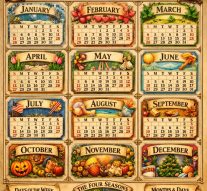
The Julian calendar , introduced by Julius Caesar, was the calendar used during the time of Jesus’ birth. This was a solar calendar with 365 days and a leap year every four years, and it was widely adopted throughout the Roman Empire. Prior to the Julian calendar’s implementation in 45 BC, the Romans and people in places like Judea used what is now known as a luni-solar calendar, which followed both lunar and solar cycles.
The Gregorian calendar, which most of the world uses today, is a reform of the Julian calendar and was introduced in 1582 to correct its minor inaccuracies. There is the addition of a day every four years to correct what would make the calendar inaccurate.
The point which we ought to grasp is that the “Saviour of the Universe” was born and this is why we celebrate Christmas, which is the ushering of good news because without the Saviour, we had no hope of eternal life. For with Adam’s transgression, we were cut off from eternal life with God until God Himself decided to incarnate in the flesh and offer Himself up to be tortured and die the most cruel death on the cross. This alone would restore our eternal life.
Christmas is the celebration of Christ, who is the “Light of the World.” “I am the Light of the World; anyone who follows me will not walk in darkness, but will have the light of life,” says Jesus in John 8:12. If we do not see the light of life and delights of Christmas, we may not be healed of our blindness.
It is during the Christmas season that God promises: “Out of gloom and darkness, the eyes of the blind shall see.” Iiadh 29: 18 says if we are sincere in faith and accept God’s grace to repent for our sins, Jesus will touch our eyes and we shall recover our sight.” (Mathew 9:29-30).
MEANINGLESS RITUALS
HENCE, our devotional practices and liturgical observances deteriorate into meaningless rituals, if we neglect the poor and our suffering neighbors. It is only those who help the poor who will discover God. We see the Manger scene and are enthralled by the green and red decorations, which raises our hope to aspire to see and worship our eternal God. Human love is meaningless if we do not focus on the well-being of the poor and those who are marginalized.
Christmas assumes significance because God so loved the world that He gave His only Son to save this world as John says in 3: 16. Jesus descended into this perishing world and gave new meaning, a new direction and new life. Almighty God comes down on earth searching for human beings – that is the mystery of Christmas. Saint Augustine proclaimed, “To make children of man as children of God, the Son of God became the Son of Man.”
We forget that the first woman on earth, Eve, listened to the fallen angel, Satan, in the form of a snake who convinced her to eat the forbidden fruit on the false promise that she would become like God. But it was our divine Mother Mary who listened to the Archangel, Gabriel, and undid everything that Eve had done.
Hence, the evil of the Mother Eve is undone by the faith of her daughter in the flesh, Our Holy Mother Mary, who restored us to eternal life. Do we accept Jesus and His Mother Mary to give them both a shelter in our hearts and in our homes? “When we seek Him, we will find Him, and when we search for Him with all our hearts, He will let us find Him.” (Jer 29: 12-13).
(Deborah Albuquerque is a lawyer and retired from the Citizen Credit Cooperative Bank Ltd while Dr Olav Albuquerque is a journalist and practicing advocate.)
 LETTER TO THE EDITOR FOR THE ISSUE DATED MARCH 21, 2026
 LOOK BACK IN ANGER, LOOK AHEAD WITH RESOLVE!By Gautam Patel
 OUR WOUNDED MANDOVI RIVER MAI! By Raaisa Lemos Vaz
 GARDEN SUBURB TO MONSTER TOWERS…Chembur then and now!
 PROTESTS PART OF GOAN DNA!
 `FISH CURRY AND RICE’ FOR GOANS
 OF IT IS GUDI PADWA…
 MIRABAG DAM WORK HALTED!
 THE WAR AGAINST TB Yes, we can end TB… By Dr Amit Dias
 70 ILLEGAL STRUCTURES USURP PRIME BEACH SPOTS FOR ILLICIT AIMS!By Dr Olav Albuquerque
 WEEKEND UPDATES
 LETTERS TO THE EDITOR FOR ISSUE DATED MARCH 14, 2026
 TOWERING INFERNOS OF GOA COMING!By Raaisa Lemos Vaz
 MIRABAG GIFTED TO ADANI!
 DEPOSITS REFUND SCAM!WHO BENEFITS FROM THE RS 10.. By Misbah Quadri
Goa is abuzz with excitement as vintage bike and car owners, users, collectors and fans are decking […]