Goa is abuzz with excitement as vintage bike and car owners, users, collectors and fans are decking […]
Old is Gold
October 4, 2016
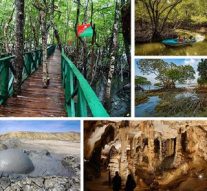
When it comes to exploring islands in India there is nothing to beat the Andaman & Nicobar islands…. where the Bengali film ‘Sabur Deeper Raja’ was filmed
By Shyam A Gaonkar
Some time the place or the location picturised in a great film can turn into a must‑see destination in ones personal life. The unique or the natural beauty of the place or a location stuck in the mind that you’d love to explore. You feel like, there’s something magic about a perticular film that pulls you into a landscape and makes you to chase it in the real life, what you actually dreamed.
The same thoughts reflected in my mind. Long back I had a chance to watch a movie, Sabuj Deeper Raja, a Bengali movie. And through that movie I admired the natural beauty of the Andaman Island and it’s surroundings. A treasure trove of pristine beaches, crystal‑clear waters, and lush jungles full of adventure, same movement I thought of that place to explore in nearby future.
Among the top Bengali directors Tapan Sinha is an exception when it comes to making films on travel and discovery, adventure and suspense. The film I watched was Sabuj Deeper Raja, which was based on the famous sleuth ‘Kakababu’ penned by Sunil Gangopadhyay. The central role of Kakababu was played by Samit Bhanja quite convincingly.
The beauty of the Andaman & Nicobar islands was wonderfully captured by the lens of the cameraman in this film. The storyline I felt was a big letdown with fantastical elements of a miraculous optical power source among the tribal and others. The significance of the film adaptation of the Kakababu series was noted for its thrilling adventure story and its beautiful location filming in the Andaman Islands.
Finally, the day came. It was a fine Sunday midnight and when the world was asleep, we woke up early at 2.30 am as per the planned itinerary, Actually, Baratang has been on my bucket list for a while! The island’s mud‑volcano and limestone caves are a unique combo. In addition to this we had to pass through the dense jungle where Jarwa community lived. The volcano is a small bubbling mud pit, it’s the only one of its kind in India, and the caves offer spectacular stalactite‑stalagmite formations after a short jungle trek.
Hiring a scorpio
From Port Blair to Baratang Jetty it is about a 100 km. We had hired a Scorpio and one Mr Biswajeet was on driving seat, who was less of driver and more of a guide-cum-friend to us. We had to explore Baratang region. Baratang is one of the most exiting places that Andaman offers to adventurous tourists. Apart from the mud volcanoes and limestone caves.
We had to reach Jirkatang entry point, a place from where we had to do the form filling formalities to enter Baratang. Let me make it simple. Andaman has four main tribal communities. A major one out of them is called Jarawas. To reach Baratang, one needs to go through the jungle which starts right after the entry to Jirkatang. The jungle houses the above mentioned tribe and is a place of great interest.
The Jarawas
I heard from some reliable sources that, long back, a group of tourists shot a video of the Jarawas and uploaded the same on social media. According to the United States, this act was not justified and it was classified as hindrance to the tribal life of the Jarawas. The issue was raised out loud and was finally brought up to the Indian government. After all sorts of discussions and panel meetings, the government decided to offer protection to the community. The jungle was then handed over to the police and CCTV cameras were also installed in the wild. A system was setup, wherein a convoy of vehicles at specific time would be accompanied by police officials, to cross the jungle from Jirkatang to Baratang and vice versa. The government also banned the use of mobiles and cameras during the journey through Jarawa locality.
As per the time schedule, the first convoy had to depart at 6 am in the morning and we had prefered the first morning schedule. If we missed this convoy then we had to wait for three hours and that’s the reason why we woke up early. We had to reach the spot a little early as each vehicle needs to register with the police officials. One may see long queues at the entry point.
Everyone in the car was enjoying a small nap and I was busy admiring the lovely natural landscapes. Mr Biswajeet clearly told me to keep him company during the drive. We started on time so we reached the spot on time and lined up in the convoy consisting of cars and buses. Jirkatang is a beautiful place with lush green landscapes. All it had was a Police Camp, a few road side eateries.
Our taxi driver carried out all necessary formalities, with all requisite details of four travellers. The convoy proceeded and the Police officials proudly sat in some random cars. The convoy was accompanied by police officers on bikes, at the begining and end of the convoy. Vehicles were to drive at a constant speed and no car/bus was allowed to overtake or stop in the way.
Everyone was wide awake and was hoping to see the Jarawa community. By telling a few of his experiences, the driver had raised the excitement. These tribes live in community huts in the midst the jungle. The huts are made of naturally available material such as palm leaves, barks, seashells and corals for ornamental purposes and also their attire.
We raced ahead in the dense jungle and guess what! We saw them on a turn, standing on little hilly area watching the convoy. They stood in a group of three.
We reached Baratang at 7.30 am. We had to cross a river in order to go to the main area which have the tourist spots. There came a ferry which was overloaded with heavy vehicles as well as commuters. I was seriously stunned seeing the pathetic condition of the ferry. In Goa we have Ro Ro ferrys which are clean and hi tech, in contrast at Baratang the old junkyard ferrys take commuters to and fro for their needs.
Biswajeet was kind enough to accompany and arrange a speed boat for me and my family. The speed boat was to show us the mud volcanoes. Each speed boat carried 8 to 10 people. Before the journey stars lifejackets were provided to us. We all had to be alert about one’s own safety or be prepared to surrender ourselves to the salt water crocodiles! I had spotted some crocodiles at the riverside while travelling to the limestone caves, while my co-passengers looked amused.
In the speed boat we had to cover a distance of 12 nautical miles which took about 30 minutes. The landscapes, trees and waterways were exciting and interesting to look at. Our guide slowed down the speed boat as we had to pass through the salt water trees. Now this was the most thrilling part because our motor boat had to slow crawl through the trees and finally berth at the side of the pier.
on to the limestone caves
After a taxi and a speed boat ride we now had to walk through the woods for around one-and-a-half kilometres. We passed through bamboo thickets, all kinds of fascinating grass and also dense forest. After a hectic track we finally reached the limestone caves at Baratang, there is a good deposit of limestone in the form of these caves and the rest in the form of layers. These deposits are either above the ground or underground. The caves are formed by the latter and their origin is complex. Limestone is sedimentary rock that was formed at the bottom of the sea. As it passes through air pockets in the soil, the drops absorb more carbon dioxide which is created by rotting plants and soluble lime. The rain water then becomes acidic, which is an affective solvent of limestone. The acid reacts with the calcium carbonate of the rocks and this results in caves.
We looked around the caves and what followed next was funny. Our guide pointed out various objects in the caves. For instance, an embossed deposit with two engraving was called Lord Ganeshji by him. This continued for half-an-hour and everyone got busy pointing their torch to the walls in order to see more clearly! The caves were quite dark and one must carry torches, which we didn’t. But mobile torches helped us. As we all know today’s era is about gadgets and technology.
After spending a good amount of time in the caves we finally headed back to the pier. Mid-way, we came across a lemonade stall run by the local farmers. The walking to the caves and back proved to be a tough physical adventure which made us very thirsty. So we welcomed the local women’s fresh lime water which they served us.
And then it was back to the trees and I still remember this walk vividly in mind. Beautiful it was! It was back on the speed boat at 11.30 am and had some quick meals in Baratang, which was tasty but very costly.
With nothing to do, we were forced to return back to the convoy spot. The next convoy was at 1 pm. We started back our journey to Jirkatang. Though this time none of the tribal people were to be seen. We were in the city by the evening and decided to visit Chidiya Tapu.
If you’re sketching the trip, Andaman’s got that perfect mix of turquoise waters and off‑beat jungle trail thrills. Baratang’s mud volcano and limestone caves are the ultimate “wow” moments. So, guys and girls do think about going out to the Andaman & Nicobar islands to explore Baratang. It’s a lifetime’s memorable experience.
 LETTER TO THE EDITOR FOR THE ISSUE DATED MARCH 21, 2026
 LOOK BACK IN ANGER, LOOK AHEAD WITH RESOLVE!By Gautam Patel
 OUR WOUNDED MANDOVI RIVER MAI! By Raaisa Lemos Vaz
 GARDEN SUBURB TO MONSTER TOWERS…Chembur then and now!
 PROTESTS PART OF GOAN DNA!
 `FISH CURRY AND RICE’ FOR GOANS
 OF IT IS GUDI PADWA…
 MIRABAG DAM WORK HALTED!
 THE WAR AGAINST TB Yes, we can end TB… By Dr Amit Dias
 70 ILLEGAL STRUCTURES USURP PRIME BEACH SPOTS FOR ILLICIT AIMS!By Dr Olav Albuquerque
 WEEKEND UPDATES
 LETTERS TO THE EDITOR FOR ISSUE DATED MARCH 14, 2026
 TOWERING INFERNOS OF GOA COMING!By Raaisa Lemos Vaz
 MIRABAG GIFTED TO ADANI!
 DEPOSITS REFUND SCAM!WHO BENEFITS FROM THE RS 10.. By Misbah Quadri
Goa is abuzz with excitement as vintage bike and car owners, users, collectors and fans are decking […]