Goa is abuzz with excitement as vintage bike and car owners, users, collectors and fans are decking […]
Old is Gold
October 4, 2016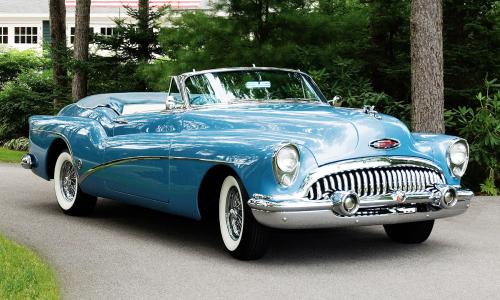

The way the Goa Jan Vishwas (Laws Amendment) Bill, 2026, was hurriedly passed in the State assembly inspires anything but people’s trust
Jan Vishwas translates to ‘people’s trust’ in English. When the Central government came out with its plan to introduce the Jan Vishwas (Laws Amendment) Bill, it very clearly stated its intent – to build a trust-based governance model by decriminalising minor offences.
But the way the bill was passed in the State legislative assembly on January 17, it inspires anything but people’s trust. Shrouded in intrigues and shadowy motives, Goa Jan Vishwas (Laws Amendment) Bill, 2026, at the face of it, appears to be an armour for white collar criminals against harsh punishments.
Curiously, the Bill has taken the ordinance route in Goa. Its timing – around the fire carnage incident at the Birch by Romeo Lane in Arpora – is also a big suspect, and its purpose even more. The hoodwinking and manipulation in the whole process is glaring to anyone who would care to look.
Expectedly, the Opposition parties erupted and charged down to the well in protest at the time of its passing in the assembly, but to no avail. In no time, the house voted to repeal the Goa Jan Vishwas (Laws Amendment) Ordinance, 2025 and passed it as Goa Jan Vishwas (Laws Amendment) Bill, 2026.
Everyone in the opposition is flummoxed by the speed of it all. Till recently, they were not even aware of the existence of ordinance issued by the governor. The draft Goa Jan Vishwas (Laws Amendment) Bill, 2026, introduced in the State assembly, states, “this Act may be called the Goa Jan Vishwas (Laws Amendment) Act, 2026. It shall be deemed to have come into force on the 2nd day of December 2025”.
It further adds; “The Goa Jan Vishwas (Laws Amendment) Ordinance, 2025 is hereby repealed”.
Congress MLA and a senior advocate Carlos Álvares Ferreira made a pertinent point that the bill was prepared “with a clear aim to allow everyone involved in the Birch by Romeo Lane to escape punishment under law.”

On December 6, last year, a fire blazed through Birch by Romeo Lane – a nightclub in Arpora – killing 25 people. The incident brought to the fore negligence and irregularities in statutory clearances by businessmen Gaurav Luthra and Saurabh Luthra or the Luthra brothers. The duo is reportedly facing charges under the Bharatiya Nyaya Sanhita (BNS), which could potentially sentence them to a jail term of up to 10 years or life imprisonment.
They are being tried under various other laws too. This is where the Jan Vishwas (Laws Amendment) Bill, 2026 comes into picture.
Intriguingly, the Goa Jan Vishwas (Laws Amendment) Ordinance, 2025 – claimed to have been promulgated by the governor on December 2, 2025 – amending various laws under which the Birch fire accused are being tried has popped up. Ferreira sees it as a conspiracy by the Chief Minister Pramod Sawant government to “give an escape route to all defaulters (in the Birch case).”
“The Bill makes this amendment (under Jan Vishwas (laws amendment Bill) effective from 2nd December, 2025 and this is important for us to note this date more particularly because this law makes amendments importantly to The Goa Excise Act, The Goa Fire Force Act, Goa Land Revenue Code (1968) and Goa Panchayat Taj Act (1994) – all of which are attracted in Birch Fire Tragedy and the consequence of sealing other premises and with an apprehension that this amendment’s effective date will give an escape to all the defaulters,” he said.
Asserting his point further, he said; “the argument will be that promulgation was done by the governor on December 2, 2025, and hence the enforcement date is December 2, 2025”.
As cautioned by him, the Act has been made retrospectively effective from December 2, 2025.
Questions baffling everyone are when, how and why the Goa Jan Vishwas (Laws Amendment) Ordinance, 2025 was issued. Under the Constitution, an ordinance is done on the aid and advice of the council of minister or the cabinet and must be presented before the legislature within six weeks.
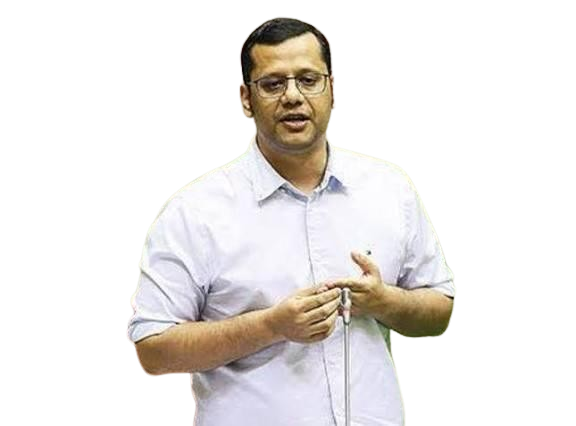
Congress MLA Yuri Alemao’s request for the notes of the cabinet meeting, where the ordinance was discussed, was brushed aside during the recent assembly session (January 12 to January 17).
“I asked for the notes (on the ordinance) of the cabinet meeting. They stayed away from giving it to me because they would get exposed. There was no reason for them (the government) to come out with the ordinance,” he told the Goan Observer.
He is very sure the ordinance was not discussed in the cabinet meeting; “Basically, I wanted to prove that there was no cabinet note (on ordinance). It (the ordinance) was never discussed (in the cabinet meeting). I confirmed it with some guy in the cabinet. It was never on the agenda (of the cabinet meeting,” informed the Congress politician.
Alemao claimed that based on the amended laws in the Jan Vishwas (Laws Amendment) Act, 2026, the accused in Birch Fire will now approach the court and try to secure bail.
Vijay Sardesai, Goa Forward Party (GFP) MLA from Fatorda constituency, highlighted a procedural lapse to establish his argument, saying if the ordinance was promulgated on December 2, 2025, then why was it not published in the government gazette on December 4, 2025, which was a Thursday. Typically, official gazette is published on Thursday every week in Goa.
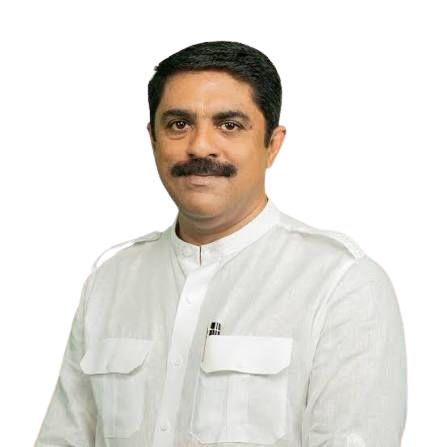
“The ordinance was passed on December 2. Thursday (December 4) is the day when you are supposed to print it in the gazette. They have not printed it on that day. Then, on December 6, Birch (fire) happened. They have published the ordinance on December 9,” he argued.
Focussing on this lapse, he raised the query; “now my question to the chief minister (Pramod Sawant) was very simple. Between the second (of December) and the ninth (of December), what happened in Goa that makes you pass a legislation or an ordinance retrospectively? The thumb rule is an ordinance is done only in an emergency. I don’t understand why an ordinance was called for to decriminalise sections of the laws”.
Calling it Jan Avishwas (distrust) Bill, Sardesai said it has been brought out to decriminalise everything that happened in the nightclub case and prepare a legal ground for the accused in Birch case to get away by just paying penalties.
“Accountability in criminal prosecution gives you jail term. Here, they are decriminalising sections to say that you must pay fines and get away with it. That is the difference,” said the Goan politician, who has lately been cornering the current establishment on several issues.
Cleofato Almeida Coutinho, an advocate, said the real issue was that Bills were getting passed in the assembly without much discussion.
“The problem with such Bills is there is hardly any time to discuss them. That should be the issue rather than the contents of the Bill. People and MLAs must have sufficient time to discuss the contents of a Bill. This Bill had almost no time for discussion,” he said.
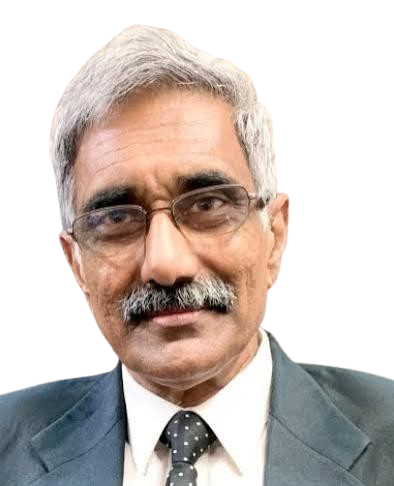
Coutinho said earlier both people and MLAs would debate and discuss Bills extensively before they were passed; “the issue is the government is not transparent. They want to supress information. They want to take you by surprise. A law is brought, and you are taken by surprise”.
Criticising the functioning of the current State government, he said; “why should it happen that people like me, you and the MLAs do not know what (Bill or ordinance) is being brought out before the house or which law or ordinance is being passed? Why should any government or legislature function like this?”
And so, what has been dressed as Jan Vishwas (people’s trust) Bill was born from the betrayal of people’s faith in democratic processes articulated in the Indian Constitution.
 LETTERS TO THE EDITOR FOR ISSUE DATED MARCH 14, 2026
 TOWERING INFERNOS OF GOA COMING!By Raaisa Lemos Vaz
 MIRABAG GIFTED TO ADANI!
 DEPOSITS REFUND SCAM!WHO BENEFITS FROM THE RS 10.. By Misbah Quadri
 THE COST OF GST COMPLIANCE IN INDIA!By Arvind Pinto
 EATING FOR SUMMER TIME
 ACUTE SHORTAGE OF COMMERCIAL AND DOMESTIC LPG FORCES RESTAURANTS TO CLOSE
 NO KIDDING ABOUT YOUR KIDNEYS Healthy Kidneys, Healthy World! By Dr Amit Dias
 WEEKEND UPDATES
 LETTERS TO THE EDITOR FOR THE ISSUE DATED MARCH 07, 2026
 AMKA NAKA ‘NEW’ GOA: Our heritage is under a hammer!By Raaisa Lemos Vaz
 39A DELHI BUILDER DRIVEN!
 THE MORIBUND STATE OF THE GOAN ECONOMY! BY Arvind Pinto
 NEW HPV VACCINE TARGETS YOUNG GIRLS!By Dr RG Wiseman Pinto
 GLOBAL WAR CLOSER TO GOA!By Olav Albuquerque
Goa is abuzz with excitement as vintage bike and car owners, users, collectors and fans are decking […]