Goa is abuzz with excitement as vintage bike and car owners, users, collectors and fans are decking […]
Old is Gold
October 4, 2016
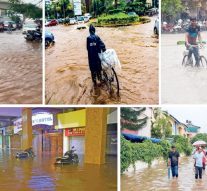
Based on civic critique associated with Sanjay Raiturkar’s arguments that flooding is man-made, not natural
Every monsoon the same ritual repeats.
Shops close. Traffic stops. Residents wait.
Recent reports confirm that 18 June Road, Patto Plaza and the bus stand routinely submerge after heavy rain, crippling business and movement.
Authorities blame rain.
Citizens blame governance.
But rain alone cannot explain predictable flooding in a capital city.
The Official Explanation — Blocked Drains
Municipal authorities themselves admit the immediate cause:
Garbage in drains caused blockage resulting in flooding.
Desilting drives are carried out every year before monsoon to clear silt and trash from nullahs.
Yet flooding returns — every single year.
So the problem is deeper than maintenance.
The Real Cause — Geography Destroyed
Panaji is not an ordinary city.
It is:
• Reclaimed marshland
• Between river and creeks
• Dependent on tidal drainage
Even experts note that during high tide, water will inevitably enter the city — but must drain out during low tide.
That drainage now fails because:
Natural water channels have been constricted by encroachment, sewage and construction.
The Urban Planning Mistake
The city expanded — the drainage did not.
Human interventions:
• Filling paddy fields
• Narrowing creeks
• Building over natural nullahs
• Concreting soil
• Raising roads above houses
Result:
Water cannot flow out by gravity anymore.
So when rain falls, Panaji behaves like a bowl.
Evidence This Is Structural — Not Weather
Even in normal rainfall years flooding occurs.
Even after drain cleaning flooding occurs.
Even after new drains flooding occurs.
The government has rebuilt kilometres of drains in recent years to reduce waterlogging — meaning the issue is chronic infrastructure failure.
The Civic Argument (Raiturkar Thesis)
Panaji flooding is a planning disaster disguised as a natural disaster.
Because:
The Consequences
If unchanged:
• Permanent flood zones
• Heritage damage
• Commercial loss
• Insurance risk
• Public health hazards (sewage mixing with water)
Already garbage accumulation and damaged roads are affecting commuters at transport hubs
 LETTERS TO THE EDITOR FOR ISSUE DATED APRIL 04, 2026
 REAL ESTATE BARONS OF GOA!
 THE SLOW VANISHING OF GOA’S GOLDEN BEACHES! By Raaisa Lemos Vaz
 WHO IS EXTRACTING GOA’S GROUND WATER? By Supriya Vohra
 PLANNING FOR RETIREMENT THE GOAN WAY! By Arvind Pinto
 WHEN `HOLY WEEK’ COMES LONG
 HPV Vaccine: PROTECTING INDIA’S DAUGHTERS FROM CERVICAL CANCER!By Dr Amit Dias, MD
 NO MORE PROTESTS AT AZAD MAIDAN?
 CURCHOREM SEX SCANDAL: Will the police really take action?By Olav Albuquerque
 WEEKEND UPDATESLETTER TO THE EDITOR FOR THE ISSUE DATED MARCH 28, 2026
 GOA’S GILDED HIGH RISE SLUMS!By Raaisa Lemos Vaz
 DIRTY TOWERS OF GOA!
 UNCLEAN WATER, CARRIER OF DISEASE! By Dr Amit Dias, MD
 LOOKING BACK AT GOA IN 60S! By Arvind Pinto
Goa is abuzz with excitement as vintage bike and car owners, users, collectors and fans are decking […]