Goa is abuzz with excitement as vintage bike and car owners, users, collectors and fans are decking […]
Old is Gold
October 4, 2016

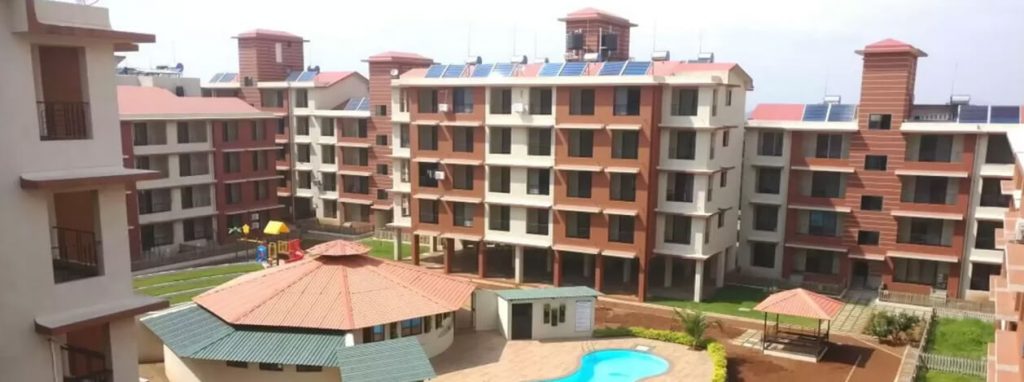
The huge complexes of tower buildings that have come up all over Goa are like concrete slums without adequate basic amenities. Very few of the tower buildings have PWD connections for safe drinking water. Though sewage treatment plants are compulsory, in most cases they are not functioning or do not have adequate capacity to deal with the huge quantities of waste generated.
IN the brochure, it is promised as “Royal Living” and in the sales pitch: It is a “Coastal Paradise.” But for hundreds of residents in Goa’s most prestigious luxury enclaves, the reality has been a stomach-churning descent into a public health nightmare. From the high- rises of Dabolim to the sprawling sea view apartments of Dona Paula – so called “New Goa” is facing an old, stinking problem, that of sewage.
The recent medical emergency at Prabhu Violetta in Dabolim, where over 160 residents were struck down by acute gastroenteritis, has pulled back the curtain on a systemic failure of waste management. Meanwhile, in the upscale hills of Dona Paula, Mathias Ocean Park stands as a testament to the “luxury slum” phenomenon — where multi-crore investments are being undermined by leaking pipes, failing STPs, and a total collapse of basic sanitation infrastructure.
The GSPCB (Goa State Pollution Control Board) has recently mandated that any complex with more than 24 flats must have its own STP. However, regulation is only as good as enforcement. In luxury projects, the aesthetic appeal — lush gardens and sparkling pools — often takes priority over the “invisible” infrastructure of pipes and tanks. The crisis occurs when the Sewage Treatment Plant (STP) on the premises fails. In the case of Prabhu Violetta, the STP was found to be operating inefficiently or being bypassed entirely. Untreated effluent was discharged into open garden areas or storm-water drains, where it seeped into the soil and directly contaminated the very bore wells the residents relied on. In Mathias Ocean Park and similar upscale developments, the reliance on internal STPs means residents are at the mercy of the society’s maintenance budget. If the “treated” water used for the beautiful gardens is derived from semi-raw sewage, it creates an aerosol effect, spreading pathogens every time the sprinklers turn on.
Where does the non-PWD water come from?
In Goa’s rapid construction boom, PWD water connections often cannot keep up with the thousands of new flats. To bridge the gap, luxury complexes rely heavily on bore wells.
DANGEROUS CYCLE
THIS creates a dangerous cycle of:
Extraction: Where the water is pumped from deep underground.
Usage: Residents use it for showering, flushing, and cleaning.
Treatment Failure: The internal STP, meant to clean this waste, is either bypassed to save electricity or fails due to poor maintenance.
Infiltration: Wherein the raw sewage is dumped into garden “soak pits” or storm drains, where it seeps back into the very groundwater the bore well is extracting.
The crisis in Dabolim began on a Tuesday in early March. At Prabhu Violetta, a complex marketed for its modern amenities, children began falling ill. By Thursday, the local health centers were overwhelmed. 160 residents in a premium complex were sidelined by a preventable waterborne outbreak!
An investigation by the Directorate of Health Services resulted in the bacteriological tests of samples taken on March 13-17 from tap water, bore wells and underground storage confirmed the worst fears: cross-contamination. The complex’s Sewage Treatment Plant had failed, and raw, untreated effluent had leached through the soil, infiltrating the ground and bore wells that supply the “treated” water to kitchen taps.
The Goa State Pollution Control Board (GSPCB) didn’t mince words and slapped the developers’ foreheads with a staggering Rs44.5 lakh fine and Rs12.5 lakh fine — lest they provide a cause stating why they shouldn’t pay this compensation for discharging untreated sewage openly. But for the victims, some of whom required IV fluids for severe dehydration, the fines are cold comfort for a breach of the most basic human rights kind: Clean potable water.
LUXURY SLUMS
UNLIKE the Prabhu Violetta complex, Mathias Ocean Park in Dona Paula represents a chronic, slow-burning crisis. Residents here report persistent structural seepages, yellow discolored water and failing infrastructure with a resident piling up case files against the builder for untreated sewage in the complex. Most of these cases mainly come from the main residential phase of the complex which includes its commercial area. The term “Luxury Slum” has gained traction among urban planners to describe these projects.
The issue at Ocean Park is compounded by the lack of a centralized government sewerage network in much of Dona Paula. Every complex is an island. When the island’s STP fails, as they often do during Goa’s frequent power fluctuations, the “ocean view” is replaced by the sight of grey water flowing into the nearby khazan lands and the Zuari estuary, destroying local fish breeding grounds.
Doctors warn that the problems can’t be undermined by addressing it as a simple stomach ache! Consuming or even bathing in this untreated water leads to various consequences that can also be fatal like:
Pathogenic invasion of E. Coli and Salmonella among many that flourish in the untreated water
Secondary infections like skin rashes, ear infections and Hepatitis A
Aerosol dangers like fecal coliform spreading in your lungs instead of clean oxygen!
The question on every resident’s lips is: Why? Why, in a complex where maintenance fees run into the thousands or even lakhs, is the water not clean? Some reasons can include
Builder Exit Strategy: Once the majority of flats are sold, developers often lose interest in the high cost of running an STP. They hand over a decaying system to a Housing Society that lacks the technical expertise to manage it.
The Electricity Factor: STPs are power-hungry. To cut costs, some management committees turn them off at night, allowing raw waste to accumulate and overflow.
Design Flaws: Many plants are built for 50% occupancy. When a complex like Ocean Park or Prabhu Violetta reaches full capacity, the system crashes and gets overridden.
Incompetent Infrastructure: If the complex relies on borewell water, a cracked sewage tank or pipe underground can seep into the aquifer, contaminating the very source of the complex’s water.
If you think your water may be contaminated or if you would like to get the water you use in your day to day life, may it be for consumption or for bathing and washing vessels, tested, some facilities you can make use of for a fee upwards of Rs 500 are,
Government Facilities:
Directorate of Health Services (DHS): Environmental and Pollution Control Wing, located at Panaji. They offer physico-chemical and bacteriological analysis of water and sewage for a fixed government fee.
Goa State Pollution Control Board (GSPCB) Laboratory: Primarily for testing effluent and industrial waste, but an essential resource if you suspect your society’s STP is discharging raw sewage.
NABL Accredited Private Labs: Private labs are often faster for individual residents and provide detailed reports within 3–5 days.
• Envirocare Labs: One of the most prominent NABL-accredited labs in Goa for food and water testing.
• SSAS Labs: Specializes in drinking water and wastewater analysis.
• Terra Hydrotech Solutions: Convenient for residents in the Vasco area, they handle groundwater and borewell analysis.
The GSPCB has begun a state-wide crackdown, but the damage to Goa’s groundwater may take decades to reverse. The path forward requires more than just better pipes; it requires a radical shift in accountability. Developers must be held criminally and the GSPCB must move from reactive fining to proactive, monthly third-party auditing of every private STP in the state. Until then, the residents of Goa’s gated communities must remain their own first line of defense.
The “New Goa” is at a crossroads. We can continue to build monuments to excess that poison their own inhabitants, or we can demand an infrastructure that respects the water we drink and the land we inhabit. Until the “luxury” in a brochure includes the guarantee of a clean glass of water, the gilded gates of Goa will remain a beautiful facade for a deepening environmental disaster. The stench reigning over the city of Panjim and Vasco may disappear but the bitter truth will remain ,which is that the rivers and the soil of this Earth that sustains your life don’t care about the luxury you build, they only feel the weight of its untreated waste.
The next outbreak isn’t a matter of if, but where.
 LETTER TO THE EDITOR FOR THE ISSUE DATED MARCH 28, 2026
 DIRTY TOWERS OF GOA!
 UNCLEAN WATER, CARRIER OF DISEASE! By Dr Amit Dias, MD
 LOOKING BACK AT GOA IN 60S! By Arvind Pinto
 THE ROAD WE STILL WALK: CONFRONTING CASTE ON VAIKOM’S ANNIVERSARY! By Prema Viswanathan
 WILL THE NEW ADVOCATES PROTECTION BILL STOP ATTACKS ON LAWYERS?By Dr Olav Albuquerque
 ABHINANDAN LODHA CONQUERS BICHOLIM
 IT’S `NIMBU-SODA’ SEASON!
 `Our Rights: Essays on Law, Justice and the Constitution’ by Dr Justice F I Rebello WHAT ARE YOUR RIGHTS?Most of us don’t even know!
 WEEKEND UPDATES
 LETTER TO THE EDITOR FOR THE ISSUE DATED MARCH 21, 2026
 LOOK BACK IN ANGER, LOOK AHEAD WITH RESOLVE!By Gautam Patel
 OUR WOUNDED MANDOVI RIVER MAI! By Raaisa Lemos Vaz
 GARDEN SUBURB TO MONSTER TOWERS…Chembur then and now!
 PROTESTS PART OF GOAN DNA!
Goa is abuzz with excitement as vintage bike and car owners, users, collectors and fans are decking […]