Goa is abuzz with excitement as vintage bike and car owners, users, collectors and fans are decking […]
Old is Gold
October 4, 2016
IT is not the Lodhas or the DLF Group or all the Delhi and Mumbai and Bengaluru builders who have the largest land holdings in Goa. It is our own homegrown mining barons. The Salgaocars, the Dempos, the Fomentos and the Chowgules of Goa. The Rs35,000 crore which was allegedly looted and plundered by the Goan mining industry, as testified by the Shah Commission, has obviously been diverted into building huge real estate banks.
BASED on a public interest litigation filed by the Goa Foundation way back in 2012, the Supreme Court appointed the Justice MB Shah Commission to enquire into the illegal gains made by the mining industry in Goa. The Shah Commission pointed out that all the mining leases had ended in 2007. That all the ore extracted, transported and exported between 2007 and 2012 when mining was suspended was illegal. That the mining industry had continued extracting millions of tons of ore even though the leases had expired. That the mining companies had extracted ore much beyond their licensed capacity. The amount of ore that can be extracted from a specific mine is limited to a certain quantity in the interests of inter-generation equity.
THE Shah Commission also found that there had been large scale evasion of royalty payable to the State government and export duty on the export of ore. Based on the Shah Commission Report the Supreme Court suspended mining with retrospective effect from 2006 when the mining leases had expired. It may also be pointed out that 2011 and 2012 witnessed a huge windfall due to the Chinese demand for iron ore, which shot up to the sky as China geared up to build a steel fame for the Olympic Games which it hosted in 2012. China needed huge quantities of steel, pushing up the price of iron ore from an average of US$20 and US$30 a ton to US$200 a ton.
Though the Shah Commission estimated that 35,000 tons of iron ore at an average of Rs5,000 a ton had been illegally mined and exported, there was no attempt at recovering the amount from the mine owners. Ultimately, the State and Central government were only able to recover less than Rs300 crore of the total of Rs35,000 crore. So what happened to the huge Rs35,000 crore loot by the mine owners of Goa?
In fact, the suspension of mining was a boon to the mine owners. They did not have to incur any expenditure on operating the mines, or transporting the ore, or exporting it. Though the mining operations were stopped the cash flow remained with them. This was besides an estimated Rs400,000 crore that was their profit from mining for the period 1967 to 2007 when mining was suspended. All this huge amounts of money was quietly diverted into buying huge quantities of land which are now being converted into mega real estate projects.
MINING BARONS IN REAL ESTATE
THE first mining baron to diversify into hospitality was Auduth Timblo of Fomento who started the Cidade de Goa in the early 80s. Never mind that almost 25 years later the Supreme Court decided that a large part of the Cidade de Goa violated CRZ rules and should be demolished. This included the Grand Sala, the convention hall. But Auduth Timblo who was closely linked with Digambar Kamat, got the then CM to modify the CRZ rules with retrospective effect. Fomento went on to build the seven-storied convention tower block right on the seafront cliffs, now called the Taj Horizon as it is managed by the Indian Hotels Group.
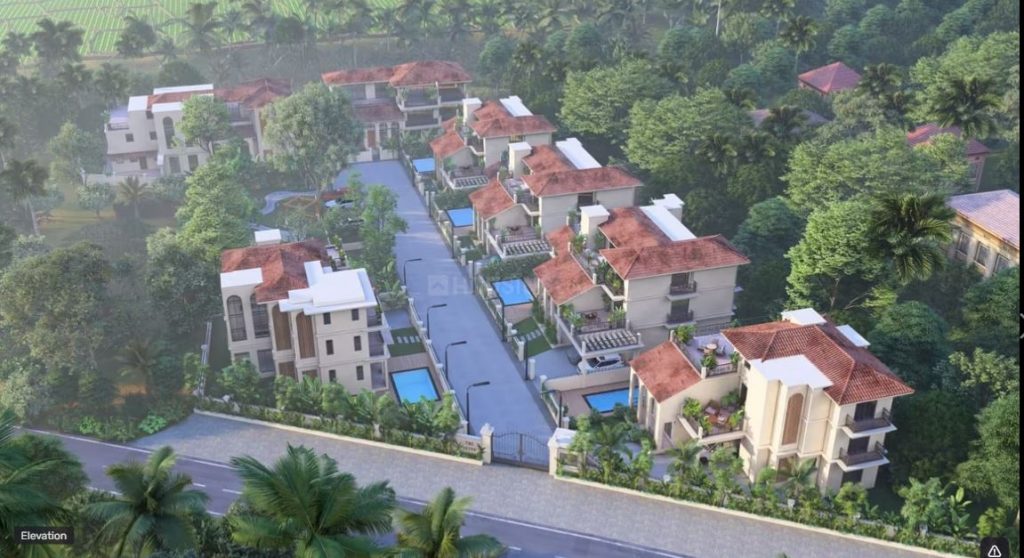
The Fomento group is heavily invested in real estate through Fomento Realty. Among the publicly listed real estate projects of the company are the Varka Palm Villas, the Varka Palm Apartments and the 7 Villa Boutique of ultra luxury villas with private pools on large plots that have come up at Bambolim beach front. The Fomento group is promoting villas in north Goa and apartments in south Goa. It also has plots in Shiroda.
The Dempo Group withdrew from the mining industry even before the ban on mining came into force. Shrinivas Dempo sold his mining interests to the Vedanta group of London which had already purchased the Sesa Goa group. The Dempos diversified into real estate under the Devashri brand name, they have built gated colonies of 2BHK and 3BHK apartments in Panjim, Caranzalem, Taleigao, Porvorim and Vasco da Gama. They also have built two commercial projects, namely the Dempo Trade Center at Patto, Panjim and the Dempo Odyssey, a residential complex in Vasco. On the cards are super luxury apartment complexes at Miramar beach area where at present they have educational institutions.
In addition, a third generation Dempo group member, Rajesh Dempo, has also gone into real estate with a Vision Dempo hospitality project. Rajesh Dempo owns The Crown hotel on a hilltop overlooking the Mandovi bridges. The group also has projects on the Kadamba plateau at Porvorim and Siolim.
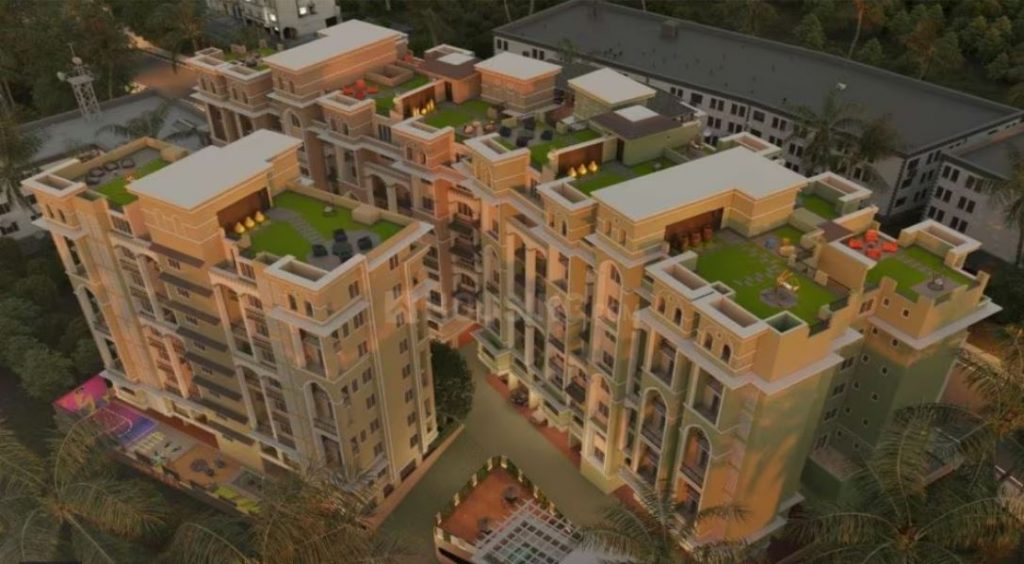
The Chowgules are probably the first mining group to set up a real estate wing. The Chowgules real estate and construction company built the Casa Del Sol residential and corporate complex adjacent to the Goa Marriott Resort at Miramar beach. The Chowgule group has housing colonies on the township model in Vasco. The company is also active with new projects in Porvorim and in south Goa.
The Salgaocar group before it split invested in the Goa Marriott Resort on the Miramar seashore in 2021. Indeed, the 140-room resort completed its silver jubilee this year in 2026. Even before the split between the two brothers Shivanand and Dattaraj they had built large villas side by side in the Dona Paula cliff top with a 360 degree view of the sea. They also built similar twin villas on the Candolim beach close to the old Kingfisher Villa of Vijay Mallya.
Separately, Dattaraj Salgaocar had bought the old ancestral home of the grandparents of advocate Aires Rodrigues and converted it into the Sunaparanta Art and Cultural Center up at the Altinho of Panjim. It is a family property owned jointly by Dipti Dattaraj and his two children. Dattaraj on his own has developed the Fairfield Marriott property in Benaulim. The group also has a 4-bedroom luxury villa in Saligao called the Palmeira Boutique Resort.
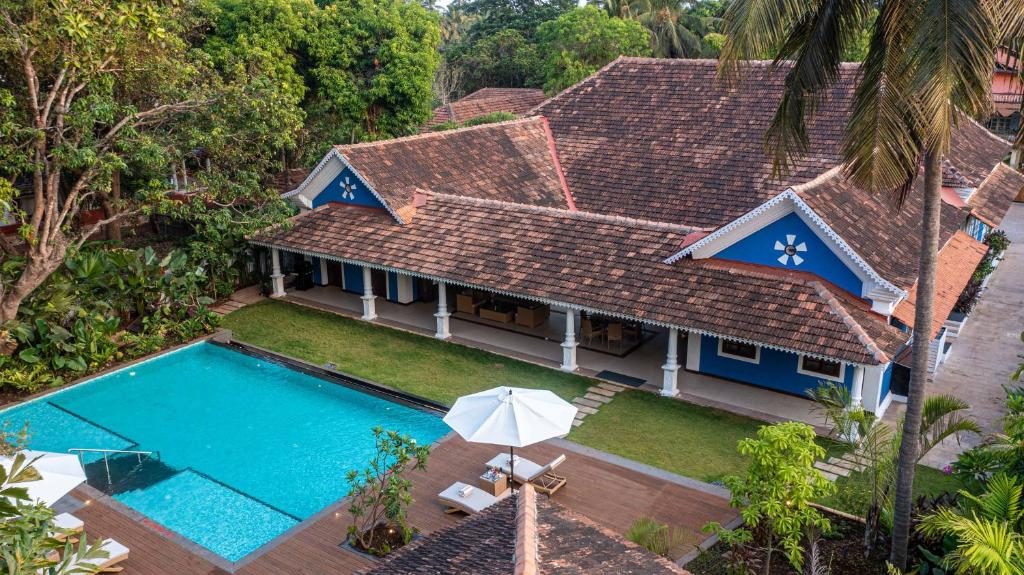
The villas owned by Dattaraj Salgaocar have been handed over to the Taj group to be maintained and managed. You can hire one of these villas for Rs1lakh plus per day. They come with their own butler, chef, gardener and chauffeured limousine. Many other mining barons have handed over their villas to the Taj to market and manage their properties. There are over 20 super luxury villas marketed and managed by the Taj under the AMA category. The villas are owned by private parties but marketed and managed by the Taj.
WOOING HIGH END BUYERS
ALL the mining groups have large parcels of land all over Goa from Pernem to Canacona. Dattaraj Salgaocar has large portions of land even in Palolem which has become the most favorite beach for very high end tourists from the UK and Europe. Similarly, it is claimed that the Dattaraj Salgaocar group is planning to set up several more Marriott hotels along a model where the property will be owned by the Salgaocars, but managed by the Marriott group. The VM Salgaocar realty company is the main real estate arm of the Salgaocar group. The Pyramid Real Estate and other dummy companies are the vehicles for the real estate projects of Shivanand Salgaocar. This includes a high end super luxury villa project in the Bicholim taluka which is not the exclusive preserve of Abhinandan Lodha.
THE question arises of transparency and accountability. Did the Rs35,000 crore flagged by the Shah Commission go into acquisition of land and diversification into hospitality in Goa? How much of this money is ill-gotten wealth? Has the Enforcement department checked if there is any money laundering? There have always been claims that since all the ore from Goa was exported initially to Korea and Japan and subsequently to China, part of the money may have been paid in dollars abroad. It has been reported that more than one mining baron have huge estates in London, including Dattaraj Salgaocar and Auduth Timblo.
All the big mining groups have huge amounts of land all over Goa. These land parcels were bought from the Rs4 lakh crore surplus from mining during the period 1967 to 2007, when all mining activity was suspended. It is suspected that these real estate projects are registered in the name of anonymous companies called Limited Liability Partnerships. The name of some of this LLPs range from Vardaman and Revathi of the Salgaocar group, Motown of the Dempo group and Infrastructure Logistic which is part of this Fomento group
LLPs or Limited Liability Partnerships are the channels which the Goan mining magnates used, to divert funds that were generated from the iron ore that was extracted and exported, without payment of royalty to government. The MB Shah report has highlighted the fact of extraction of iron ore by Goan mining families in excess of the sanctioned quota. This excess was exported and the proceeds of this excess was deposited in several limited liability partnerships that the mining families created.
The process started in the year 2005-2008. During this period, iron ore in excess of the sanctioned capacity was mined. During this period there was heightened purchase by China. During this period, Chinese steel mines were willing to buy Goan iron ore fines that had only 51-55 Ferric content, below the 62@ bench mark.
The export proceeds were under-invoiced to reduce the declared value. The difference between the actual and declared valued was parked in LLPs created by the Goan mining magnates.
Unfortunately, the Shah Commission only investigated the misuse of the mining leases and inquired into the excess export volumes that were exported and the resulting royalty evasion, that would have flowed to the Goa government. However the LLP ownership and the financial flows into these LLPs were not tracked.
The Goan mining families used the money received from the illegal mining and channelled this into limited liability partnerships formed with names of different family members. These LLP were created in order to divert this ill-gotten wealth into entities that would not easily be traceable.
Unfortunately, the Shah report did not investigate these LLP but was only content to indicate the modus operandi of these transactions. The tax department did attempt to investigate and track these, but were informally instructed not to pursue these leads. Over the decades, these families have now diverted some of these funds into real estate and other legitimate business fronts.
The Taj group has 20 plus super luxury villas owned by mine owners but managed, maintained and marketed by Taj group with rentals ranging from Rs50,000 to Rs 5lakh per night
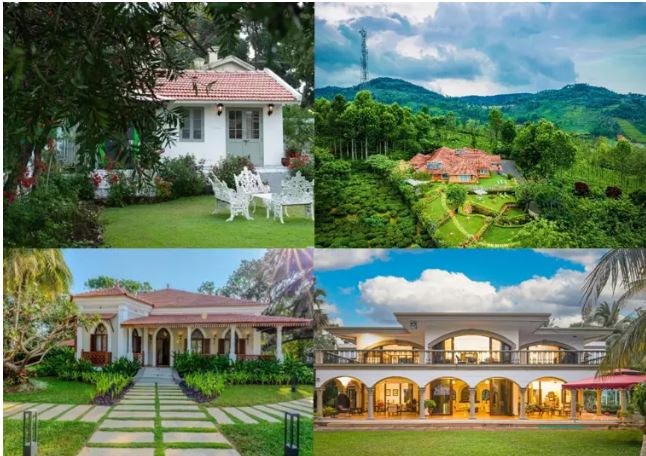
Taj ama villas in Goa (amã stays & trails)
Heritage & signature villas
Braganza House
Cardozo House
Palmeira de Saligao & Socorro
Hacienda de Bastora
These are restored Portuguese-era homes with strong heritage value.
Premium Private Villas & Estates
Villa Siolim
Aguada Villas (including sea-facing luxury units)
Villa Eterna
Imperial Villa
Palatium Villa (Candolim)
These are modern luxury villas with pools, lawns, and concierge service.
Boutique villas & themed homes
Casa Aroma (Assagao)
Chikoo Villa
The Lamp House
Ambalama (Assagao)
Mudita Estate
AssA 360
Smaller curated luxury homes, popular for private stays and long weekends.
Unique / large estate properties
Eden Farms
70 Vale
Larger estate-style properties with expansive grounds, ideal for events or extended stays.
 LETTERS TO THE EDITOR FOR ISSUE DATED APRIL 04, 2026
 THE SLOW VANISHING OF GOA’S GOLDEN BEACHES! By Raaisa Lemos Vaz
 WHO IS EXTRACTING GOA’S GROUND WATER? By Supriya Vohra
 PLANNING FOR RETIREMENT THE GOAN WAY! By Arvind Pinto
 WHEN `HOLY WEEK’ COMES LONG
 HPV Vaccine: PROTECTING INDIA’S DAUGHTERS FROM CERVICAL CANCER!By Dr Amit Dias, MD
 NO MORE PROTESTS AT AZAD MAIDAN?
 CURCHOREM SEX SCANDAL: Will the police really take action?By Olav Albuquerque
 WEEKEND UPDATESLETTER TO THE EDITOR FOR THE ISSUE DATED MARCH 28, 2026
 GOA’S GILDED HIGH RISE SLUMS!By Raaisa Lemos Vaz
 DIRTY TOWERS OF GOA!
 UNCLEAN WATER, CARRIER OF DISEASE! By Dr Amit Dias, MD
 LOOKING BACK AT GOA IN 60S! By Arvind Pinto
 THE ROAD WE STILL WALK: CONFRONTING CASTE ON VAIKOM’S ANNIVERSARY! By Prema Viswanathan
Goa is abuzz with excitement as vintage bike and car owners, users, collectors and fans are decking […]