Goa is abuzz with excitement as vintage bike and car owners, users, collectors and fans are decking […]
Old is Gold
October 4, 2016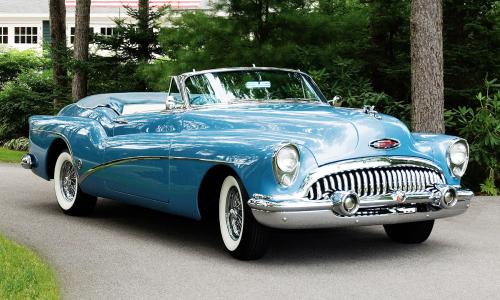

AI CAN LEAD TO HALLUCINATIONS!
THE main disadvantages of AI include high implementation and maintenance costs, significant job displacement due to automation, and ethical concerns regarding bias, data privacy and lack of transparency.
AI lacks human creativity and emotion, creates over-dependence, poses security risks, and can produce inaccurate results or “hallucinations.” Developing and maintaining AI systems is expensive, requiring significant investment in infrastructure and specialized talent. Who will bear it and why?
Automation of routine and complex tasks threatens to make various human job roles redundant, causing unemployment in certain sectors. So is this the part of practical development?
AI systems can inherit, amplify and perpetuate social biases present in their training data, leading to unfair or discriminatory outcomes. In this case justification is needed to the society. AI cannot replicate human emotional intelligence, creativity, or contextual understanding, limiting its effectiveness in roles requiring human empathy or original thought.
Hallucinations and inaccuracy. Generative AI can generate incorrect, false, or misleading information confidently, which can lead to bad decisions. Excessive dependence on AI may lead to a decline in human critical thinking, problem-solving abilities, and in education reduced teacher autonomy. This are big and milestone questions to answer.
Without constant care, retraining and updates, AI models can degrade in performance over time. So time to think about AI while implementing it for general use.
— Rajesh Banaulikar, Arpora, Goa.
VANDE MATARAM MUST MEAN IMPOWERED MINDS, NOT EMPTY RITUALS!
WHILE Chinese children are being introduced to coding, robotics and Artificial Intelligence at a very young age – with massive investments going into research, technology and futuristic education, India’s think tanks are busy in only talking about past history, or symbolic gestures. The most recent one being making all six stanzas of Vande Mataram compulsory in schools.
While patriotism is important, real patriotism in today’s world is preparing our children for the future and giving them better education, better cities and lives to live. Besides equipping them with skills in science, innovation and critical thinking. Nations that have invested in knowledge and education have progressed by leaps and bounds in every sector.
Both India and China were near at par but China has galloped far, far ahead now. Now it did not become a global leader by embracing symbolism or religion; it did so by systematic planning and relentless focus on education and technology. That is why it stands today like a giant on every front. Challenging even USA and Russia and other countries.
Perhaps that is why Prime Minister Modi had no option but to say, “Jo uchit hai woh karo,” during the China-India border flashpoints, because China is technologically way too ahead of us at this point of time, and India’s options realistically while taking them on are limited.
India has the talent, the youth and the potential. But we need to invest more in minds than in slogans or divisive politics. If we choose substance over symbolism we can still shape a stronger, smarter future or else, the future does not look too bright. Government must do a reality check and focus its energies in the right direction. Any other option means letting our own country down.
—Sandeep Heble,Goa
 LETTER TO THE EDITOR FOR THE ISSUE DATED MARCH 28, 2026
 GOA’S GILDED HIGH RISE SLUMS!By Raaisa Lemos Vaz
 DIRTY TOWERS OF GOA!
 UNCLEAN WATER, CARRIER OF DISEASE! By Dr Amit Dias, MD
 LOOKING BACK AT GOA IN 60S! By Arvind Pinto
 THE ROAD WE STILL WALK: CONFRONTING CASTE ON VAIKOM’S ANNIVERSARY! By Prema Viswanathan
 WILL THE NEW ADVOCATES PROTECTION BILL STOP ATTACKS ON LAWYERS?By Dr Olav Albuquerque
 ABHINANDAN LODHA CONQUERS BICHOLIM
 IT’S `NIMBU-SODA’ SEASON!
 `Our Rights: Essays on Law, Justice and the Constitution’ by Dr Justice F I Rebello WHAT ARE YOUR RIGHTS?Most of us don’t even know!
 WEEKEND UPDATES
 LETTER TO THE EDITOR FOR THE ISSUE DATED MARCH 21, 2026
 LOOK BACK IN ANGER, LOOK AHEAD WITH RESOLVE!By Gautam Patel
 OUR WOUNDED MANDOVI RIVER MAI! By Raaisa Lemos Vaz
 GARDEN SUBURB TO MONSTER TOWERS…Chembur then and now!
Goa is abuzz with excitement as vintage bike and car owners, users, collectors and fans are decking […]