Goa is abuzz with excitement as vintage bike and car owners, users, collectors and fans are decking […]
Old is Gold
October 4, 2016
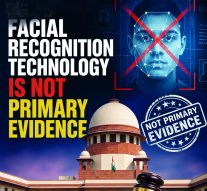
THE intersection of technology and law enforcement is redefining the parameters of criminal justice in India. Among the most potent and controversial tools entering the police arsenal is Automated Facial Recognition System (AFRS) technology.
From Delhi to Hyderabad, and increasingly in Goa, law enforcement agencies are deploying facial recognition software to identify suspects, track missing persons, and police public spaces. However, as the use of this technology accelerates, a critical question confronts our legal system: Is facial recognition software legally admissible as evidence in a court of law?
To understand the legal standing of facial recognition, we must look through the lens of the Indian Evidence Act, 1872 (now replaced by the Bharatiya Sakshya Adhiniyam, 2023, or BSA). In the eyes of Indian law, facial recognition data falls under the broad category of electronic and scientific evidence. Like fingerprints, DNA profiling, or ballistics, it represents an algorithmic opinion on identity.
The Hurdle of Expert Opinion and Electronic Records
FOR facial recognition data to even be considered by a judge, it must clear two primary statutory hurdles.
First, under Section 45 of the Evidence Act (now Section 39 of the BSA), the software’s analysis must qualify as an expert opinion. When a computer program matches a suspect’s face from CCTV footage against a database, the report generated is essentially a scientific conclusion. However, unlike a human fingerprint expert who can be cross-examined on their methodology, an algorithm operates within a “black box.”
The underlying source code, error rates, and training data are often proprietary secrets of private tech corporations. Defence lawyers cannot easily cross-examine a line of code, making the baseline reliability of such “expert opinions” highly questionable.
Second, because this evidence originates from a computer, it must satisfy the strict conditions of electronic records under Section 65B of the Evidence Act (now Section 63 of the BSA). This requires a specific certificate verifying that the computer system, the database, and the cameras were functioning correctly at the time the data was captured and processed. If the police fail to provide a flawless chain of custody for the digital images or cannot certify the integrity of the software server, the evidence is legally dead on arrival.
The underlying rule in criminal courts is that for anything to be admissible as evidence, the witnesses must depose in court and be subjected to a rigorous cross examination to test the veracity of their allegations which remain allegations until accepted by the court as primary evidence.
Investigative Tool vs. Admissible Proof
THE foundational rule currently guiding Indian jurisprudence is that facial recognition technology is an investigative tool, not substantive proof of guilt.
There is a vital legal distinction between using a technology to track down a suspect and using it to convict them. If a camera at a Goan casino or a beach in Calangute flags a face that matches a historical offender in a police database, that match gives the police a lead. It allows them to initiate an investigation, question the individual, and seek corroborating evidence — such as eyewitness accounts, physical recovery of stolen goods, or DNA.
However, a match report from a facial recognition program cannot, by itself, form the basis of a conviction. The Supreme Court of India has consistently maintained that scientific tools with margins of error cannot override the constitutional guarantee of a fair trial. Facial recognition software does not produce absolute certainty; it produces a probability score. A report might state there is an “85% statistical probability” that the person on camera is the accused. In a criminal trial, where the standard of proof is “beyond a reasonable doubt,” an 85% algorithmic probability is simply not enough to strip a citizen of their liberty.
The Shadow of Constitutional Violations
BEYOND the rules of evidence, the admissibility of facial recognition is deeply entangled with constitutional rights. In the landmark K.S. Puttaswamy v. Union of India judgment, the Supreme Court declared privacy to be a fundamental right under Article 21 of the Constitution. The Court established a three-pronged test for any state action that infringes on privacy: legality (there must be a law authorizing it), necessity (it must serve a legitimate state aim), and proportionality (the least intrusive means must be used).
Currently, India lacks a specific, dedicated statutory framework regulating the deployment of facial recognition by police. The technology is being used via executive orders and administrative sanctions. Without a transparent law enacted by Parliament that specifically governs how facial recognition data is harvested, stored, and verified, its presentation in court faces severe constitutional vulnerability. Evidence obtained through means that systematically violate the fundamental right to privacy can be challenged as tainted and inadmissible.
Furthermore, Article 20(3) of the Constitution protects citizens against self-incrimination — the right not to be a witness against oneself. While courts have allowed the passive collection of fingerprints and DNA samples, the mass, non-consensual scanning of citizens’ faces in public places pushes the boundaries of this protection, raising questions about whether the state can covertly extract biometric evidence from an individual’s body without their consent.
The Problem of Algorithmic Bias
FROM a practical evidentiary standpoint, the software itself is on trial. Global studies have conclusively proven that facial recognition algorithms suffer from systemic demographic biases. They exhibit significantly higher error rates when identifying women, younger individuals, and people with darker skin tones.
In a diverse nation like India, where facial structures, skin tones, and lighting conditions vary wildly across regions, the potential for “false positives” (wrongly identifying an innocent person as a criminal) is dangerously high. If the technology itself is scientifically flawed and prone to demographic bias, it fails to meet the standard of reliable scientific evidence required by courts.
The Road Ahead
AS Goa moves toward smarter policing and digital surveillance, our legal framework must evolve to prevent miscarriages of justice driven by automated systems. If facial recognition is ever to become truly admissible as standalone evidence, India requires a robust, statutory law that mandates independent audits of police software, establishes strict error-rate thresholds, and guarantees the defence full access to the technology’s technical parameters.
Until then, facial recognition remains a digital pointer, a high-tech assistant for a police officer on the beat. It can help find the needle in the haystack, but when the trial begins, the prosecution must still prove its case the hard way—with ironclad, legally sound, and human-verified facts. The machine can assist the investigator, but it cannot play

 LETTERS TO THE EDITOR FOR ISSUE DATED SEPTEMBER 12, 2026
 GOAN TEACHERS ARE CONTRACT LABOR!
 THE COLOUR IS PRESTIGIOUS! THE PROCESS MUST BE EQUALLY SO!
 DOGS ATTACK GOANS, OWNERS GET ACQUITTED!By Dr Olav Albuquerque & Deborah Cordeiro
 CYBER FRAUD: A THREAT TO FINANCIAL SECURITY & MENTAL WELL-BEING! By Adv Vinayak (Mama) D Porob
 RUPEE IN FREE FALL: WHY THE SLIDE MATTERS MORE THAN THE NUMBER! By Arvind Pinto
 SHRAVAN BYE-BYE, CHOVOTH WELCOME!
 HUSBANDS SHOULD KNOW HOW TO COOK, BE WILLING TO WASH VESSELS!
 HOLD ON TO LIFE: CHANGING THE NARRATIVE ON SUICIDE! By Dr Amit Dias
 WEEKEND UPDATESLETTER TO THE EDITOR FOR THE ISSUE DATED SEPTEMBER 05, 2026
 WHEN A MOUNTAIN BECAME A RIVER!By Ranadhir Mukhopadhyay
 REAL GROUP TURNS 80!
 WHEN ‘I’LL MARRY YOU’ IS A LIE! Why Goa’s courts are failing women…By Dr Olav Albuquerque & Deborah Cordeiro
 WHEN THE LEGAL FRATERNITY TOOK TO THE FIELD IN GOA! By Adv Vinayak (Mama) D Porob
Goa is abuzz with excitement as vintage bike and car owners, users, collectors and fans are decking […]