Goa is abuzz with excitement as vintage bike and car owners, users, collectors and fans are decking […]
Old is Gold
October 4, 2016
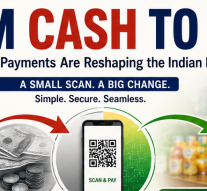
INDIA’S digital payments ecosystem has moved well beyond being merely an alternative to cash. It is now influencing consumer behaviour, formalising economic activity and expanding the reach of financial services. The record number of transactions in July 2026 underlines the scale and depth of this transformation.
According to data released by the National Payments Corporation of India, the Unified Payments Interface processed 23.66 billion transactions worth Rs29.88 trillion during the month — its highest-ever monthly volume. Compared with June, transaction volume increased by 4.1%, while value rose by 3.3%. On a year-on-year basis, the number of transactions grew by 22% and their value by 19%.
The significance of these numbers lies not merely in the creation of another record. July did not witness any exceptional festival-related or structural event capable of producing an unusual surge in payments. The growth, therefore, appears to have been driven largely by ordinary economic activity. Digital payments are increasingly embedded in routine purchases, utility payments, mobile recharges and person-to-person transfers.
A transformation beyond the metros
THE most consequential change is taking place outside India’s metropolitan centres. In Tier-2 and Tier-3 cities, small towns and rural markets, UPI is moving from being an occasional payment option to becoming part of everyday commerce. Vegetable vendors, autorickshaw drivers, neighbourhood stores and small service providers are increasingly accepting payments through QR codes.
This expansion has been aided by the simplicity of UPI, the availability of low-cost smart phones, wider mobile internet access and the near-ubiquity of QR codes. Community-level familiarity has also strengthened trust: individuals who were initially hesitant are often introduced to digital payments by shopkeepers, relatives, bank correspondents or other users in their immediate surroundings.
The fact that UPI transaction volume is growing faster than transaction value suggests that the platform is becoming particularly important for small-ticket retail payments. The digitalisation of such transactions represents a deeper shift than the migration of a few large payments from one electronic platform to another. It indicates a change in the economic behaviour of ordinary households and small businesses.
Formalising economic activity
INDIA has historically had a large cash-dependent informal economy. A considerable part of the income and turnover of small enterprises remains undocumented, making it difficult for them to establish their financial capacity before banks and other regulated institutions.
Digital payments can gradually address this information gap. Each transaction generates a verifiable financial trail. For a small trader, self-employed worker or micro-enterprise, a consistent record of digital receipts can provide evidence of turnover and cash flow. Subject to informed consent, adequate privacy safeguards and responsible lending practices, such data may help banks assess creditworthiness more accurately.
This could improve access to formal credit for borrowers who may not possess conventional documentation such as audited financial statements, income-tax returns or valuable collateral. It may also reduce their dependence on informal lenders who frequently charge exorbitant interest rates.
Digital payments can improve economic efficiency as well. Instant transfer of funds accelerates the working capital cycle, reduces the cost and risk of handling cash and enables businesses to maintain more accurate accounts. At scale, these gains can improve productivity and facilitate the integration of small enterprises into the formal economy.
Yet, a digital trail must not become a substitute for prudent credit appraisal. Payment data may reflect cash flow but cannot, by itself, establish the viability of a business or the borrower’s ability to repay. Nor should individuals be denied essential financial services merely because their digital footprint is limited.
The promise of financial inclusion
THE growth of digital payments has important implications for financial inclusion. Banking services are no longer tied entirely to the physical presence of a branch or an automated teller machine. A bank account linked to a mobile phone can enable an individual to send and receive money, pay bills and undertake transactions at any time.
The Aadhaar Enabled Payment System has a distinct role in areas where bank branches, ATMs and reliable internet connectivity remain limited. AePS transactions increased by 3% in July to 100 million, from 97 million in June and 88 million in May. Their aggregate value rose to Rs275.39 billion, compared with Rs260.51 billion in June.
By using Aadhaar-based biometric authentication through business correspondents, customers can withdraw or deposit money and check their account balances closer to their homes. This is particularly relevant for pensioners, beneficiaries of welfare schemes, workers under the rural employment guarantee programme and people who may not be comfortable using smart phone-based applications.
Financial inclusion, however, cannot be measured only by the number of bank accounts opened or transactions processed. An individual is meaningfully included only when he or she can use financial services independently, understands the costs and risks involved, and has access to effective grievance redress.
Biometric authentication failures, connectivity problems, inadequate cash with business correspondents and instances of unauthorised AePS withdrawals can disproportionately affect vulnerable customers. The expansion of access must, therefore, be accompanied by stronger accountability and consumer protection.
A differentiated payments ecosystem
THE growth of UPI does not imply that other digital payment systems have become redundant. Immediate payment service transactions increased by 3% in July to 364 million, from 354 million in June. Their value rose by more than 5% to Rs7.12 trillion.
On a year-on-year basis, however, IMPS transaction volume declined by 24%, even as value increased by 13%. This divergence suggests that many small-value transfers may have migrated to UPI, while IMPS continues to be used for relatively high-value, immediate inter-bank transfers. The two systems are increasingly serving differentiated requirements within the payments ecosystem.
FAST recorded a different trend. Its transaction volume fell by 4% to 347 million in July, while value declined marginally to Rs71.43 billion from Rs72.15 billion in June. Average daily volume and value also decreased. The decline may reflect seasonal variations in highway traffic and travel patterns rather than a weakening of digital payments. Monthly movements in sector-specific platforms must be interpreted in their appropriate economic context.
Transparency, corruption and unaccounted wealth
DIGITAL payments can contribute to greater transparency by creating records of transactions that are otherwise difficult to trace in a cash-based economy. They can improve tax compliance, help identify suspicious financial activity and make it harder for businesses to conceal their entire turnover.
The combination of digital payments and direct benefit transfers can also reduce leakages in public welfare programmes. When pensions, subsidies, scholarships and other benefits are credited directly to verified bank accounts, the scope for fictitious beneficiaries, intermediaries and unauthorised deductions can be reduced.
Similarly, greater use of digital payments in government procurement, salaries and public expenditure can facilitate audit and improve accountability. These systems can make corruption more difficult by increasing the probability that illicit financial flows will leave an identifiable trail.
It would, however, be misleading to suggest that digitalisation alone can eliminate corruption or unaccounted wealth. Corruption is not confined to cash. Shell companies, fraudulent invoices, benami arrangements, trade-based money laundering, mule accounts and manipulated digital identities can also be used to conceal or transfer illicit funds.
Technology can produce an audit trail, but institutions must possess the competence and independence to examine it. Effective tax administration, data analytics, coordination among enforcement agencies and timely prosecution remain indispensable. Digital payments are an important instrument against unaccounted transactions, but they are not a substitute for institutional integrity.
The financial literacy deficit
The pace at which digital payments have expanded has not been matched by a comparable improvement in digital and financial literacy. Many first-time users do not fully understand the function of a UPI PIN, payment request, QR code, one-time password or screen-sharing application.
Fraudsters exploit precisely these gaps. Customers are deceived into approving payment requests, revealing authentication details, downloading remote-access applications or contacting fraudulent customer-care numbers. The risks are particularly acute for senior citizens, rural users and those with limited literacy.
Financial education must, therefore, go beyond teaching people how to operate a mobile application. Users must understand that a UPI PIN is required to send money, not to receive it; that unknown links and applications should be avoided; and that suspected fraud must be reported immediately to the bank and the cybercrime reporting system.
Banks, payment service providers and public authorities must also stop placing the entire burden of security on customers. Applications should be designed to minimise error, warnings should be available in regional languages, suspicious transactions should trigger timely alerts and grievance-redress mechanisms should be simple and accessible.
Trust as essential infrastructure
DIGITAL payments ultimately depend on public trust. A failed transaction, an unexplained debit or an unresolved fraud can undermine confidence far more quickly than promotional campaigns can build it. The expansion of transaction volumes must, therefore, be accompanied by investments in cybersecurity, system resilience and time-bound resolution of complaints.
Data protection is equally important. Payment data can be used to improve financial services, but it can also enable intrusive profiling and discriminatory pricing. The use of transaction histories for lending, marketing or risk assessment must be governed by meaningful consent, transparency and robust privacy safeguards.
India has created a digital public payments infrastructure of remarkable scale. The July 2026 data demonstrate that it is no longer limited to digitally sophisticated urban consumers. It is becoming part of the economic lives of households, workers and small businesses across the country.
The next phase of this transformation must be judged not only by the number and value of transactions, but also by the quality of inclusion it produces. Digital payments can widen opportunity, formalise commerce and strengthen transparency. But these gains will endure only if the system remains secure, accessible and accountable. India has succeeded in building the rails of a digital economy; it must now ensure that every citizen can travel on them safely and with dignity.
 LETTER TO THE EDITOR FOR ISSUE DATED SEPTEMBER 19, 2026
 ELEVATED HIGHWAY TO HELL!
 MEDICAL DEVICES LOOT!By GS Mudur
 HOSTILE ACT BY PAKISTAN: `PNS HUNAIN’ TRIED TO DISRUPT OUR NAVAL SURVEILLANCE! By Dr Olav Albuquerque & Deborah Albuquerque
 BLACK MONEY IN POLITIAL PARTIES: ADR’s Alarming Revelations By Arvind Pinto
 `KHANDVI MILLE-FEUILLE’ AT BRICS ALL VEG BUFFET!
 SATYA NIKETAN TRAGEDY: HOW GLOBAL STUDENT HOUSING MODELS COULD HELP INDIA FIX A BROKEN SYSTEM!By Sneha Swaminathan
 GANESH PANDALS HIJACKED BY ADANI, AMBANI
 WHY DOES A DEMENTIA DIAGNOSIS MATTER? By Dr Amit Dias
 WEEKEND UPDATES
 LETTERS TO THE EDITOR FOR ISSUE DATED SEPTEMBER 12, 2026
 GOAN TEACHERS ARE CONTRACT LABOR!
 THE COLOUR IS PRESTIGIOUS! THE PROCESS MUST BE EQUALLY SO!
 DOGS ATTACK GOANS, OWNERS GET ACQUITTED!By Dr Olav Albuquerque & Deborah Cordeiro
 CYBER FRAUD: A THREAT TO FINANCIAL SECURITY & MENTAL WELL-BEING! By Adv Vinayak (Mama) D Porob
Goa is abuzz with excitement as vintage bike and car owners, users, collectors and fans are decking […]