Goa is abuzz with excitement as vintage bike and car owners, users, collectors and fans are decking […]
Old is Gold
October 4, 2016
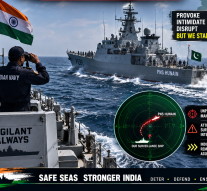
THE high seas have traditionally been governed by a strict, non-negotiable code of maritime protocol, designed to prevent catastrophic miscalculations between armed nations. However, the recent and deeply alarming maritime confrontation off the Gulf of Oman — where a Pakistani Navy corvette, PNS Hunain,’ deliberately collided with a frontline Indian Navy warship — has shattered the fragile stability of the northern Arabian Sea. This was not a routine navigational error or a structural oversight in dark waters; it was an act of calculated, raw brinkmanship executed by the Pakistani maritime establishment with clear hostile intent. For the international community, this tactical escalation threatens the safety of vital global energy shipping lanes. Goa serves as a primary, strategic nerve center for the Indian Navy’s Western Fleet. This collision flashes an immediate warning signal about the changing nature of regional maritime threats. On June 16, 2011, the Indian Navy frigateINS GODAVARI’ was involved in a minor brush with the Pakistan Navy vessel PNS Babur’ in the Gulf of Aden. With the shifting of the submarine repair facility toINS Seabird’ in Karwar, Goa plays a vital role in sea surveillance and retaliation.
GRAVE SITUATION
THE ruling defence and geopolitical establishments across the subcontinent have viewed this incident with intense gravity. Initial naval briefs indicate that the Indian warship was operating on a routine, internationally compliant anti-piracy and maritime security patrol when the Pakistani vessel executed a high-speed, aggressive manoeuvre, ignoring multiple radio warnings before grazing the hull of the Indian ship.
While Islamabad’s official channels have attempted to downplay the collision as a “navigational misalignment” during close-quarter manoeuvres, the video evidence and telemetry data tell a vastly different story. This deliberate collision represents a dangerous departure from standard operating procedures and violates the International Regulations for Preventing Collisions at Sea (COLREGSHunain to ), a framework to which both nations are signatories under international law.
To fully comprehend why this far-off confrontation hits so close to home, one must view it through a Goan lens. Goa is not merely a tourist destination; it is an irreplaceable, heavily fortified sovereign platform for India’s power projection across the Indian Ocean Region (IOR). The historical INS Hansa’ naval air station at Dabolim, the advanced facilities at Vasco da Gama, and the sprawling, state-of-the-art Project Seabird naval base at nearby Karwar — which operates under the operational oversight of the Western Naval Command — are the absolute lifelines of India's maritime defence architecture. The elite MiG-29K fighter squadrons, the Long-Range Maritime Reconnaissance aircraft (such as the P-8I Poseidons), and the specialized naval personnel who monitor the vast expanses from the Gulf of Aden to the Malacca Straits are trained and stationed right here on Goan soil. When an Indian warship is targeted in the Gulf of Oman, it directly impacts the tactical posture, operational readiness, and families of the naval community residing in Goa. The strategic rationale behind Pakistan's aggressive manovreous in the Gulf of Oman cannot be analyzed in isolation. It is a direct product of growing geopolitical desperation. As India's naval power expands through indigenous aircraft carrier inductions, advanced stealth destroyer deployments, and deep trilateral maritime partnerships in the Quadrilateral Security Dialogue (Quad), the traditional balance of power in the Arabian Sea has decisively shifted in New Delhi's favor. Furthermore, the operational integration of the Gwadar port under Chinese influence has created a dual-front pressure point. By initiating sub-conventional friction on the high seas—actions that fall just short of an open declaration of war—the Pakistani Navy is attempting to test India’s strategic patience, disrupt energy corridors, and project a false image of parity to its domestic audience. Under Article 21 and the broader constitutional framework, the sovereign duty of the Union government is to defend the territorial integrity and maritime borders of the republic. When hostile state actors weaponize their naval assets to physically strike Indian warships, it constitutes a flagrant violation of international law and state sovereignty. The immediate fallout of this confrontation will undoubtedly be felt within the naval installations across Goa. The Western Naval Command will inevitably scale up its maritime surveillance sorties fromINS Hansa.’ The frequency of combat-ready fleet deployments leaving the breaks of the Goan coast to escort merchant vessels through the volatile waters of the Gulf of Oman will increase exponentially.
This escalation places a massive operational and physical strain on our naval officers and assets. The quiet, coastal villages of Goa, which have co-existed with the naval presence for decades, are now directly linked to a volatile geopoliticaltheater where a single spark could trigger a wider regional conflagration.
HOSTILE NEIGHBOURS
HISTORY has repeatedly demonstrated that when a nation tolerates the systematic degradation of maritime laws by hostile neighbours, it invites bigger, more devastating security breaches along its own coastlines. The memory of the 26/11 Mumbai attacks, where terrorists infiltrated the nation’s financial capital via unchecked sea routes, remains an open wound in India’s security consciousness.
The current escalation in the Gulf of Oman proves that the threat environment in the Arabian Sea is rapidly evolving from irregular asymmetric actors to direct, state-backed conventional harassment.
GOA stands as the frontline guardian of India’s western seaboard. The powerful message emanating from the naval command centers in our state is clear: India’s maritime sovereignty is non-negotiable. If rogue naval elements believe they can execute predatory collisions in international shipping lanes without facing severe, consequential costs, they are gravely mistaken.
The soul of Goa remains peaceful, but its naval steel is fully prepared to defend the republic’s honor.

 ELEVATED HIGHWAY TO HELL!
 MEDICAL DEVICES LOOT!By GS Mudur
 BLACK MONEY IN POLITIAL PARTIES: ADR’s Alarming Revelations By Arvind Pinto
 `KHANDVI MILLE-FEUILLE’ AT BRICS ALL VEG BUFFET!
 SATYA NIKETAN TRAGEDY: HOW GLOBAL STUDENT HOUSING MODELS COULD HELP INDIA FIX A BROKEN SYSTEM!By Sneha Swaminathan
 GANESH PANDALS HIJACKED BY ADANI, AMBANI
 WHY DOES A DEMENTIA DIAGNOSIS MATTER? By Dr Amit Dias
 WEEKEND UPDATES
 LETTERS TO THE EDITOR FOR ISSUE DATED SEPTEMBER 12, 2026
 GOAN TEACHERS ARE CONTRACT LABOR!
 THE COLOUR IS PRESTIGIOUS! THE PROCESS MUST BE EQUALLY SO!
 DOGS ATTACK GOANS, OWNERS GET ACQUITTED!By Dr Olav Albuquerque & Deborah Cordeiro
 CYBER FRAUD: A THREAT TO FINANCIAL SECURITY & MENTAL WELL-BEING! By Adv Vinayak (Mama) D Porob
 RUPEE IN FREE FALL: WHY THE SLIDE MATTERS MORE THAN THE NUMBER! By Arvind Pinto
 SHRAVAN BYE-BYE, CHOVOTH WELCOME!
Goa is abuzz with excitement as vintage bike and car owners, users, collectors and fans are decking […]