Goa is abuzz with excitement as vintage bike and car owners, users, collectors and fans are decking […]
Old is Gold
October 4, 2016
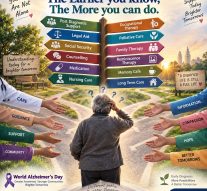
SEPTEMBER is observed as World Alzheimer’s Month with September 21 marking World Alzheimer’s Day. This year’s message is especially important: “The Earlier You Know, The More You Can Do: A Dementia Diagnosis Matters.” ADI, UK and ARDSI in India have been working to raise awareness and stress the importance of an early diagnosis. The Department of Social Welfare, government of Goa in association with Goa Medical College & Hospital has taken a step to start the first Dementia Screening Camps in Goa to diagnose dementia and Alzheimer’s disease.
More than 57 million people worldwide were living with dementia in 2021, with nearly 10 million new cases every year. Alzheimer’s disease is the most common cause of dementia, accounting for an estimated 60–70% of cases.
Yet around 90% people remain undiagnosed.
Why?
Because the first signs can be subtle.
A forgotten name. A missed appointment. Repeated questions. Misplaced belongings. Difficulty managing money. Getting lost on a familiar route.
The response is often:
“It is just old age.”
Sometimes forgetfulness is a part of normal ageing. But progressive cognitive decline that interferes with everyday life should never simply be dismissed as ageing. Dementia is not an inevitable part of growing older.
Why is diagnosis important?
A dementia diagnosis is much more than giving a name to a condition.
It can identify treatable causes.
Not every memory problem is Alzheimer’s disease. Depression, medication effects, thyroid disorders, vitamin deficiencies, sleep problems and other medical conditions can affect memory and thinking. A proper assessment can identify these conditions.
It opens the door to treatment
ALTHOUGH there is no cure for most dementias, many interventions can improve symptoms, maintain independence and support quality of life. For selected people with early Alzheimer’s disease, newer disease-modifying treatments targeting amyloid may also be considered following specialist assessment and appropriate biomarker confirmation.
It allows risk reduction
HYPERTENSION, diabetes, smoking, physical inactivity, excessive alcohol use, social isolation and other potentially modifiable factors contribute to dementia risk. WHO estimates that up to 45% of dementia cases may potentially be prevented or delayed by addressing modifiable risk factors.
An early diagnosis therefore creates an opportunity to ask:
“What can we do today to protect brain health tomorrow?”
It allows planning
FINANCIAL matters, advance care planning, driving, medications and future care can be discussed while the person is still able to participate fully in these decisions.
And perhaps most importantly, diagnosis helps families understand that certain changes are symptoms of a disease—not deliberate behaviour.
“Early diagnosis does not take away hope. It gives hope a direction.”
Why do people delay?
Stigma is a major barrier. The word “dementia” can frighten people. Some fear being labelled, isolated or treated differently.
Another misconception is:
“Nothing can be done.”
Much can be done—even when a cure is not available. Early assessment can identify reversible problems, address risk factors, initiate appropriate treatment and connect families with support.
Sometimes the person may not recognise the changes. In such situations, relatives or close friends may notice them first.
If someone who knows a person well says, “This is not how he or she used to be,” it deserves attention.
Ten early warning signs of dementia
ONE symptom alone does not mean dementia. However, persistent or progressive changes that interfere with daily life warrant medical evaluation.
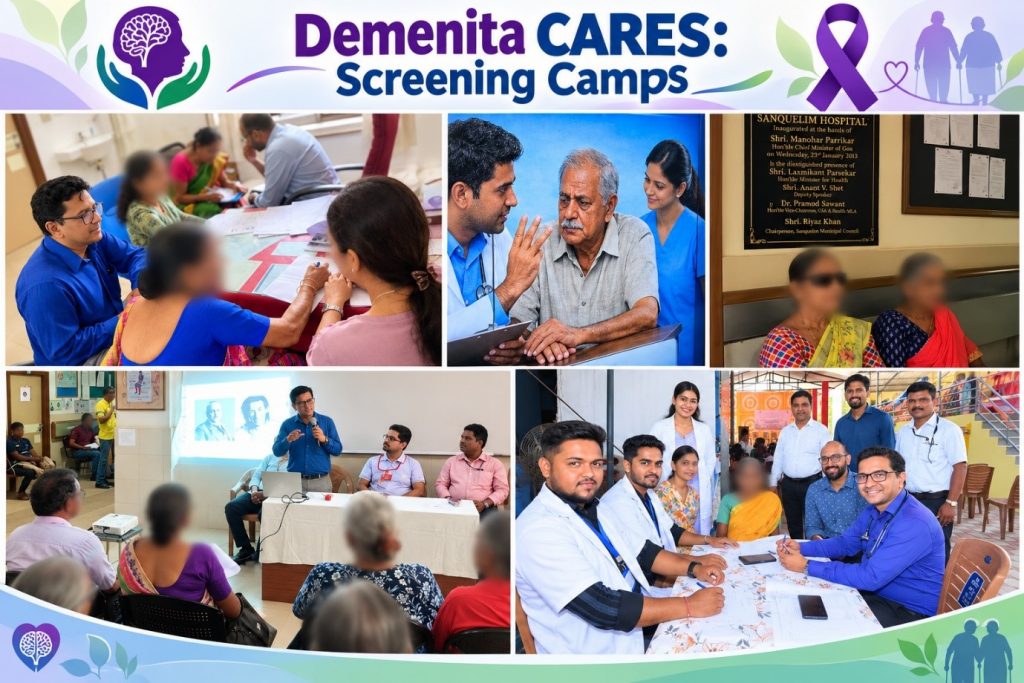
From awareness to action: Goa CARES
Screening becomes meaningful only when it reaches the community and the right people are motivated to attend the camps.
In Goa, Goa CARES — Cognitive Assessment, Risk Evaluation and Specialist Referral — has taken dementia awareness and screening closer to senior citizens through community-based camps. The approach combines cognitive screening, assessment of risk factors and appropriate referral for further evaluation.
Screening is therefore not about frightening people with a diagnosis. It is about opening a door to assessment, support and appropriate care.
What should we do?
IF you notice persistent changes in yourself or someone you love, do not ignore them.
Start a conversation.
Instead of saying:
“You are becoming forgetful.”
Try:
“I have noticed that some things have become more difficult lately. Why don’t we get it checked together?”
Take note of when the symptoms began, whether they are progressing and how they affect daily activities.
Most importantly, listen without judgement.
A memory concern deserves the same attention as a persistent cough, chest pain or change in vision.
“The earlier you know, the more you can do.”
An early diagnosis can provide clarity, treatment options, an opportunity to address risk factors, time for planning and—perhaps most importantly—an opportunity to preserve dignity and quality of life.
This World Alzheimer’s Day, let us replace “It is just old age” with: “Let us get it checked.”
Because sometimes, the most important thing we can remember is not to ignore the signs.
THE EARLIER YOU KNOW, THE MORE YOU CAN DO
 SATYA NIKETAN TRAGEDY: HOW GLOBAL STUDENT HOUSING MODELS COULD HELP INDIA FIX A BROKEN SYSTEM!By Sneha Swaminathan
 GANESH PANDALS HIJACKED BY ADANI, AMBANI
 WEEKEND UPDATES
 LETTERS TO THE EDITOR FOR ISSUE DATED SEPTEMBER 12, 2026
 GOAN TEACHERS ARE CONTRACT LABOR!
 THE COLOUR IS PRESTIGIOUS! THE PROCESS MUST BE EQUALLY SO!
 DOGS ATTACK GOANS, OWNERS GET ACQUITTED!By Dr Olav Albuquerque & Deborah Cordeiro
 CYBER FRAUD: A THREAT TO FINANCIAL SECURITY & MENTAL WELL-BEING! By Adv Vinayak (Mama) D Porob
 RUPEE IN FREE FALL: WHY THE SLIDE MATTERS MORE THAN THE NUMBER! By Arvind Pinto
 SHRAVAN BYE-BYE, CHOVOTH WELCOME!
 HUSBANDS SHOULD KNOW HOW TO COOK, BE WILLING TO WASH VESSELS!
 HOLD ON TO LIFE: CHANGING THE NARRATIVE ON SUICIDE! By Dr Amit DiasWEEKEND UPDATESLETTER TO THE EDITOR FOR THE ISSUE DATED SEPTEMBER 05, 2026
 WHEN A MOUNTAIN BECAME A RIVER!By Ranadhir Mukhopadhyay
Goa is abuzz with excitement as vintage bike and car owners, users, collectors and fans are decking […]