Goa is abuzz with excitement as vintage bike and car owners, users, collectors and fans are decking […]
Old is Gold
October 4, 2016
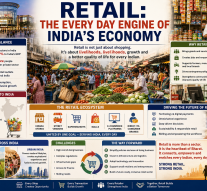
WHEN we think of India’s economic growth, the spotlight often falls on IT services, manufacturing, or agriculture. Yet, the heartbeat of the economy lies in something far more familiar: retail. From the bustling kirana (grocery) shops in Panjim’s lanes to the sprawling malls of Mumbai, retail is the connective tissue between producers and consumers, tradition and modernity, rural and in urban India. It is both a mirror of social change and a driver of economic transformation.
Characteristics of Indian Retail
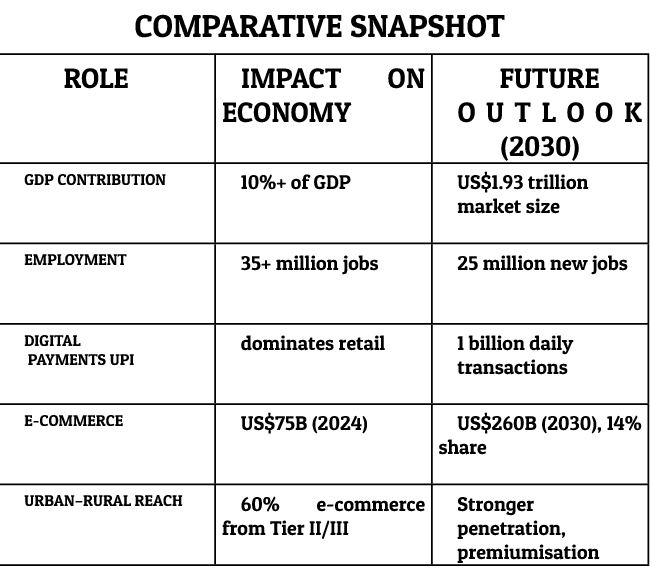
THE Indian unorganised dominance: 80–93% of sales come from unorganised retail sector. Walk around our towns and cities, you will find small kirana stores where you can buy your daily needs, such as bread, tea, coffee powder, soap and toiletries; feeling thirsty or hungry during the day and you will stop by a chai or batatavada kiosk. Then there are the weekly markets, the haats, or like the Mapusa Friday bazaar, where villagers come to the towns to sell their wares and buy provisions. Over the decades in our urban centres, supermarkets and malls have erupted attempting to draw the urban dwellers to them. Similarly, e-commerce has gown popular, especially with the youth. But retail selling still remains king, with the majority of Indians preferring to shop locally, going to see and touch the vegetables, fruits or even the cereals before making their purchases. For the Indian consumer habits are localised, where the grocer or kirana owner knows his customers, gives credit to the regulars who would pay him at the end of the month. These shops or outlets continue to dominate the Indian retail business. Indian retail business was valued at US$1.06 trillion by the year 2030.
This retail market is growing at a steady 10% compounded annual growth rate (CAGR). More importantly, unlike the IT sector growth which caters to the export market, the retail sector is domestically anchored and it reflects the consumption aspirations of 1.4 billion people in the country.
Let’s look at Goa. Our retail market is not only the fancy malls in Panjim or Margoa. Rather it includes the fish market in Margoa, Panjim or Ponda, the little shops that line our beaches in Calangute or Colva, selling trinkets to tourists or the little tavernas where Goans men and the end of day, sit to discuss politics or the friendly grocery stores that gives the Goan housewife credit on her purchases knowing fully well that she will pay her debts on the very day, her husband receives his pay packet.
One of the critical aspects of the retail sector is that it employs more than 35 million Indians, or nearly 8% of our workforce. This is indeed an important factor in the economy where the spectre of unemployment is high. India is aware of the recent CJP protests, where one of the main planks was the unemployment among youth. By the year 2030, the retail sector is expected to create 25 million new jobs especially in Tier 2 and Tier 3 cities. It is true that these are not high paying or highly skilled jobs. These jobs range from shop assistants, Zomato delivery boys, workers on the shop floor, in packing or distribution. Nevertheless, the jobs bring an income to these families, and in turn drive consumption with the income that these families spend. For Goa’s youth, retail jobs in malls, supermarkets, and online delivery platforms provide entry level employment. Seasonal tourism spikes create temporary retail opportunities — from beach shack vendors to handicraft sellers — showing retail’s flexibility in absorbing labour.
Retail is a Consumption Driver in the Economy
OUR retail sector is the face of consumption. It translates rising incomes into demand for goods and services. With India’s growing middle class and Gen Z consumers the spending patterns are the drivers of our economy. In statistics by 2025, Gen Z will account for 43% of total consumption, demanding convenience, digital access, and premium experiences. Retail trade ensures local distribution from essentials such as rice dal or medicines to aspirational goods such as gadgets, smartphones or IT products.
In Goa the rise of supermarkets like Masons and Delfino’s reflects changing consumer habits in Goa. But traditional markets still thrive on the 18th June Road or the fish market in Panjim where the majority of Goan source their daily necessities.
Digital Transformation in Our Retail Trade
INTERESTINGLY, our retail trade is at the forefront of India’s digital revolution. Buy a ‘choris pav’ from a Gaddo at Miramar beach. Not having your purse or money is no concern. For most ‘gaddos’ have a cardboard QR code- linked to the bank account where from the privacy of your phone you pay to enjoy your favourite snack. Gone are the days, when your wallet or currency that you carried determined whether you were able to buy. UPI transactions dominate retail payments, making India the world’s largest digital payments market. Statistics reveal Online retail is expected to grow from US$75 billion (2024) to US$260 billion (2030), expanding its share from 7% to 14%. Today for most Goan households Quick commerce platforms promise delivery within 10–15 minutes, reshaping consumer expectations.
Even small Goan vendors now accept UPI payments. From Mapusa vegetable sellers to beachside souvenir stalls, digital retail has penetrated everyday life. The pandemic accelerated this shift, making cashless transactions the norm.
No more of an Urban /Rural divide
RETAIL bridges India’s rural–urban divide. Tier II and III cities account for 60% or more of e commerce transaction .Organised retail is expanding beyond metros, bringing modern shopping experiences to smaller towns. Rural retail remains vital, with Kirana stores serving as lifelines for villages. Goa’s retail landscape is unique—urban sophistication coexists with village markets. A mall in Porvorim may sell global brands, while a village fair in Bicholim sustains traditional crafts. Retail thus preserves heritage while embracing modernity.
Challenges
TODAY, our retail trade faces several challenges. The trade agreements that are to be signed with other nations, envisage the entry of foreign large dominant retail outlets. We already have Amazon and D Mart and more are on the way. Will these retail giants kill our little village shops. This is an important question that India needs to consider. There is already a muted rural demand due to inflation in food, fuel, and fertilisers. While urban centres and high-income jobs create demand for value added goods, our rural sector continues to stagnate. Goa faces its own challenges — seasonal demand fluctuations, dependence on tourism, and competition between local shops and online giants. The survival of traditional markets depends on balancing heritage with modern retail formats.
Some Common Myths
THE power of the media has put out a myth that retail is only about malls and e-commerce. In reality 90% of Indian retail is still unorganised, driven by kirana shops. Another myth that is popular that digital retail will kill traditional markets. In practice, there exists a hybrid model, where most people prefer credit or paying by cash and would like to use the digital mode when they do not carry their purse or when the seller does not have change. Then again, retail is not only about urban markets since the rural market is huge, more that 50% of retail business in the country. Goa offers a fascinating case study: We have tourist retail shops selling souvenirs, handicrafts, beachwear, and liquor outlets thrive on tourist inflows. Then there are local specialities: Cashew, feni, and Goan sweets form niche retail segments. Further there are cultural specifics such as weekly markets in Mapusa and Margoa which remain vibrant, blending tradition with modernity. Retail trade has adopted to payments digitally. Even small vendors now use QR codes, showing how retail adapts quickly.
Above all there is need for a policy direction. If the retail trade is to survive in India, policies are required to protect this sector There should be ease-of-doing business for small retailers. Small traders should be provided infrastructure investment in logistics and warehousing in order that their goods are competitive in the market. Consumer protection laws must be enacted to protect the retail trade. There should be skill development training courses for retail workforce. Goa’s government can support retail by promoting local crafts, easing licensing for small shops, and integrating tourism with retail growth.
CONCLUSION
RETAIL is not just about buying and selling — it is India’s consumption backbone, job creator, and digital transformation leader. Its growth in Tier II/III cities, integration with UPI, and expansion of organised formats will define India’s economic trajectory over the next decade. Goa, with its blend of tradition and modernity, offers a microcosm of this transformation. As we move into an age of e-commerce, advertising selling of international brands, let’s frame suitable policies that allow our gaddos, our village outlets and retail selling to survive!
(Arvind Pinto is a Chairman, Citizencredit Cooperative Bank Limited)
 LETTER TO THE EDITOR FOR ISSUE DATED SEPTEMBER 19, 2026
 ELEVATED HIGHWAY TO HELL!
 MEDICAL DEVICES LOOT!By GS Mudur
 HOSTILE ACT BY PAKISTAN: `PNS HUNAIN’ TRIED TO DISRUPT OUR NAVAL SURVEILLANCE! By Dr Olav Albuquerque & Deborah Albuquerque
 BLACK MONEY IN POLITIAL PARTIES: ADR’s Alarming Revelations By Arvind Pinto
 `KHANDVI MILLE-FEUILLE’ AT BRICS ALL VEG BUFFET!
 SATYA NIKETAN TRAGEDY: HOW GLOBAL STUDENT HOUSING MODELS COULD HELP INDIA FIX A BROKEN SYSTEM!By Sneha Swaminathan
 GANESH PANDALS HIJACKED BY ADANI, AMBANI
 WHY DOES A DEMENTIA DIAGNOSIS MATTER? By Dr Amit Dias
 WEEKEND UPDATES
 LETTERS TO THE EDITOR FOR ISSUE DATED SEPTEMBER 12, 2026
 GOAN TEACHERS ARE CONTRACT LABOR!
 THE COLOUR IS PRESTIGIOUS! THE PROCESS MUST BE EQUALLY SO!
 DOGS ATTACK GOANS, OWNERS GET ACQUITTED!By Dr Olav Albuquerque & Deborah Cordeiro
 CYBER FRAUD: A THREAT TO FINANCIAL SECURITY & MENTAL WELL-BEING! By Adv Vinayak (Mama) D Porob
Goa is abuzz with excitement as vintage bike and car owners, users, collectors and fans are decking […]