Goa is abuzz with excitement as vintage bike and car owners, users, collectors and fans are decking […]
Old is Gold
October 4, 2016
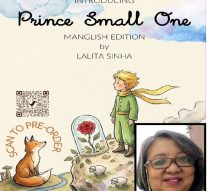
“Manglish” is like creole language in Malaysia, says author Prof Dr Lalita Sinha, who has come out with an amazing transcreation of French writer Antoine de Saint-Exupery’s famous book for children titled “The Little Prince” — in Manglish! Manglish is the word coined for the Malay-English spoken at street level across Malaysia, say a bit like Hinglish in India…
THIS is kind of personal for me too! For Dr Lalita Sinha goes a long way back for me, we were in school together on the island of Penang in Malaysia right through the 1950s to `60s. Say she’s a schoolfriend I have kept in touch with through five going on six decades of a dear friendship. A former professor at the University of Malaysia in Penang she’s also visited India a couple of times, perhaps still looking for some roots – for she hails from a Bengali family which had migrated to Malaysia long years ago.
Anyway, to cut to the present, in a recent talk with her she was excited about her new book which is an interesting take on the famous book “The Little Prince” by Antoine de Saint-Exupery (one of the most widely translated books for children in publication history). Is it a spoof or what, I queried. She replied, no, not spoof! She is introducing Malaysian readers, children and adults alike, to the charms of Manglish, a Malay-English patois, say like Creole elsewhere in the world. Where colonial English mingles with local native language… a form of down-to-earth real market-place lingo. It’s Manglish, meaning, Malay-English. Do I get it?
Yes, I get, but is she murdering the Queen’s English then? I retorted. She said she is not, “I am making a case for Manglish to be accepted as a creative, alternative form of expression in Malaysian literature. I have explained it in my translators’ preface …why not English, not Malay, but Manglish. …” Manglish, she says, is Malaysian English, like maybe we have Hinglish in India – wherever a colonial language exists it transforms into a local lingo which is an acceptable form of communication and in which people feel at home. It’s closer to the heart and soul, something like that.
Accepted, I replied, not to get into another argument over a long distance video talk with her. But this is an interesting idea lovers of literature in any form may want to look into in India where there’re linguistic identities rooted in mother tongues being twisted out of shape …like it or not. The histories and contexts may be different but the creativity is like the rebirth of a something unusual or enchanting depending on how an open a mind you have. This is to say Dr Lalita Sinha’s book in Manglish edition has for cover title: “Prince Small One” – it’s of course an out of the blue thing to do to translate or “transcreate” “The Little Prince” in Malay-English or Manglish…a new genre of local native language or so to speak. “Prince Small One” is published by TintenfaB – I haven’t got a hard copy in hand yet but it’s online if you wish to do a Google search.
What is important is that Dr Lalita Sinha has remarkably retained the vital heart and bottom line philosophy of the “The Little Prince” stories very well in her Manglish transcreation edition and that is the hallmark of a job done breathtakingly well. Her book I’m told was presented at the recently held George Town Literary Festival in Penang and has received some welcome reviews. Other than that this is just to note that Dr Lalita Sinha is the founder of Athena Solutions (I’m not familiar with that), and she’s from the Class of 2024, University Sains Malaysia. She currently lives with one of her three children and grandchildren on the East coast of Malaysia, where her son Roshan is married to a girl of Thai-Malay descent and who do actually fish for a living. She’s living the “balek kampong” life, she said. Meaning, a village life, and it is a very tranquil life for her nowadays in the autumn of her life. She’s very much into books to liven up children’s lives in Malaysia…in Manglish!
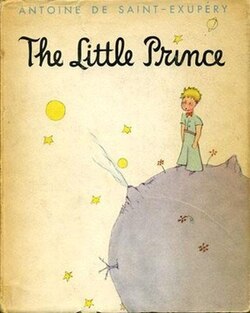
My translation, or more accurately, transcreation, of Antoine de Saint-Exupéry’s The Little Prince has just been published in Manglish, under the title Prince Small One. This makes it the 245th language that Edition Tintenfass, a German publisher, has added to its collection. Manglish is a Malaysian creole, a vernacular variety widely spoken among most Malaysians. The reason is mostly the stubborn love one can have for a language that isn’t one’s mother tongue, nor recognised as a “real” or “accepted” one.
As a young girl, when I met the Little Prince in a school library copy with a torn cover, I didn’t understand then why a book about a boy talking to flowers and foxes on other planets should feel truer than most things adults told me. Now, in my twilight years, I understand it better: the book trusts children and poets to see plainly, and treats the grown-up habit of hiding behind seriousness, like counting stars, being “matters of consequence”, as the real strangeness. That trust in me grew after I had technically become a grown-up.
Manglish is also a plain-seeing, no-fluff, informal language. It has no patience for ornament. It strips a sentence to what needs saying. When I first tried a line of the Prince in Manglish, the philosophy didn’t shrink. “It is only with the heart that one can see rightly; what is essential is invisible to the eye” became, roughly, “Use heart to see, then only correct. The most important stuff, eye cannot see one.” That closing “one” isn’t decoration, it’s the sound of a truth set down for good, the way an elder would end an argument. Manglish isn’t diminishing Saint-Exupéry’s original meaning. Its doing what the book itself asks of us: bringing cosmic ideas down to a plastic stool outside a Malaysian mamak stall, where diverse ethnic groups habitually lepak, (Malaysian slang for hanging out, close to Bengali adda) and where the important conversations actually happen.
The chapter that convinced me to finish the whole book was the Fox’s. “Taming” always struck me as an odd word for what the Fox is really describing: the slow work of becoming necessary to one another, feeling a complementarity and interdependency. Malaysians have a word for that instant click when two people or things suddenly belong together: ngam. Once I had ngam, the chapter opened up. The Fox no longer needed paragraphs of English exposition. He could just say, “we roll together, we become ngam,” and every Malaysian reader would feel what fifty years of “taming” translations have circled around. I didn’t choose Manglish to make the book more casual. I chose it because, for that one idea, it is more precise than the English version.
There’s a quieter motive too. Manglish has spent its existence being told it is broken English, fit for jokes and WhatsApp chats, but not literature. I wanted to see what happened if I asked it to carry a work of world renown. An English reader in Wales, long married into a Malaysian famil,y reviewed the manuscript, noted that Malaysians rarely finish a sentence in the language they started in, and that this everyday code-switching is not confusion but a fluency the rest of the world is only beginning to recognise. The recent entry into the Oxford Dictionary of several
Malay/sian terms solidifies this claim. Some examples are: Wayang (n. & adj.): Traditional theatrical performances, or used figuratively to describe a false display, pretence, or something fake; Mat Salleh (n. & adj.): A colloquial, and sometimes affectionate, term for a foreigner or a white person; and Play play (v.): To fool about, mess around, or not take something seriously.
This is where I suspect Indian readers, Goan ones especially, will feel least like outsiders. India has never had one tongue, and Goa carries that in a particularly layered way. Konkani has held its ground through Portuguese rule, English has arrived on top, and Marathi and Hindi remain within easy reach. A reader who has spent a lifetime moving between Konkani, Portuguese and English, or who knows Hinglish or Indlish as an everyday hybrid rather than an oddity, will recognise Manglish immediately: not a curiosity, but a cousin.
The Prince meets a Businessman who spends his life counting stars he’ll never touch, certain that counting is the same as owning. I didn’t have to translate that character far from home. We know him here as bos (boss), obsessed with KPIs and ROI, and Manglish has Prince Small One’s retort ready: “You count and count for what? The star cannot eat also.” A small joke, but it carries the book’s largest argument: that seriousness and importance are not the same thing.
I didn’t set out to prove anything about linguistics or scholarship. I only wanted to read the Prince the way I first loved him, without the stiffness that comes with “proper” translation. But every time a street language is allowed to hold a serious book without apologising for itself, something small shifts: a little more trust between people who speak differently, which the world could use right now. If Prince Small One gives your readers a taste of that, I would consider this labour of love worthwhile.
Lalita Sinha is an award-winning literary scholar, translator, and critic. Born in Malaysia to migrant Bengali parents, she studied world literatures at Universiti Sains Malaysia, Penang, and served over three decades as Senior Lecturer in Comparative Literature and Comparative Religion, retiring in 2006. Her doctoral research on Sufi and Bhakti mystical symbolism, Unveiling the Garden of Love, was published as part of the Perennial Philosophy Series of World Wisdom publishers, Bloomington, USA. She also wrote The Other Salina: A. Samad Said’s Masterpiece in Translation and co-authored Rainbows of Malay Literature and Beyond.
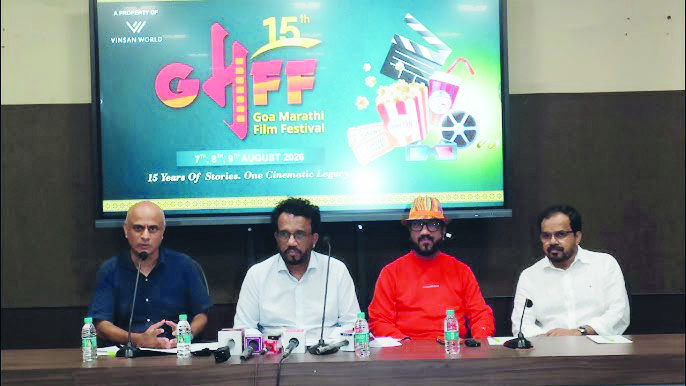
TO MOVE on to another subject regardless of whether there is rain or no rain this monsoon season…it’s raining film festivals and musicals in capital city Panjim. The 15th edition of the Goa Marathi Film Festival will screen on August 7,8 and 9 and needless to say the Marathi film came of age long ago, there is quite an audience for Marathi films in Goa. The films will be screened at the Inox Multiplex and Maquinez Palace auditoriums.
Naturally, Chief Minister Pramod Sawant will be doing the inaugural honors for the 3-day film festival and connoisseurs of Marathi cinema may look forward to viewing such films as the inaugural film “Bandakhor” directed by Mahesh Manjrekar, produced by Vinsan Graphic Productions.
Speaking to media people organizer and ardent film-lover Sanjay Shetye, chief of Vinsan Graphic, 19 Marathi films out of 24 entries will be screened and these include such films Goan filmmaker Sainath Uskaikar’s award-winning documentary film “Waai” – also “Sabar Bonda” directred by Rohan Kanawade(first Marathi film which premiered at the Sundance Film Festival), “Krantijyoti Vidyalaya,” “Uttar,” “Fussclass Dabhade”, “Tighee,” “Tu Ti and Fuji,” “Tumbbadchi Manjula,” “Mardani,” “Bhutam Bhayam,” “Aga Aga Sunbai Kai Mhanta Sasubai,” “Ghabadkund” and some more. Some unreleased films will be “Snowflower”,”Pishwi.”
Some more. They are expecting Sanjay Dutt to be the chief guest at the opening of the festival and regional cine lovers may look forward to saying hello to visiting stars from Marathi cinema – namely, Sachin Khedekar, Renuka Shabane, Mrinal Kulkarni, Amey Wagh, Siddharth Chandekar, Swapnil Joshi, Anita Daate, Jitendra Joshi, Lalit Prabhakar, Nirmiti Sawant, Subhodh Bhave, Prarthana Behere, Neha Pendse, Sonalee Kulkarni, Mrunmyee Godbole. Other highlights: a film workshop details of which will be released soon. Registration for the film festival will open via Burraa website and app and there will be in person registration facility in Panaji, Margao, Vasco, Mapusa and other Goan cities.
English, Hindi, Marathi, Konkani or any other regional language, there’s really nothing like a good film to view to warm the cockles of the heart on the big screen, a real treat for young and not so young alike. Note it down in your black diary today!
ON that note it’s my usual avjo, selamat datang, poite-verem, au revoir, hasta la vista and vachun yeta here for now. Make the most of the monsoon season’s offerings.
 LETTER TO THE EDITOR FOR ISSUE DATED OCTOBER 03, 2026
 GEN-Z BLOCKED FROM VOTING BY GYANESHWAR MODI!
 THE FORAL OF 1526 Five Hundred Years Later, What Does Goa’s Oldest Village Charter Really Mean?
 20 YEARS IN ‘HERALD’, 43 IN GOA!
 THE DEGRADATION OF JNU – MY ALMA MATER! By Arvind Pinto
 THE WOMEN WHO LOOK BACK! By Prema Viswanathan
 GOA IS CELEBRITY STATE!
 HI MUMBAI MERI JAAN BUT…
 WEEKEND UPDATES
 LETTER TO THE EDITOR FOR ISSUE DATED SEPTEMBER 26, 2026
 DIVIDED EVEN IN DEATH!By Rajan Narayan
 IF YOU CLAIM THE CREDIT, TAKE THE RESPONSIBILITY!By Joquim Goes
 8 EMAILS IN 7 DAYS, BUT VALID GOA VOTERS STILL LEFT OUT: EC’S FLAWED SYSTEM!By Ritika Chopra
 MAKE IN INDIA: UNITED PAYMENTS INTERFACE India’s digital local leap to global benchmark…By Arvind Pinto
 BRING BACK THE FLATBREADS OF INDIA!
Goa is abuzz with excitement as vintage bike and car owners, users, collectors and fans are decking […]