Goa is abuzz with excitement as vintage bike and car owners, users, collectors and fans are decking […]
Old is Gold
October 4, 2016

THERE is an old fable about a proud deer. Every morning, he admired his magnificent antlers reflected in the lake, believing they were the most beautiful part of his body. At the same time, he looked with disgust at his thin, awkward legs and wished they were stronger and more attractive. One day, a hunter appeared. The deer sprinted through the forest, and it was those very legs he had despised that carried him swiftly to safety. But just as he thought he had escaped, his magnificent antlers became entangled in the branches of a tree. Unable to free himself, he was caught.
The moral is timeless: we often value what looks impressive while neglecting what truly supports us.
Our feet are much like the deer’s legs. They quietly carry us through life, yet they receive far less attention than our face, hair, or hands. We polish our appearance, moisturize our skin, and spend hours choosing shoes, but often ignore the very foundation that supports every step we take.
It is time to put our best foot forward — not just figuratively, but literally.
FOOT: A Marvel of Engineering
The human foot is one of the most remarkable engineering masterpieces in the body. Each foot contains:
• 26 bones (over one-quarter of all the bones in the human body)
• 33 joints
• More than 100 muscles, tendons, and ligaments working together
• Thousands of nerve endings that help us maintain balance and coordination.
Together, our two feet carry us the equivalent of walking around the earth several times during a lifetime. With every step, they absorb forces up to three times our body weight while maintaining balance, mobility, and agility.
Despite this incredible workload, we rarely appreciate them until something goes wrong.
When the Feet Begin to Protest
FOOT problems affect people of all ages. Many are preventable, and early attention can prevent lifelong disability.
Peripheral Neuropathy
PERIPHERAL neuropathy is damage to the nerves supplying the feet. It is commonly caused by diabetes but may also occur due to vitamin deficiencies, alcohol misuse, certain medications, kidney disease, or nerve disorders.
People often experience numbness, tingling, burning sensations, or loss of feeling. Since pain sensation is reduced, small injuries may go unnoticed and become infected.
The key is controlling the underlying condition, protecting the feet from injury, and having regular foot examinations.
Plantar Fasciitis
ONE of the commonest causes of heel pain is plantar fasciitis — an inflammation of the thick band of tissue that connects the heel to the toes.
It is frequently seen in runners, overweight individuals, people who stand for prolonged periods, and those who wear poor footwear.
Stretching exercises, supportive footwear, weight management, and physiotherapy usually provide relief.
GOUT
GOUT is a form of arthritis caused by the deposition of uric acid crystals in the joints, often affecting the base of the big toe.
The pain is sudden, severe, and often wakes people from sleep. The joint becomes red, swollen, and extremely tender.
Treatment involves medications to reduce inflammation and long-term control of uric acid levels, along with dietary modifications and adequate hydration.
Foot Ulcers
A SMALL blister or cut may appear harmless, but in people with diabetes or poor circulation, it can develop into a deep ulcer.
Foot ulcers heal slowly because of poor blood supply and reduced sensation. Infection can spread rapidly to deeper tissues and bone.
Early medical attention, proper wound care, pressure relief, and blood sugar control are essential.
Ingrown Toenails
WHEN the edge of a toenail grows into the surrounding skin, it causes pain, redness, swelling, and sometimes infection.
Improper nail trimming, tight footwear, and repeated trauma are common causes.
Cutting nails straight across, avoiding overly tight shoes, and seeking early treatment can prevent complications.
Foot Deformities
CONDITIONS such as bunions, hammer toes, flat feet, high arches, and claw toes alter the normal mechanics of walking.
These deformities may lead to pain, difficulty finding comfortable footwear, calluses, and an increased risk of ulcers.
Proper footwear, orthotic supports, exercises, and, in severe cases, corrective surgery may be required.
Foot Fractures
THE foot contains many small bones, making fractures relatively common.
Common injuries include fractures of the toes, metatarsals, heel bone (calcaneus), ankle bones, stress fractures in athletes, and the well-known Jones fracture affecting the fifth metatarsal.
Persistent pain after an injury should never be ignored. Prompt evaluation and appropriate immobilization promote proper healing and prevent long-term disability.
Gangrene occurs when body tissue dies because of inadequate blood supply or severe infection.
People with diabetes, smokers, and those with peripheral arterial disease are particularly vulnerable.
The foot may become black, foul-smelling, painful — or surprisingly painless if nerves are damaged.
Diabetes and the Threat of Amputation:
WORLDWIDE, diabetes remains one of the leading causes of non-traumatic lower limb amputations. The encouraging news is that most diabetic foot complications are preventable through regular care and early intervention.
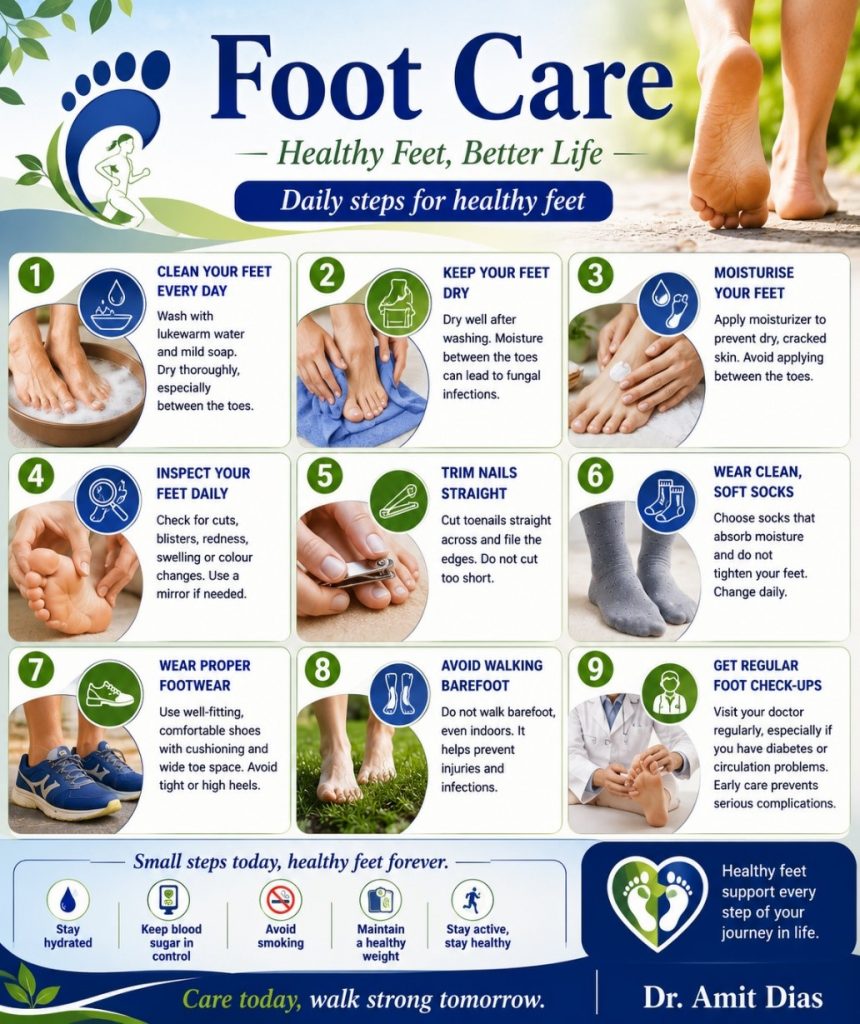
Maintain a healthy weight to reduce pressure on your feet. Exercise regularly to improve circulation. Choose footwear that fits well rather than simply following fashion. Alternate shoes to reduce wear. Change socks daily and keep feet clean and dry. Treat fungal infections promptly. Stretch your feet and calf muscles, especially if you spend long hours standing.
Most importantly, never ignore persistent pain, swelling, numbness, wounds, or changes in skin colour. Your feet are often the first place where diabetes, poor circulation, arthritis, and nerve disorders reveal themselves.
 LETTER TO THE EDITOR FOR THE ISSUE DATED OCTOBER 10, 2026
 WHEN THE MACHINE OVERRIDES THE LAW!
 HAS GOA BECOME MORE PERMISSIVE? By Special Correspondent
 BILLIONAIRES MULTIPLYING AT THE COST OF THE MIDDLE CLASS!
 THE SHADOW OF VOTE THEFT: WHY CEC GYANESH KUMAR MUST RESIGN!By Dr Olav Albuquerque & Deborah Cordeiro
 ULTRA MODERN ‘MID-DAY’ OFFICE
 HI MUMBAI MERI JAAN BUT…
 TCS INVOLVED IN SIR MATCH FIXING!
 CEREBRAL PALSY: UNDERSTANDING ABILITY, ENABLING INCLUSION! By Dr Amit Dias
 WEEKED UPDATES
 LETTER TO THE EDITOR FOR ISSUE DATED OCTOBER 03, 2026
 GEN-Z BLOCKED FROM VOTING BY GYANESHWAR MODI!
 THE FORAL OF 1526 Five Hundred Years Later, What Does Goa’s Oldest Village Charter Really Mean?
 20 YEARS IN ‘HERALD’, 43 IN GOA!
 THE DEGRADATION OF JNU – MY ALMA MATER! By Arvind Pinto
Goa is abuzz with excitement as vintage bike and car owners, users, collectors and fans are decking […]