Goa is abuzz with excitement as vintage bike and car owners, users, collectors and fans are decking […]
Old is Gold
October 4, 2016
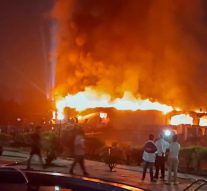
The fire tragedy at the Arpora night club – Birch by Romeo Lane – early this week is an outcome of criminal negligence and systemic corruption. People from across Goa say the blame lies not just at the night club owner’s door but also at the doors of an entire administrative system that abetted illegalities
By Praveena Sharma
In July, during zero hour of the monsoon session in the State Assembly, BJP MLA Sankalp Amonkar flagged concerns over the illegalities in the operation of Birch by Romeo Lane – the night club in Arpora that was engulfed in flames on December 6 night, killing 25 persons.
The politician’s warning was brushed aside by every ministry – from home ministry to tourism ministry, environment ministry, panchayats ministry and town and country planning (TCP) ministry – complicit in allowing the night club to continue its illegal operations with impudence.
The Goa unit of the All-India Lawyers Union (AILU) calls this a demonstration of “wilful negligence by executive authorities”.
In its petition to the Goa State Human Rights Commission (GSHRC), the AILU has enumerated large-scale irregularities, violations and corruption that allowed an illegal establishment like Birch to exist despite non-compliance of various regulations and safety norms, which resulted the tragic fire that took 25 lives.
“The continued operation on the unsafe structure and illegally run establishment by the owners despite known risks reflects liability, not only on the private owners but also the State authorities, who are obligated to prevent such dangers,” states the AILU petition with the GSHRC, which has issued a notice to the State chief secretary (CS) and the director general of police (DGP), seeking their replies by January 6, next year (2026).
Birch by Romeo Lane, which opened its door to its customers last year in Arpora, was operating without fire no objection certificates (NOCs), adequate emergency exits or compliance with building norms.
“Overcrowding far beyond permissible occupancy limits magnified the fatal consequences once the fire broke out. These lapses were not accidental but systemic, pointing to wilful disregard of safety regulations meant to protect human life, more specifically of the employees in the establishment,” AILU petition further adds.
Had these approvals and compliances been in place, the outbreak of fire would not have been as catastrophic and could have saved many lives. The night club spells disaster not just for human but for environment too as it is built on “ecologically sensitive khazan land and salt pan, which are protected under the environmental and coastal regulations”.
The petition also accuses the night club of indulging in illegal activities such as drug trafficking, gambling, prostitution, and environmental degradation under the guise of “tourism operations”.
In a damning allegation, it says the Goa Coastal Zone Management Authority (GCZMA) gave a nod to the night club despite several coastal regulation zone (CRZ) violations and claims it amounted to “institutional failure and possible complicity”.
When the Arpora Panchayat tried to revoke the night club’s illegal permissions, it was overruled by a stay order from the director of Panchayats.
Vigilia De Sa, a prominent activist, former Sarpanch of Moira, and key figure in the Archdiocese of Goa, says Panchayats are empowered to stop constructions in villages if they do not comply with the laws and regulations.
She said in a case where a demolition order by a Sarpanch is stayed by any higher authority, he can appeal against it but the hearing can go on for years till the final order is delivered. In such instances, she said, there is provision in the Goa Panchayat. Raj Act, 1994 that allows Panchayats to initiate closure of commercial operation if it is seen as illegal.
However, invariably, after an appeal is filed against a stay order and the hearing begins, the Panchayat “conveniently remain absent for hearing” and the matter drags on endlessly.
She says illegality of commercial activities begins at the stage of land acquisition, then at the construction stage and finally when operations start it is a completely illegal business venture.
According to her, rarely a prospective investor will first approach the Panchayat. Almost all of them come through local politicians – either a MLA or a minister – or through an IAS or IPS officer.
She said it was profitable nexus between politicians, businessmen and bureaucrats at the cost of people living in villages.
“The beneficiaries of these ventures are the people who are investing and politicians. For the local communities, it is a loss of resources, strain on their infrastructure and deterioration in the quality of their life with their roads, electricity, and water supply in shambles. Look at our water bodies. Because of no proper sewage (in the commercial premises), everything is allowed to be flushed into the sea or the river,” she said.
De Sa has little confidence in the magisterial enquiry ordered by chief minister Pramod Sawant into the fire incident and sees it as a sham. Citing the case of enquiry into cash-for-jobs scam, which fizzled out due to lack to evidence and political pressure, she said Arpora fire tragedy may not see the desired outcome and the real culprits being punished.
She said early arrests made by State authorities were to give the impression that they were acting in the case.
“Why arrest employees. They are not responsible for licenses and approvals. They are working for their livelihood. There is no logic in arresting them,” she said.
Bosco George, former deputy inspector general of police, is also “sceptical” of the outcome of the investigation into the Arpora night club fire.
He said any enquiry into it would inspire trust only if it is a court monitored investigation or a judicial commission is looking into all the regulatory lapses by the various authorities.
“Only a judicial commission will be able to investigate all these things. It is beyond the police to probe this or penalise all those involved in the crime,” he said.
If not, then it will end up like Delhi’s Uphaar fire tragedy, which got its closure after 18 years.
The former cop called for inclusion of Section 120B of the Indian Penal Code (IPC), which deals with the punishment for criminal conspiracy and abetment of offense, in the Arpora night club case.
“The entire administrative system can be tried because all these guys are responsible (abetted the crime),” he emphasised.
He said beneficiaries in most of these illegal ventures being operated in the State were North Indian from Delhi because of their connections with people in “positions of power”.
According to him, all early arrests and detentions were newspaper headline ploys.
Laxmikant Yashwant Parsekar, former chief minister of State, said those who have been arrested in case till now could not have committed the crime on their own.
“They (bureaucrats and company employees), I am sure, have not done (committed the crime) on their own. It must have been done on the instructions of higher ups – the concerned minister or the IAS officers,” he said.
Parsekar lamented corruption has scaled up to unimaginable level in Goa. He blamed it on investments pouring into the State from outside.
“All illegalities that are happening across the state, particularly the coastal line, are by outsiders They never had property here but the locals are a little lazy but even if some Goans try to venture into business, they do not get permission or licenses or cooperation from authorities. The moment his property is handed over to a Delhi-wala, or anybody else, they get all the permissions swiftly (through corruption),” he complained.
And the State’s lawyer body – AILU – sees such bending of law through corruption for the advantage of profiteers as “government failure”.
“The government failure is not isolated to one department but is systemic. Investors and tourism stakeholders who profited from illegal operations share responsibility, as unlawful profits inherently attract civil and criminal liability,” states the AILU the petition.
 LETTER TO THE EDITOR FOR ISSUE DATED SEPTEMBER 19, 2026
 ELEVATED HIGHWAY TO HELL!
 MEDICAL DEVICES LOOT!By GS Mudur
 HOSTILE ACT BY PAKISTAN: `PNS HUNAIN’ TRIED TO DISRUPT OUR NAVAL SURVEILLANCE! By Dr Olav Albuquerque & Deborah Albuquerque
 BLACK MONEY IN POLITIAL PARTIES: ADR’s Alarming Revelations By Arvind Pinto
 `KHANDVI MILLE-FEUILLE’ AT BRICS ALL VEG BUFFET!
 SATYA NIKETAN TRAGEDY: HOW GLOBAL STUDENT HOUSING MODELS COULD HELP INDIA FIX A BROKEN SYSTEM!By Sneha Swaminathan
 GANESH PANDALS HIJACKED BY ADANI, AMBANI
 WHY DOES A DEMENTIA DIAGNOSIS MATTER? By Dr Amit Dias
 WEEKEND UPDATES
 LETTERS TO THE EDITOR FOR ISSUE DATED SEPTEMBER 12, 2026
 GOAN TEACHERS ARE CONTRACT LABOR!
 THE COLOUR IS PRESTIGIOUS! THE PROCESS MUST BE EQUALLY SO!
 DOGS ATTACK GOANS, OWNERS GET ACQUITTED!By Dr Olav Albuquerque & Deborah Cordeiro
 CYBER FRAUD: A THREAT TO FINANCIAL SECURITY & MENTAL WELL-BEING! By Adv Vinayak (Mama) D Porob
Goa is abuzz with excitement as vintage bike and car owners, users, collectors and fans are decking […]