Goa is abuzz with excitement as vintage bike and car owners, users, collectors and fans are decking […]
Old is Gold
October 4, 2016

NEET-UG 2026 ROW ESCALATES: FAIMA MOVES SC
THE integrity of India’s medical entrance system has reached a breaking point. What began as a hopeful May 3 for nearly 22 lakh candidates across 5,000 centres has devolved into a national crisis, forcing the Federation of All India Medical Association (FAIMA) to move the Supreme Court. The petition is clear: the National Testing Agency (NTA) has suffered a “systemic failure,” and only a judicially supervised overhaul can salvage the future of medical education in India.
A demand for judicial guardianship represented by advocate Tanvi Dubey, FAIMA’s petition pulls no punches. Describing the NTA’s current state as a credibility vacuum, the association is calling for a high-powered monitoring committee to oversee a fresh examination. This proposed panel — led by a retired Supreme Court judge and flanked by cybersecurity and forensic experts — aims to provide the technical and ethical safeguards that the NTA seemingly lacked.
Beyond the call for a re-test, the petition demands transparency from the ongoing CBI investigation. FAIMA has requested a four-week deadline for a detailed status report, ensuring that the networks responsible for the breach are exposed and dismantled under the watchful eye of the apex court.
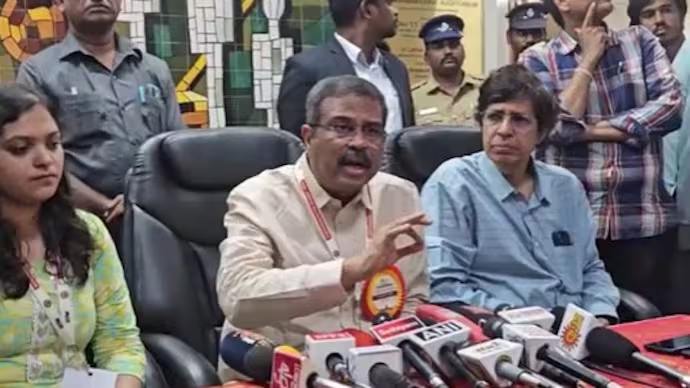
Anatomy of a Breach: The “Private Mafia”
The cancellation of NEET-UG 2026 was not a premature reaction; it was a response to an alarming breach of security. Investigative leads suggest a coordinated “Private Mafia” network that operated with clinical precision:
• The Leak Source: Officials suspect the breach originated at a printing press in Nashik before spreading like wildfire across state lines.
• The Digital Paper Trail: “Guess papers” circulated on WhatsApp and Telegram were found to match over 100 questions from the actual exam.
• The Economy of Malpractice: Access to leaked content reportedly cost anywhere from Rs5,000 to Rs30,000, with middlemen like Shubham Khairnar (a BAMS student) allegedly flipping leaked material for a profit of Rs 5 lakh per transaction.
With over 150 individuals questioned across six states, the CBI is now untangling a web of coaching counsellors, paper-solvers, and intermediaries who have commodified the hard work of millions.
Structural Reform: Beyond Paper and Pen
FAIMA’s legal challenge isn’t just about punishing the current culprits; it’s about future-proofing the system. The association has proposed a shift that many experts feel is long overdue:
— Uday Barat, Goa (courtesy FB)
GOLD BUYING WILL BE ‘NO MORE COMMON FACTOR’ FOR COMMON PEOPLE
A FRIEND of mine called me and informed that he cancelled his wedding — due to gold price hike. He is waiting for gold price to fall and become cheaper. Here, the common man is not aware of the fact that gold rates are controlled by foreign countries like America and United Kingdom. Alas! Billionaire countries! While gold holds immense cultural and emotional significance in India — often acting as a security net for lower-income households — rising prices have significantly reduced its accessibility as a common investment for the average household, with experts noting that pure gold is becoming increasingly unaffordable.
As of mid-2026, the disconnect between soaring gold prices and stagnating income growth means gold is shifting away from a widely held, everyday asset for the common person toward a more exclusive store of value.
Genuine purchasing power has not improved. It is difficult for the common man to purchase gold at current prices which may go up and up. Finally, gold lovers do not believe in restrictions in buying gold or gold ornaments. Even consumers are moving from 24-karat gold to 22, 16, or even 12-karat options due to high costs.
Rising prices and economic pressures —such as high EMIs and inflation — have made discretionary purchases like gold rare for many, even though 75% of households still own some form of it.
In future if gold price increases, potentially reaching record levels, it is likely to cause a further decline in retail participation, with investment demand shifting towards financial instruments rather than physical ownership. Gold buying will be no more common factor for common people in future?
India needs to find its own gold mines. In Goa one square meter land is equal to rising gold price for sure!
—By Rajesh Banaulikar, Arpora, Goa
 LETTER TO THE EDITOR FOR ISSUE DATED OCTOBER 03, 2026
 GEN-Z BLOCKED FROM VOTING BY GYANESHWAR MODI!
 THE FORAL OF 1526 Five Hundred Years Later, What Does Goa’s Oldest Village Charter Really Mean?
 20 YEARS IN ‘HERALD’, 43 IN GOA!
 THE DEGRADATION OF JNU – MY ALMA MATER! By Arvind Pinto
 THE WOMEN WHO LOOK BACK! By Prema Viswanathan
 GOA IS CELEBRITY STATE!
 HI MUMBAI MERI JAAN BUT…
 WEEKEND UPDATES
 LETTER TO THE EDITOR FOR ISSUE DATED SEPTEMBER 26, 2026
 DIVIDED EVEN IN DEATH!By Rajan Narayan
 IF YOU CLAIM THE CREDIT, TAKE THE RESPONSIBILITY!By Joquim Goes
 8 EMAILS IN 7 DAYS, BUT VALID GOA VOTERS STILL LEFT OUT: EC’S FLAWED SYSTEM!By Ritika Chopra
 MAKE IN INDIA: UNITED PAYMENTS INTERFACE India’s digital local leap to global benchmark…By Arvind Pinto
 BRING BACK THE FLATBREADS OF INDIA!
Goa is abuzz with excitement as vintage bike and car owners, users, collectors and fans are decking […]