Goa is abuzz with excitement as vintage bike and car owners, users, collectors and fans are decking […]
Old is Gold
October 4, 2016
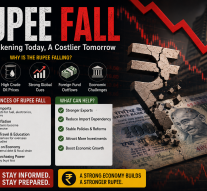
INDIA today stands at a complex economic crossroads. While the economy continues to grow at a relatively strong pace of around 7.5% in the current financial year, compared to a world average of 4% for many global peers, its external sector — the part of the economy dealing with trade, capital flows, and foreign exchange — shows increasing signs of stress. In recent months, policymakers have drawn attention to declining foreign exchange reserves, a weakening rupee, and rising import bills, especially for crude oil, gold and edible oils.
These developments have triggered calls for austerity measures, such as reducing gold purchases, limiting foreign travel, saving fuel, and even cutting down on edible oil consumption. Even the Prime Minister has called for Indians not to travel abroad and not to buy gold or silver and use less petrol and diesel.
At first glance, these suggestions might seem like symbolic gestures. However, when examined closely, they are deeply rooted in economic logic. This article explores the nature of the foreign exchange (forex) situation in India today, evaluates whether it reflects a crisis, examines how consumer behaviour influences forex reserves, and analyses whether current problems arise solely due to global factors like wars or also from domestic structural issues.
Understanding the Foreign Exchange Situation
FOREIGN exchange reserves are assets held by a country’s central bank, typically in the form of foreign currencies (like the US dollar), gold and special drawing rights. These reserves are used to pay for imports, manage currency stability and build investor confidence. The large foreign exchange reserves are a sign of a country’s international standing.
India’s forex reserves remain large — around $690 billion — but recent declines and volatility have raised concerns about sustainability under external pressures. The fall in reserves has been attributed to rising import costs, capital outflows, and geopolitical tensions, especially the US, Israel – Iran war that has disrupted the supply of oil raising its price in the international market.
At the heart of the issue is the current account deficit (CAD) — the gap between what India spends on imports and earns from exports. When imports exceed exports, India must pay the difference in foreign currency, leading to a drain on reserves.
Why Gold, Oil and Edible Oil Matter
INDIA’S import structure reveals why policymakers are concerned. A large proportion of imports consists of commodities that are either essential or culturally ingrained.
How Reducing These Activities Helps Forex
THE call to reduce gold purchases, foreign travel, fuel consumption, and edible oil usage is not merely symbolic; it has clear economic implications.
Reduction in Dollar Outflows
All these activities involve spending foreign currency. Cutting them reduces immediate demand for dollars, helping preserve forex reserves.
Improvement in Current Account Balance
Lower imports directly narrow the current account deficit, strengthening the external position.
Stabilization of the Rupee
Reduced demand for dollars lowers depreciation pressure on the rupee, making imports cheaper and controlling inflation. Sadly, the rupee has touched an all time low of Rs 96 per dollar and most Indians believe that in the coming days, the King dollar break the psychological barrier of Rs 100/-
Increased Economic Resilience
Conserving forex builds a buffer against external shocks, such as sudden oil price spikes or capital outflows.
For example, even a partial reduction in gold imports could save billions of dollars annually and significantly reduce external vulnerability.
Are Global Factors the Only Cause?
A common perception is that India’s current forex stress is largely due to global events such as the West Asia conflict, rising oil prices, and geopolitical tensions. While these factors are important, they are only part of the story
Global Factors
Geopolitical Conflicts (eg West Asia crisis)
Conflicts disrupt oil supply chains and push up crude prices, increasing import bills.
Global Financial Tightening
Higher interest rates in developed economies attract capital away from emerging markets like India, causing capital outflows.
Strong US Dollar
A strong dollar increases the cost of imports and external debt servicing.
Supply Chain Disruptions
Global shocks can raise the cost of commodities and reduce export demand.
Domestic Structural Issues
HOWEVER, structural weaknesses in India’s economy play an equally significant role.
Lessons from the 1991 Crisis
India has faced a severe forex crisis before, most notably in 1991. During that time, the country had barely enough reserves to cover three weeks of imports.
The crisis was triggered by a combination of factors:
— Rising oil prices due to the Gulf War
— Large fiscal and current account deficits
— Collapse of trade with the Soviet Union
— Capital outflows and declining investor confidence
This historical episode highlights a key lesson: economic crises rarely result from a single cause. They usually emerge from the interaction of external shocks and internal vulnerabilities.
Comparison with the Current Situation
INDIA today is far from a crisis comparable to 1991. The forex reserves are high, and macroeconomic stability is stronger. However, the current situation reflects early warning signs rather than an imminent crisis.
Similarities with 1991 include:
–Rising oil prices due to geopolitical conflict
–Pressure on the current account deficit
–Currency depreciation
Differences include:
–Much higher forex reserves
–Stronger financial system
–Better export performance (especially services)
–Flexible exchange rate regime
The Way Forward
To address the forex challenge, both short-term and long-term measures are needed.
Short-Term Measures
–Encourage reduced consumption of non-essential imports (gold, luxury travel)
–Promote fuel conservation and efficiency
–Manage reserves through prudent RBI intervention
Long-Term Structural Reforms
Energy Independence
Expanding renewable energy and domestic exploration to reduce oil imports.
Boosting Exports
Improving manufacturing competitiveness and diversifying export markets.
Reducing Edible Oil Imports
Investment in oilseed cultivation and agricultural reforms.
Promoting Financial Savings Over Gold
Encouraging alternatives like bonds and mutual funds.
Attracting Stable Capital Inflows
Strengthening investor confidence through policy stability.
Conclusion
INDIA’S foreign exchange situation today reflects both global turbulence and domestic structural challenges. While geopolitical factors such as the West Asia conflict and rising oil prices have intensified pressures, deeper vulnerabilities —such as heavy import dependence, weak export growth, and consumption patterns — are equally responsible.
The suggestion to reduce gold purchases, foreign travel, and consumption of fuel and edible oil is not merely symbolic nationalism, but a pragmatic response to immediate economic pressures. These measures help reduce dollar outflows, improve the current account balance and stabilize the currency.
Ultimately, the current situation should be seen as a warning rather than a crisis. It underscores the need for both behavioural change among citizens and structural reforms within the economy. As history has shown — from the 1991 crisis to the present — economic resilience depends not only on external conditions but also on how effectively a nation manages its internal vulnerabilities.
If addressed proactively, India can transform this period of stress into an opportunity to build a more self-reliant and resilient external sector. However, presently the economic mood looks despondent. Acche din has turned into a nightmare for the average Goan!
 LETTER TO THE EDITOR FOR ISSUE DATED OCTOBER 03, 2026
 GEN-Z BLOCKED FROM VOTING BY GYANESHWAR MODI!
 THE FORAL OF 1526 Five Hundred Years Later, What Does Goa’s Oldest Village Charter Really Mean?
 20 YEARS IN ‘HERALD’, 43 IN GOA!
 THE DEGRADATION OF JNU – MY ALMA MATER! By Arvind Pinto
 THE WOMEN WHO LOOK BACK! By Prema Viswanathan
 GOA IS CELEBRITY STATE!
 HI MUMBAI MERI JAAN BUT…
 WEEKEND UPDATES
 LETTER TO THE EDITOR FOR ISSUE DATED SEPTEMBER 26, 2026
 DIVIDED EVEN IN DEATH!By Rajan Narayan
 IF YOU CLAIM THE CREDIT, TAKE THE RESPONSIBILITY!By Joquim Goes
 8 EMAILS IN 7 DAYS, BUT VALID GOA VOTERS STILL LEFT OUT: EC’S FLAWED SYSTEM!By Ritika Chopra
 MAKE IN INDIA: UNITED PAYMENTS INTERFACE India’s digital local leap to global benchmark…By Arvind Pinto
 BRING BACK THE FLATBREADS OF INDIA!
Goa is abuzz with excitement as vintage bike and car owners, users, collectors and fans are decking […]