Goa is abuzz with excitement as vintage bike and car owners, users, collectors and fans are decking […]
Old is Gold
October 4, 2016

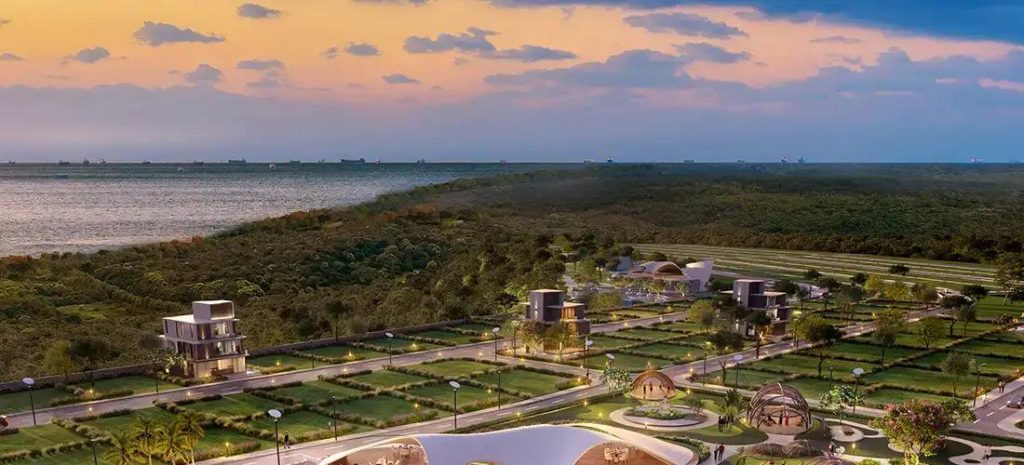
The holding company promoting the “One Goa” mega Abhinandhan Lodha project in Karapur village has filed Rs15 crore defamation case against activist Swapnesh Bhanudas Sherlekar. The issue is not as if the project has followed all the rules. The larger issue is the very real carrying capacity of small villages like Karapur and their ability to sustain such mega projects…..
IN the light of the Supreme Court’s statement “show us even a single project in this country where the so-called environmental activists have said that we welcome this project” and the news highlights stating that “the Supreme Court of India slams pleas blocking developmental projects,” it seems that the time is ripe for assessing the course of activism in India but more specially in Goa – as one of our most diligent and research-backed activists is threatened to be sued for defamation of a notorious Real Estate company who claimed the latest “colonisation” of Goa.
The image of Goa has long been that of a landscape of beaches, rivers, forests, paddy fields, khazan lands and tightly knit village communities. Yet over the past two decades, the state has witnessed a dramatic surge in speculative real estate development. Luxury villas, gated townships, high-rise apartments, tourism infrastructure and mega housing projects have increasingly spread into ecologically fragile areas, often with questionable environmental assessments and absolutely no scientific scrutiny or inspections from the appropriate authorities. In fact, the scrutinised applications under 17(2) and 39A indicate “no requirement” for such inspections with totally conflicting reasoning against each.
Based on the revelations as they emerge, activists, village groups, environmentalists, planners, lawyers and ordinary citizens across Goa have been reacting sporadically as a powerful counterforce. And this sporadic struggle is only now gathering the required strength of numbers to see a possible hope in arriving at a satisfactory resolution. Our struggle is not simply against “development,” but against what may be described as unscientific development — projects approved without credible carrying-capacity studies, hydrological analysis, ecological assessments or infrastructure planning. The Environmental Reports are generic and not grounded in reality. The conflict unfolding in Goa today represents one of India’s clearest examples of the tension between ecological sustainability and speculative urbanisation.
NATURE OF THE CONFLICT
GOA is India’s smallest state in terms of area, spanning 3,702 sq km with a population estimated to be around 1.46 million as per 2011 census, and an urbanisation rate of over 62%. It is ecologically sensitive and its coastlines, mangroves, wetlands, estuaries, hill slopes and lateritic plateaus form interconnected environmental systems. Traditional settlements historically evolved in response to these systems through low-density villages, water harvesting practices and agricultural landscapes crafted by the locals with indigenous but “genius” mechanisms such as the khazan systems of alternating food crops with salt pans and water management.
However, modern real estate expansion frequently treats land as an isolated commodity rather than part of a living ecosystem, thereby encroaching into all areas and treating wetlands as “wastelands” and plateaus as “barren unproductive lands.” To the contrary, both of these are the raison d’etre of our biodiverse ecosystems. Activists argue, not without reason, that many projects receive permissions despite inadequate scientific evaluation regarding:
• Groundwater availability
• Sewage carrying capacity
• Storm-water drainage
• Flood vulnerability
• Slope stability
• Coastal erosion
• Wetland hydrology
• Biodiversity corridors
•Road and waste infrastructure
• Cumulative environmental impact
Environmental Impact Assessments (EIAs) are often project-specific and do not consider the cumulative impact across the connected ecosystem on a larger scale, across entire watersheds and coastal belts. Besides an EIA, projects should be run through the SEEA – System of Environmental-Economic Accounting – an internationally agreed framework that integrates economic and environmental data to provide a comprehensive view of the relationship between the economy and nature. We are fortunate to have the NIO in Goa, yet we do not take their scientists on board when considering the impact of any development along the coastline. The smallest intervention can cause repercussions in areas that we would never imagine.
Does anyone remember the impact of the grounded barge in Candolim? The vessel acted as an artificial breakwater, obstructing the natural flow of sand and causing the beach southward of the ship to erode heavily. A 1.5 km stretch of the coast receded by as much as 85 meters in some areas, eating away at the dunes for over 12 years until it was removed. The eroded sands were deposited in Nerul and other areas. The force of water and its movement along the shores is dependent on wind, tides, undercurrents and the obstacles the water encounters enroute can reshape the coastline in ways we cannot imagine without simulation of forces and energies.
The dunes play a very specific role in protecting coastlines. The first line of primary dunes is located at around 90 meters from the High Tide Line, and the secondary line of higher dunes is located at around 200 meters from the High Tide Line. And this is the science that guides the Coastal Regulations of No Development within the 200 meter line of the High Tide. This science is now being erased with the new CRZ regulations of 2024.

RISE OF CARRYING CAPACITY AS A PUBLIC DEMAND
ONE of the most important ideas emerging in Goa’s environmental movements is the concept of carrying capacity — the maximum level of development an ecosystem and infrastructure network can sustain without irreversible degradation. All that the village communities in Goa are demanding is a scientific carrying-capacity study before large real estate or tourism projects are approved. This is not “anti-development.” This is a very reasonable request from people with foresight, after learning lessons from hindsight.
Unfortunately, the elected representatives have betrayed the people with each plan that is rolled out, and each amendment that is made to the plans. Gram Sabhas in villages repeatedly raise concerns over water supply, sewerage, roads and waste management while opposing mega housing projects, which are mostly second and third homes for non-residents, consuming land and resources without addressing the real problem – housing for the masses, housing for the homeless. Land is a finite commodity, especially in the small state of Goa that has no scope for expansion being caught between the Western Ghats and the Deep Blue Arabian Sea. Projects have been given approval under the guise of addressing housing for the masses and homeless, on plot sizes of 150 sq mts (in Goa, plot sizes of 100 sq mts are allotted under the 20-point housing for the homeless scheme, with reduced setbacks to enable the homeless poor to afford a space of their own). However, these plots have been allotted to Real Estate companies who are selling villas on these plots to our “impoverished” countrymen at prices unaffordable to the local population, taking advantage of the reduced setbacks and height allowances permitted for 20-point programmes. Besides the demographic change in the villages due to this covert Real Estate mechanism, other issues such as representation in local self-governance, representation in the Legislative Assembly, etc will also be affected due to the change in demography. These are not merely emotional or cultural arguments. Planning does not end with physical amenities. Without socio-cultural and socio-economic aspects, physical planning is a failure. We plan for people, for integration. Not ghettoization. Citizens and ‘activists’ arguments are increasingly grounded in environmental science, hydrology, planning theory and infrastructure analysis. Our villages may have what appears to be a lot of land. However, each parcel of land has its purpose in the larger scheme of what the Gaonkars or Communidade (Community) had planned and parcelled out to tenants, which brought in the revenue that was redistributed to the heads of families as Zon.
The activists and villagers demand is therefore simple: before approving large projects, authorities must scientifically demonstrate that the region can sustain the project as well as provide economic benefit to the villagers.
The Legacy of Regional Plan Controversies
THE roots of present-day planning activism in Goa can be traced back to the controversies surrounding the Regional Plan 2011 and later the Regional Plan 2021. A large number of Goans protested alleged arbitrary land-use conversions that opened ecologically sensitive areas for construction. Activists demonstrated that agricultural zones, forests and natural landscapes were being systematically transformed into settlement zones benefiting private developers. According to reports, environmental campaigners argued that many problematic elements from the earlier Regional Plan reappeared in later planning frameworks despite public opposition. Instruments such as the section 16(B) which was vehemently opposed for giving “sweeping powers” to change zones on a case to case basis, was later revoked but stealthily brought back in revised form of 17(2) and later given more teeth with the draconian 39A and the formation of the Investment Promotion Board under which Zone changes can be made ad-hoc, all existing Zoning regulations thrown to the wind. This phase gave birth to the Goa Bachao Abhiyaan, a formalisation of the “Save Goa” movement.
These battles have been shaping a generation of Goan environmental activism. Guided by the Goa Foundation and the GBA, citizens have learned to use the RTI act to obtain relevant and incriminating information. Combined with GIS mapping, thanks to Amche.in and professionals who have given their time and skills to develop the map box of Goan land and make it a user-friendly interface, ecological surveys and access to planning documents, concerned citizens are well aware of their rights as well as their duties as per the Constitution – the duty to protect the environment and ecology, and the right to demand the same from the government. “Activists” of today are well educated professionals from all walks of life, working together for the cause of saving the last of Goa’s environment and ecosystems. And like Engineer Swapnesh Sherlekar, they are using their education in the best way possible – defending the rights of the common man and educating the less privileged of their rights. Besides performing his fundamental duties of protecting the environment and demanding that it be protected by the government that has been elected for the purpose, Er Swapnesh Sherlekar and other professionals are forced to abandon their lucrative professions and careers and spend time in court fighting public interest litigations against government agencies that are paid salaries to protect the law and ensure that development is based on the regulations in force.
Today’s protests against development are a result of the incessant violation of environmental regulations as per the Environment Protection Act and the degradation of ecosystems that are being witnessed and documented. Water pollution and fish kills, mangrove destruction, salinity ingress upto 10 km inland — as the current movement spearheaded by Retd Justice Ferdinand Rebello says “Enough is Enough”
COASTAL REGULATION ZONE (CRZ) VIOLATIONS
THE Coastal Regulation Zone framework has become one of the most contested legal instruments in Goa. CRZ laws were designed to protect fragile coastal ecosystems from uncontrolled construction. However, projects proceed in violation of No Development Zones clearly demarcated. Hill-cutting is rampant (Reis Magos hill-cutting is visible from the Capital city of Panjim where the Town and Country Planning Department and the Forest Department is located, in fact it is visible from Altinho hillock where all the bureaucrats and judiciary reside). If this needs an “activist” to bring it to the attention of the authorities, either the authorities are driving around in tinted glass vehicles (which is again illegal), ignorant of the regulations, or not interested in the ecosystem and environment. Civic movements arise because local communities feel that approvals are granted without integrated ecological evaluation of the projects.
WETLANDS, KHAZANS AND FLOODING
ANOTHER major concern is the destruction of wetlands and khazan lands for construction. Goa’s low-lying wetlands historically acted as flood buffers, groundwater recharge zones, fish-breeding habitats, agricultural land and salinity regulators. Filling and reclamation of these lands for real estate have disrupted these functions. The flooding that occurs in many parts of Goa can be directly attributed to encroachment and filling of such low-lying lands.
In Panjim, the grounds opposite Bal Bhavan, the lake in Lake View Colony Miramar, and several other open spaces that used to absorb flood waters and slowly release them through the drainage network, have been filled and built over, covered with impervious paving, raised above road level – thereby converting roads into water channels especially when drainage is silted over and filled with debris and plastic. Scientific hydrological studies are conspicuously absent during project approvals, especially regarding cumulative runoff impacts. This is especially alarming in a monsoon-dominated state like Goa, where intense rainfall events can rapidly overwhelm modified drainage systems.
MOLLEM AND EXPANSION OF ECOLOGICAL ACTIVISM
ALTHOUGH the Mollem movement focused primarily on infrastructure projects rather than housing, it transformed environmental activism in Goa. The movement spearheaded by youthful activists opposing railway expansion, transmission lines and highway widening through forested areas mobilised thousands of citizens. Importantly, the protests popularised scientific language in public discourse. It brought to attention the fact that cumulative impact assessment is necessary. Wildlife corridors should be respected and fragmentation of habitat can affect biodiversity and wildlife. The movement demonstrated that ordinary citizens could critically analyse official environmental reports and challenge them publicly. This culture of ecological literacy has since spilled into opposition against unsustainable real estate expansion.
THE QUESTION OF SCIENTIFIC CREDIBILITY
COMMON concerns of citizen activists are the fact that projects are assessed individually while the ecosystem faces the stress of several types of developmental activities along a continuum. Environmental approvals are granted on inadequate background analysis and data. Planning approvals rely on such weak or incomplete scientific methodologies. For example, one housing project may appear manageable in isolation, but dozens of similar projects together may exceed groundwater recharge rates, sewage capacity and road infrastructure. This cumulative dimension remains poorly addressed in Goa’s planning framework.
SOCIAL DIMENSION OF ACTIVISM
THE struggle is also social and cultural. Many Goans fear displacement from ancestral villages due to rising land prices, speculative investment and changing settlement patterns. Environmental activism therefore intersects with the Goan identity, local governance, housing justice, cultural preservation, preservation of local livelihoods (fishing, farming, salt panning). Reports and public commentary frequently reflect anxieties that unchecked development is transforming Goa into a landscape detached from its ecological and cultural foundations. Importantly, many activist movements are decentralised and community-driven rather than led by large NGOs. Village gram sabhas, citizen forums and informal collectives often become the primary sites of resistance.
CITIZEN SCIENCE AND PUBLIC PARTICIPATION
ONE notable feature of Goa’s activism is the rise of citizen science. Communities are resorting to creating a parallel ground-truths documentation of illegal hill-cutting, wetland filling, groundwater depletion, flooding events, tree-felling, solid waste pileups, shoreline changes, CRZ violations. Using drones, GIS maps, RTIs, hydrological observations and legal documentation, activists create independent records that challenge official narratives. Social media and local digital networks have further amplified this process. Discussions around overdevelopment, carrying capacity and ecological collapse increasingly circulate in public forums and citizen groups. This democratisation of environmental knowledge represents a significant shift in how planning conflicts unfold.
THE DEVELOPMENT DILEMMA
THE debate is not entirely one-sided. Proponents of development argue that Goa requires economic growth, tourism infrastructure, employment generation, improved housing stock and urban expansion. Some also argue that activism delays infrastructure and create planning uncertainty. However, the counter point is that the issue is not development itself. It is the manner in which it is carried out – unscientific and irresponsible ad-hoc development that counters the very plans prepared for the purpose. Planning must be eco-system based and approvals must consider carrying capacity of the location/locality based on existing infrastructure and the possibility of augmenting the same at the location. Wetlands and forests must be treated as non-negotiable ecological assets which are out of bounds for development. Infrastructure must precede high-density construction. Climate resilience must become central to planning. In a coastal state facing sea-level rise, intense monsoon events and groundwater stress, these concerns are increasingly difficult to dismiss.
CONCLUSION
THE struggle between activists and real estate expansion in Goa is ultimately a struggle over the meaning of development itself. For many citizens, the fight is not merely about preserving scenic landscapes. It is about defending hydrological systems, ecological resilience, cultural continuity and democratic participation in planning. What makes the Goan case particularly important is the growing insistence that environmental governance must be rooted in scientific credibility rather than procedural formality. Activists are increasingly challenging not only individual projects, but the very frameworks through which projects are evaluated and approved.
The future of Goa may therefore depend on whether planning institutions begin to integrate genuine carrying-capacity studies, cumulative ecological assessments and transparent public participation into decision-making. Without such reforms, the conflict between communities and speculative development is likely to intensify — as citizens continue to ask a fundamental question: How much development can Goa actually sustain before the ecological systems that make Goa unique begin to collapse?
I hope the Supreme Court of India takes cognisance of the voices of the locals and “activists” before passing its judgements and granting approvals to plans without verifying their potential impact on the fragile and interconnected ecosystem of Goa. And I do hope Goans who do not openly vocalise their angst at least come out in support of its activist who has given Goa his all.
(Ar. Hyacinth Pinto is a M.Arch Green Infrastructure; President of WICCI Goa Women Architects chapter)
 LETTER TO THE EDITOR FOR ISSUE DATED SEPTEMBER 26, 2026
 DIVIDED EVEN IN DEATH!By Rajan Narayan
 IF YOU CLAIM THE CREDIT, TAKE THE RESPONSIBILITY!By Joquim Goes
 8 EMAILS IN 7 DAYS, BUT VALID GOA VOTERS STILL LEFT OUT: EC’S FLAWED SYSTEM!By Ritika Chopra
 MAKE IN INDIA: UNITED PAYMENTS INTERFACE India’s digital local leap to global benchmark…By Arvind Pinto
 BRING BACK THE FLATBREADS OF INDIA!
 EARLIER YOU KNOW, THE MORE YOU CAN DO Dementia diagnosis matters… By Dr Vailanki Nazira Raposo
 YOUNG LOVE IS A CRIME IN BIHAR!
 THE BOAT BECKONS, THE UNICORN WATCHES! By Prema Viswanathan
 WEEKEND UPDATES
 LETTER TO THE EDITOR FOR ISSUE DATED SEPTEMBER 19, 2026
 ELEVATED HIGHWAY TO HELL!
 MEDICAL DEVICES LOOT!By GS Mudur
 HOSTILE ACT BY PAKISTAN: `PNS HUNAIN’ TRIED TO DISRUPT OUR NAVAL SURVEILLANCE! By Dr Olav Albuquerque & Deborah Albuquerque
 BLACK MONEY IN POLITIAL PARTIES: ADR’s Alarming Revelations By Arvind Pinto
Goa is abuzz with excitement as vintage bike and car owners, users, collectors and fans are decking […]