Goa is abuzz with excitement as vintage bike and car owners, users, collectors and fans are decking […]
Old is Gold
October 4, 2016
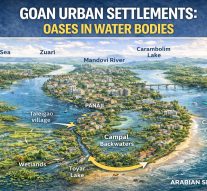
Around 24.6% of Goa’s 1,463 recorded water bodies (Jal Shakti Ministry’s National Water Body Census) are already out of use due to drying, siltation or complete destruction, while nearly 60% of the tested ones show clear signs of pollution from sewage, garbage, industrial effluents and construction debris.
GOA’S landscape is defined by its shimmering rivers, quiet lakes, and intricate network of estuaries and khazan wetlands. For decades, these waterbodies have sustained agriculture, fishing, biodiversity and tourism. Yet, today they are at the heart of a quiet environmental crisis. The result is a state of paradox: a land celebrated for its beaches and rivers now watching these very waterbodies turn into heavily burdened drains, its coastal waters increasingly unfit for bathing or fishing, and its rural water sources slowly disappearing. (Gauree Malkarnekar, TNN March 16 2026). The root cause of degradation of water bodies in Goa must be diagnosed. The degradation that we see in our waterbodies should remind readers that water is not an abstract entity; it is the silent thread that stitches together livelihoods, culture and ecology.
How Goa’s Water bodies Are Changing
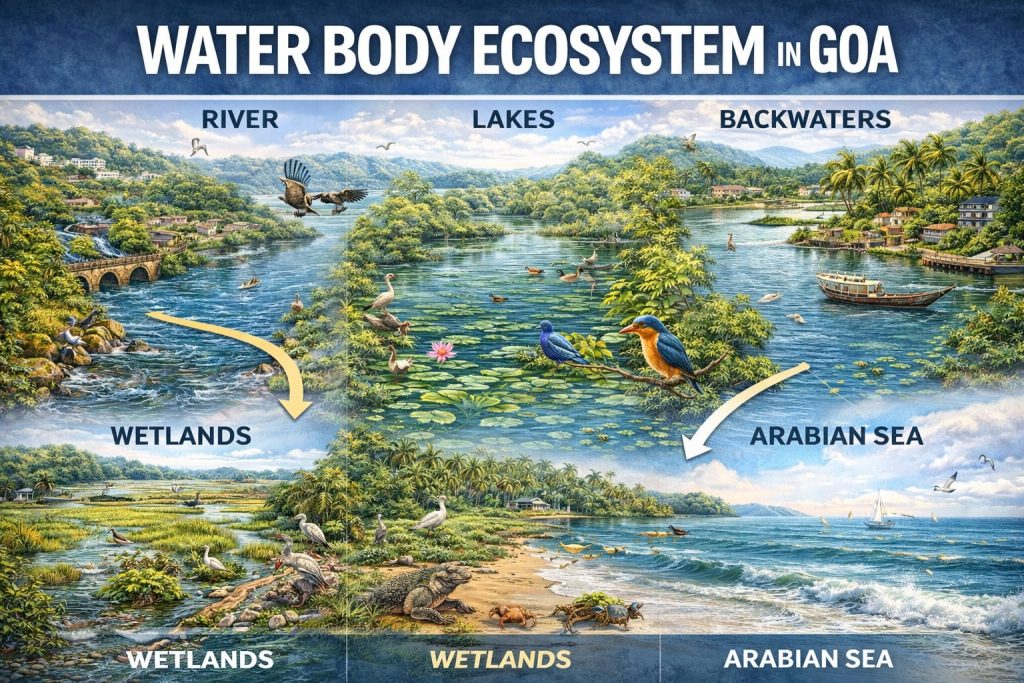
GOA’S water network includes 11 major rivers of which the Mandovi, the Zuari, the Sal pass through the major urban regions. These along with other rivers like the Terekhol, Chapora, Talpona and Galgibaga, and minor rivers like the Colvale, the Mapusa, Saleri and Assonora rivers and hundreds of lakes, ponds, percolation tanks and coastal wetlands form a network of wetlands from highland catchments to low-lying khazans. These systems were historically understood as living, seasonal entities: rivers swelled in the monsoon and receded in the dry months; khazan-fields were low-lying, tidal influenced tracts where farmers managed salinity and freshwater to grow rice and vegetables; and estuaries functioned as nurseries for fish and feeding grounds for migratory birds. (Wenceslaus Mendes)
Today, this seasonal balance is disturbed. Data from the Union Jal Shakti Ministry’s national water-body census show that 360 of Goa’s 1463 waterbodies are effectively out of use because of drying, siltation or irreversible damage. Many of the remaining waterbodies are being used almost exclusively for irrigation, reflecting a shift from diverse, multi-use commons to narrowly utilitarian tanks. At the same time, studies and media reports indicate that about 60% of tested waterbodies – rivers, lakes and coastal stretches – are polluted with faecal coliform, heavy metals, suspended solids and plastic waste – forming the core of the contamination.
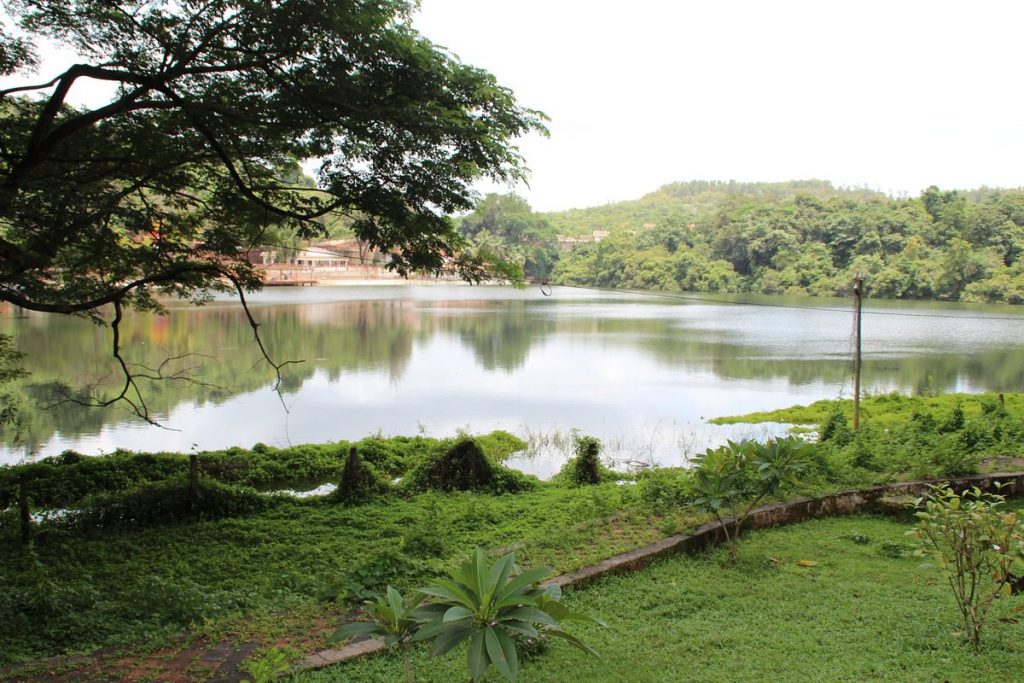
These numbers translate into tangible local realities: dead fish floating in Mala Lake in Panaji, foul-smelling stretches of the Sal river near urban settlements, and large stretches of Goa’s coastline deemed unsafe for swimming or water sports. The rivers that once carried clean water through the countryside are now often seen as conduits for sewage and mining-belt run-off, while wetlands and khazans are being encroached or claimed for roads, housing, and tourism infrastructure.
Drivers of Degradation: Sewage, Sand and Concrete
THREE overlapping forces are at the center of the water-body crisis: inadequate sewage treatment, unregulated sand and construction activity, and land-use changes driven by real-estate and tourism. Untreated sewage and domestic waste form the most visible layer of pollution. Goa’s existing sewage infrastructure is stretched far beyond its designed capacity, especially during the tourist season. The Goa State Pollution Control Board and Central Pollution Control Board have repeatedly recorded high levels of faecal coliform and other pollutants in coastal waters, with popular beaches such as Morjim, Arambol, Calangute, Baga and Miramar often exceeding safe standards for bathing and water sports. Yet these activities continue unabated. Behind the scenes, thousands of households and small establishments either discharge greywater directly into storm drains or rely on septic tanks that frequently overflow or leak into nearby waterbodies. Recent reports of mass fish deaths in Mala Lake in Panaji have been directly attributed to the dumping of untreated sewage, highlighting how even small urban lakes can become toxic.
Sand Mining and Construction Activity:
SAND mining and construction have altered the very physical structure of Goa’s rivers and wetlands. Excessive sand extraction narrows river channels, reduces water holding capacity, increases siltation and alters the natural flow regime, which in turn affects habitats for fish and benthic organisms. (Rajendra P. Kerkar) Studies have shown that mining-related sediments in rivers such as Mandovi and Bicholim carry elevated levels of iron, manganese and lead, (Ramesh Gauns) which stress aquatic life and can eventually enter the food chain via shellfish and fish. (Study by Marine Science department of Goa University).
In rapidly urbanizing areas, construction debris and illegal dumping further clog drainage lines and floodable zones, turning potential retention areas into choked, stagnant pockets.
Land-use change and encroachment complete the picture. The census of water bodies notes that at least eight waterbodies in Goa are under some form of encroachment, including ponds, tanks and percolation dams, with one site reportedly encroached to the extent of 75%. (reported by Gauree Malkarnekar) In many villages, smaller ponds and khazan-wetlands have been filled or converted into roads, parking lots or housing layouts, often justified by the need for “development” or “modernization”. The loss of water-retaining areas not only reduces the buffer against floods but also diminishes groundwater recharge, creating a double burden: more frequent flash floods in the monsoon and sharper water scarcity in the summer. (Rajendra Kerkar, TNN, Sep 26,2021)
Ecological and Livelihood Impacts:
THE degradation of water bodies is not just an environmental issue; it is a socio-economic crisis unfolding in slow motion. Aquatic biodiversity is under heavy stress – eutrophication caused by nutrient-rich sewage and agricultural run-off leads to algal blooms, oxygen depletion and fish kills. Studies from major estuaries such as Mandovi, Zuari, Sal and Terekhol show elevated biochemical oxygen demand (BOD) and widespread micro-plastic contamination, with plastic fibres and fragments ingested by commercially imported fish species. (The Goan, 11th March).
Bottom-dwelling organisms such as clams and benthic fauna have been severely affected by mining-related sediments, with historical reports indicating more than 70% reduction in clam production and a collapse of diverse native communities in favour of a few hardy, pollution-tolerant species. (Study by the Marine Science Department of the Goa University). Such shifts reduce the resilience of the entire estuarine system and limit natural water-purification services that these organisms once provided.
Livelihoods are eroding. Fishing communities that depend on healthy estuaries and coastal waters face declining catches, modified fish migration patterns and increased risk of disease-related losses. The degradation of rivers and lakes also undermines the viability of traditional khazan-based agriculture, where farmers once managed salinity and freshwater to grow rice, vegetables and fish in a harmonious, low-input system.
When wetlands are concreted or filled, knowledge-intensive, community-based management practices are pushed to the margins, and small-scale farmers and fishers are left with fewer options.
Urban and peri-urban residents also pay a price. Polluted waterbodies become breeding grounds for mosquitoes and vectors, while contaminated groundwater can show up in drinking-water wells (water is a solvent and carrier of dissolved contaminants and pollutants), especially in areas with leaky septic tanks and inadequate sanitation. The resultant contamination therefore does not affect just the source location but can emerge in any other area to which the water has flowed either through surface flow or subsurface/groundwater level. At the same time, the loss of open waterbodies and wetlands reduces the availability of public spaces for recreation, cooling and groundwater recharge, making cities more vulnerable to heat and flooding.
Governance Gaps and Institutional Challenges:
THE problem is not only the scale of pollution but also the mismatch between laws on paper and realities on ground. Goa has legal frameworks for water-body protection, pollution control and coastal-zone management, yet enforcement is severely lacking. The National Water-body Census and the Union Jal Shakti Ministry’s data surface the extent of damage, but turning those figures into concrete restoration plans requires co-ordinated action across multiple departments –Local Bodies (Municipalities, Panchayats), the Goa State Pollution Control Board, the Goa State Wetlands Authority, the Water Resources Department, the Coastal Zone Management Authority, and mining authorities.
In many cases, responsibilities are blurred, budgets are fragmented and short-term revenue-generating projects (such as tourism infrastructure or Real Estate Development) are prioritized over long-term ecological restoration. Restoration projects, when announced, often stall at the level of feasibility or planning. For example, the Panaji Municipal Council (now Corporation of the City of Panaji) has been speaking of the need for a large-scale rejuvenation of the capital’s waterbodies, estimated to cost Rs.80-100 cr., yet financing, regulatory clearances and inter-departmental co-ordination remain formidable hurdles. Without transparent, participatory planning – and without integrating local knowledge from fishers, khazan farmers and traditional stewards of wetlands – such schemes risk becoming technocratic exercises that miss the social and cultural dimensions of water management.
Pathways to Re-imagining Goa’s Water Futures:
HALTING the degradation of Goa’s waterbodies and restoring their health will require a multi-pronged, context-sensitive strategy. First of all, stringent action should be taken against any individual/entity found dumping waste/discharging effluents into waterbodies. In the age of IoT and CCTV, monitoring this is not difficult. In the case of vehicles violating speed limits, the number plate is linked to the owners address, so penalties are claimable. In the case of humans (if vehicles are not used/visible) the complexity of penalizing the perpetrator emerges. However, the images captured can be published on social media/local journals and social stigma/pressure will eventually work. Creative infographics can be displayed in the precincts of waterbodies guiding visitors to locations of solid waste receptacles, which must be located appropriately before entering the wetland buffer zone (which is prescribed as 50 meters from the highest water level of the lake). The Solid Waste Management Rules have been reset from the 1st of April 2026. These include concepts like “Polluter Pays” and other systems like returning packaging to the vendor agencies. Cash for trash could be a good way of eliminating solid waste from public spaces.
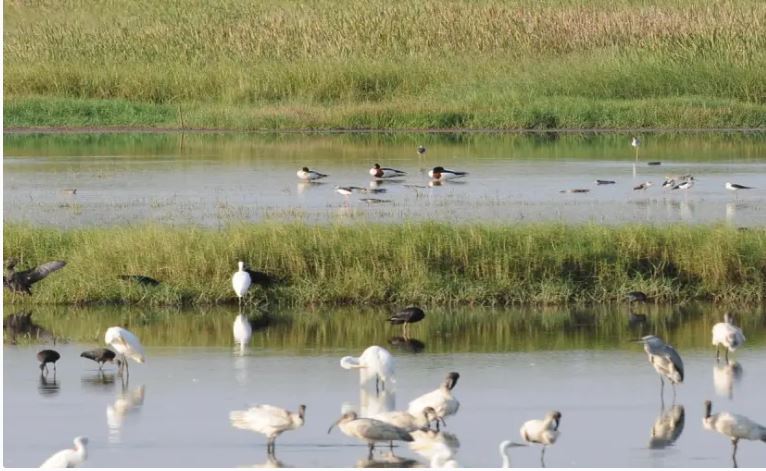
Besides solid waste, sewage and greywater management at source can reduce and eliminate the load on dysfunctional Sewage Treatment Plants (STP’s). Several agencies have been working on Bio STP’s and biodigestors for sewage, the technology having been adopted from the DRDO (Defence Research and Development Organisation) The effluent from these systems is >90% pure and pathogen-free, and can be discharged into the ground/into waterbodies. One of the pioneers in this field in Goa, is EPEE Industries.
Biodigestors can be sized from individual home-sized units for a family of 4-5, and can also be scaled up to cater to communities and housing complexes, thus reducing the need for piping sewage through large distances to public STP’s which do not achieve such high levels of pathogen break-down/digestion. Retrofitting existing STPs, upgrading their technology and capacity, enforcing norms for hotels and commercial establishments and promoting such decentralized solutions for community-scale can eliminate sewage from entering waterbodies. Properly designed wetland-based systems can also serve as green spaces (Nature based systems for greywater treatment like constructed wetlands)
Conclusion: A Call to Re-value Water:
IN 2026, Goa stands at crossroads. The state’s international reputation is built on its beaches and coastline, yet its future quality of life depends on much more: the quiet backwaters, the seasonal rivers, the disappearing khazans and the neglected village ponds that rarely make the headlines. The degradation of waterbodies is not a distant ecological concern; it is already visible in the fish kills, the foul-smelling stretches of rivers, the drying tanks and the polluted beaches. Reversing this trend will demand political will, Institutional co-ordination and sustained public pressure. But it also calls for a deeper cultural shift: a recognition that water is not a commodity to be exploited until it breaks, but a living system that sustains every aspect of life. Every effort to protect a pond, river or wetland is, in fact, an investment in Goa’s future.
(Architect Hyacinth Pinto, B Arch, Master’s Degree in Design of Sustainable Green Infrastructures, EHEA, Andorra, is currently pursuing a thesis on anthropogenic impact on wetlands — the case of Savlem Lake — as part of MArch in Sustainable Habitat, Goa College of Architecture, due for completion in May 2026. She is an associate of the Indian Institute of Architects, Goa Chapter, President of WICCI Goa Architects — Women’s Indian Chamber of Commerce and Industry, Goa Chapter)
 LETTER TO THE EDITOR FOR THE ISSUE DATED OCTOBER 10, 2026
 WHEN THE MACHINE OVERRIDES THE LAW!
 HAS GOA BECOME MORE PERMISSIVE? By Special Correspondent
 BILLIONAIRES MULTIPLYING AT THE COST OF THE MIDDLE CLASS!
 THE SHADOW OF VOTE THEFT: WHY CEC GYANESH KUMAR MUST RESIGN!By Dr Olav Albuquerque & Deborah Cordeiro
 ULTRA MODERN ‘MID-DAY’ OFFICE
 HI MUMBAI MERI JAAN BUT…
 TCS INVOLVED IN SIR MATCH FIXING!
 CEREBRAL PALSY: UNDERSTANDING ABILITY, ENABLING INCLUSION! By Dr Amit Dias
 WEEKED UPDATES
 LETTER TO THE EDITOR FOR ISSUE DATED OCTOBER 03, 2026
 GEN-Z BLOCKED FROM VOTING BY GYANESHWAR MODI!
 THE FORAL OF 1526 Five Hundred Years Later, What Does Goa’s Oldest Village Charter Really Mean?
 20 YEARS IN ‘HERALD’, 43 IN GOA!
 THE DEGRADATION OF JNU – MY ALMA MATER! By Arvind Pinto
Goa is abuzz with excitement as vintage bike and car owners, users, collectors and fans are decking […]