Goa is abuzz with excitement as vintage bike and car owners, users, collectors and fans are decking […]
Old is Gold
October 4, 2016
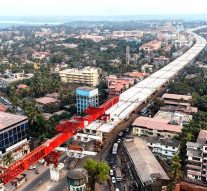
ON May 30, 1987 Goa attained statehood and proudly became India’s 25th state. For many, this marked the culmination of a long struggle for identity, autonomy and self-governance. For others, however, it opened a complex chapter — one where the promise of freedom came with a hidden cost: fiscal responsibility.
Nearly four decades later, it is worth asking — did Goa truly benefit from statehood, or did it exchange financial security under Union Territory (UT) status for a precarious autonomy it has yet to fully master?
The argument often made in public discourse, including conversations in Goan civil society, is deceptively simple: as a Union Territory, Goa’s budgetary deficits were largely absorbed by the Centre, whereas as a state, it must fend for itself, often sliding into debt and deficit. This article examines that contention in depth — not to dismiss statehood, but to interrogate whether Goa has fully leveraged it.
The Union Territory Years: Stability Under Central Protection
FOLLOWING Liberation from Portuguese rule in 1961, Goa was administered as part of the Union Territory of Goa, Daman and Diu until 1987.
As a Union Territory, Goa operated within a system where financial and administrative powers were significantly curtailed but, crucially, where the Centre bore substantial fiscal responsibility. Unlike states, UTs rely heavily on grants-in-aid from the central government rather than independent revenue generation. In 1961, this fiscal support was needed, since Goa as a Portuguese colony did not have much of fiscal support, and little development activity. Taxes were minimal and with limited needs the population did not have great expectations of government.
Thus the early interim arrangement provided a cushion. While local leaders and citizens had limited control over economic policy, they were insulated from many financial shocks. Deficits, if any, were not a political burden borne by Goan governments; they were absorbed into the broader fiscal architecture of the Union.
However, this came at a cost: limited autonomy. The legislative assembly had restricted powers, especially in areas such as law and order, fiscal policy and resource management. Thus, the UT phase offered financial security but political dependency — a paternalistic model of governance. In theory, Goa was governed from Delhi.
The Case for Statehood: Autonomy, Identity and Control
THE demand for statehood arose not out of fiscal dissatisfaction but from aspirations of identity and autonomy. Goa’s refusal to merge with Maharashtra in the historic Opinion Poll of 1967 demonstrated a strong regional consciousness. The United Goan Party lead by Jack Sequeira made Goans conscious of their identity and the need to preserve and maintain this unique blend of Luso-Indian culture.
By the 1970s and 80s, the push for statehood was driven by several key demands:
• Greater control over mining revenues and natural resources, which found world markets with rising prices.
• Authority to shape tourism policy, which was emerging as a major economic sector
• Protection of Konkani language and Goan identity. In their language, Goans of all hues found a distinct unifying force.
• Administrative efficiency through local decision-making
Statehood promised empowerment. It meant control over one’s destiny.
And in many respects, Goans believed that the time had come when they should have the power to decide their own destiny rather than be dictated by Delhi.
The Gains of Statehood: A Success Story in Many Metrics
ANY critique of statehood must acknowledge its undeniable successes. With being an independent state Goa has made substantial progress on several fronts.

The Fiscal Reality: From Cushion to Constraint
YET, the criticism about rising budget deficits is not without merit.
Recent data shows:
• Goa’s fiscal deficit was about 3.8% of GSDP in 2023–24
• The 2025–26 budget targets a fiscal deficit of 2.1% of GSDP.
• Outstanding debt has risen significantly, reaching over Rs34,000 crore by 2023–24.
Moreover, over the past two decades, Goa’s fiscal deficit has increased sharply, driven by:
• Rising welfare expenditure, schools, primary health care.
• Infrastructure spending, the need to improve connectivity
• Decline in mining revenue, partly due to the stoppage by the court order
• Dependence on borrowing
This is where the contrast with the UT phase becomes stark. Today, Goa must balance its books — at least within the constraints imposed by fiscal rules like the FRBM Act.
“Power Without Responsibility”? Interrogating the Claim
THE charge that Goa has “power without responsibility” is provocative. But is it accurate?
Argument Supporting the Claim
Critics argue that:
• State governments enjoy political autonomy but often rely on borrowing rather than disciplined fiscal management
• Populist schemes and subsidies have expanded beyond sustainable levels
• There is a disconnect between spending decisions and accountability for long-term debt
In this view, autonomy has encouraged short-term political thinking at the expense of fiscal prudence.
Argument Against the Claim
However, this characterization is partly misleading.
First, Goa does bear responsibility. It cannot rely entirely on the Centre for deficit financing. Borrowing limits, fiscal targets, and debt sustainability requirements constrain state fiscal norms
Second, the rise in deficits is not unique to Goa. Across India, states are grappling with similar pressures due to:
• Increasing expectations for welfare
• Infrastructure needs
• Economic shocks such as pandemics or sectoral declines
Third, Goa’s fiscal position is not uniformly weak. The state has reported revenue surpluses in certain years, indicating that its day-to-day finances are not always in distress.
Thus, the issue is not responsibility versus irresponsibility—but the complexity of managing a modern state economy.
The Structural Challenge: Small State, Big Expectations
GOA’S size is both its strength and its limitation.
With a small population and limited geographical area, Goa:
• Has narrow revenue sources
• Is heavily dependent on tourism and mining, both volatile sectors
• Faces high per capita expenditure expectations
At the same time, as a state, it must maintain a full administrative apparatus — education, health, policing, infrastructure — all of which carry significant costs.
This asymmetry between revenue capacity and expenditure obligations is at the heart of Goa’s fiscal stress.
Centre-State Dynamics: Has the Support Really Disappeared?
THE nostalgic belief that the Centre fully “took care” of Goa’s finances during the UT era must also be examined critically.
Even today, states receive:
• Share in central taxes
• Grants-in-aid
• Centrally sponsored scheme funding
However, the nature of support has changed. Instead of blanket fiscal coverage, support is now conditional and shared — reflecting India’s federal structure.
Thus, Goa is not abandoned—it is simply expected to co-manage its finances.
The Mining Shock: A Turning Point
ONE cannot discuss Goa’s fiscal challenges without mentioning mining.
The decline and legal uncertainties surrounding mining have significantly reduced state revenues.
This has had a cascading effect:
• Reduced royalties
• Lower employment income
• Reduced secondary economic activity
In many ways, Goa’s fiscal struggles reflect structural economic changes rather than failures of statehood per se.
Rethinking the Debate: Statehood vs Governance
THE central question is often framed incorrectly.
The issue is not whether statehood was beneficial. It clearly was — in terms of identity, autonomy, and development.
The real question is: Has Goa used statehood effectively?
This shifts the debate from political structure to governance quality.
Lessons for the Future
IF Goa is to overcome its fiscal challenges, several lessons emerge:
Conclusion: Was Statehood Worth It?
ON balance, the answer is unequivocal: Yes, Goa benefited from statehood.
But that benefit came with a price —responsibility.
The nostalgia for the Union Territory era reflects a longing for financial security without accountability. But that model was inherently limited and unsustainable for a society that sought self-determination.
Statehood gave Goa the tools to shape its destiny. Whether it uses those tools wisely is a question that must be answered not in theory, but in policy decisions and fiscal choices.
The real danger lies not in autonomy, but in the illusion that autonomy can exist without discipline.
As Goa approaches nearly four decades of statehood, it stands at a crossroads. It can either continue to attribute its fiscal challenges to the past — or embrace the responsibility that comes with the power it once demanded. The choice, as always, is Goan.
 LETTER TO THE EDITOR FOR THE ISSUE DATED OCTOBER 17, 2026
 AZAD MAIDAN NO LONGER FREE!
 AZAD MAIDAN CRACKDOWN! Goa’s crackdown on protesters raises grave questions about democracy! By Our Special Correspondent
 INDIAN WOMEN ARE ON THE STREETS AGAIN. EVERYTHING HAS CHANGED BUT NOTHING HAS CHANGED!By Shilpa Phadke
 RBI TIGHTENS SCREWs ON ECONOMY!By Arvind Pinto
 SSR OVERRULED SIR IN GOA!
 HI MUMBAI MERI JAAN BUT…
 RAJENDRA ARLEKAR WILL REPLACE PRAMOD SAWANT?
 MENTAL HEALTH ACROSS THE LIFESPAN! By Dr Amit Dias
 WEEKEND UPDATES
 LETTER TO THE EDITOR FOR THE ISSUE DATED OCTOBER 10, 2026
 WHEN THE MACHINE OVERRIDES THE LAW!
 HAS GOA BECOME MORE PERMISSIVE? By Special Correspondent
 BILLIONAIRES MULTIPLYING AT THE COST OF THE MIDDLE CLASS!
 THE SHADOW OF VOTE THEFT: WHY CEC GYANESH KUMAR MUST RESIGN!By Dr Olav Albuquerque & Deborah Cordeiro
Goa is abuzz with excitement as vintage bike and car owners, users, collectors and fans are decking […]