Goa is abuzz with excitement as vintage bike and car owners, users, collectors and fans are decking […]
Old is Gold
October 4, 2016
WHILE strolling around Miyajima Island near Hiroshima recently, I was confronted with a simple question posed by my son, a member of Gen Z. We had arrived in Japan only a week ago. I could sense that this question may have occurred to him after he visited the Peace Memorial Museum an hour ago. The impeccably clean and disciplined Japan, we agreed earlier, is a country where silence teaches freedom. His question was centred on governance, on culture, on individual responsibility. Questions about what it means to India to be a “developed” society—not in terms of GDP, but in terms of political behaviour, democratic values, and collective consciousness.
India today stands at a remarkable historical moment. It is among the world’s fastest-growing major economies, an increasingly influential geopolitical actor, and one of humanity’s largest democratic experiments. Its technological ambitions are global, its demographic energy immense, and its civilisational memory extraordinarily deep. Yet beneath this narrative of rise and resurgence lies a quieter but more consequential question: can India harmonise political power with ethical governance and social trust?
It means the challenge before India is threefold, and not merely economic. It is moral, institutional, and civilisational.
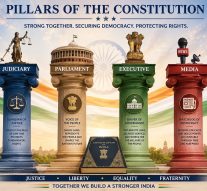
The first major shortcoming confronting contemporary India is the gradual erosion of institutional balance through excessive political centralisation. The framers of the Constitution envisioned India not as a majoritarian state but as a constitutional republic governed by checks and balances. Parliament, the judiciary, the federal structure, the civil services, universities, and independent agencies were intended to function as stabilising pillars rather than extensions of transient political authority.
However, over time, public life has increasingly become personality-centric. Political discourse is often dominated less by institutions and more by charismatic leadership, partisan loyalty, and electoral calculation. Investigative agencies are frequently accused of selective activism, parliamentary debate has become increasingly confrontational and abbreviated, and inner-party democracy across political formations remains weak. In many cases, dissent is treated not as a democratic necessity but as an anti-national activity.
The danger here is subtle but profound.
Democracies rarely collapse overnight; they weaken gradually as institutions lose independence and citizens place greater faith in personalities than in processes. A nation as vast and diverse as India cannot function sustainably through the concentration of authority alone. Its strength lies precisely in the decentralisation of power, accommodation of diversity, and constitutional restraint.
The second shortcoming is the widening ethical deficit in public life. India possesses one of the richest moral-philosophical inheritances in the world. The teachings of Buddha, Ashoka, Kabir, Gandhi, Tagore, Vivekananda, and Ambedkar consistently emphasised compassion, truth, self-restraint, and justice. Yet modern public culture often appears disconnected from these ethical foundations.
Corruption continues to corrode governance at multiple levels. Opportunistic political defections have become normalised. Public debate increasingly rewards sensationalism over sincerity, aggression over reflection, and propaganda over truth. Hate-driven mobilisation, particularly through digital platforms, has deepened polarisation and weakened civic trust. In many instances, ethics has become symbolic rather than operational — invoked ceremonially but neglected institutionally.
This erosion of ethics carries consequences beyond politics. Democracies survive not merely through elections but through public morality. Laws alone cannot sustain a republic if truthfulness, accountability, and civic responsibility weaken in society. Electoral legitimacy cannot permanently substitute moral legitimacy.
India’s greatest leaders understood this clearly. Mahatma Gandhi repeatedly argued that means are as important as ends. Dr B.R. Ambedkar warned that constitutional democracy would fail if social morality did not accompany political democracy. Their concerns remain strikingly relevant today.
The third and perhaps deepest challenge is India’s inability to achieve development alongside genuine social reconciliation. The country has made impressive advances in infrastructure, digital governance, entrepreneurship, space technology, and global diplomacy. Yet beneath this visible progress persist unresolved fractures of caste, religion, gender, language, region, and economic inequality.
Millions continue to experience exclusion not only economically but also socially and culturally. Rural distress coexists with urban prosperity. Ecological degradation disproportionately affects vulnerable communities. Political mobilisation frequently sharpens identities rather than healing them. Public conversations increasingly resemble ideological battlefields rather than democratic dialogue.
Economic growth, while essential, cannot by itself create national cohesion. A modern republic requires citizens to feel equal in dignity and a sense of belonging. Social peace cannot emerge merely from electoral victories or welfare schemes; it requires continuous ethical investment in justice, inclusion, and constitutional citizenship.
India’s civilisational genius historically lay in synthesis — the ability to accommodate contradictions while preserving continuity. From the Upanishadic debates to the Bhakti and Sufi traditions, India evolved through dialogue rather than uniformity. That pluralistic instinct remains central to the survival of the republic.
Today, however, public discourse often rewards outrage more than understanding. Social media has amplified emotional reaction while shrinking reflective engagement. Political language has become sharper, while collective patience has become thinner. In such an atmosphere, governance risks becoming permanently reactive and electoral instead of visionary and reconciliatory.
Yet pessimism would be both inaccurate and unfair. India also possesses extraordinary democratic resilience. Despite its complexities, elections remain vibrant, civil society remains active, courts continue to intervene, journalists continue to question authority, and citizens continue to engage passionately with public life. Few nations of comparable scale have sustained democratic continuity with such diversity.
The question, therefore, is not whether India will survive as a democracy. It almost certainly will. The deeper question is what kind of democracy it wishes to become.
Will it evolve into a mature constitutional civilisation where power is moderated by ethics, institutions protected by restraint, and diversity strengthened through justice? Or will it drift toward perpetual polarisation, institutional weakening, and transactional politics?
The answer lies not merely with governments but with society itself. Citizens, intellectuals, educators, artists, religious leaders, and media institutions all share responsibility in shaping democratic culture. Republics do not decline only because leaders fail; they decline when societies normalise cynicism and abandon ethical expectations from power.
India’s future strength thus will depend less on GDP rankings and more on whether it can rebuild three foundational values: institutional integrity, ethical public culture, and social trust across differences.
Ultimately, nations become powerful through economics and technology, but endure through moral imagination. India’s true greatness will not be measured only by highways, stock markets, or geopolitical influence. It will be measured by its ability to transform political democracy into an ethical civilisation — where restraint tempers power, dignity shapes disagreement, and development includes compassion.
That remains the unfinished task of the Indian republic. Japan had not given me answers—but it had shown me possibilities.
(The author is a scientist, mentor, and policy analyst. He is currently a Fellow at the Goa-based Centre for Contemporary Research, a policy think-tank.
 LETTER TO THE EDITOR FOR THE ISSUE DATED OCTOBER 17, 2026
 AZAD MAIDAN NO LONGER FREE!
 AZAD MAIDAN CRACKDOWN! Goa’s crackdown on protesters raises grave questions about democracy! By Our Special Correspondent
 INDIAN WOMEN ARE ON THE STREETS AGAIN. EVERYTHING HAS CHANGED BUT NOTHING HAS CHANGED!By Shilpa Phadke
 RBI TIGHTENS SCREWs ON ECONOMY!By Arvind Pinto
 SSR OVERRULED SIR IN GOA!
 HI MUMBAI MERI JAAN BUT…
 RAJENDRA ARLEKAR WILL REPLACE PRAMOD SAWANT?
 MENTAL HEALTH ACROSS THE LIFESPAN! By Dr Amit Dias
 WEEKEND UPDATES
 LETTER TO THE EDITOR FOR THE ISSUE DATED OCTOBER 10, 2026
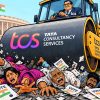 WHEN THE MACHINE OVERRIDES THE LAW!
 HAS GOA BECOME MORE PERMISSIVE? By Special Correspondent
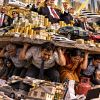 BILLIONAIRES MULTIPLYING AT THE COST OF THE MIDDLE CLASS!
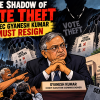 THE SHADOW OF VOTE THEFT: WHY CEC GYANESH KUMAR MUST RESIGN!By Dr Olav Albuquerque & Deborah Cordeiro
Goa is abuzz with excitement as vintage bike and car owners, users, collectors and fans are decking […]