Goa is abuzz with excitement as vintage bike and car owners, users, collectors and fans are decking […]
Old is Gold
October 4, 2016
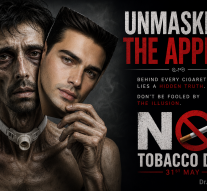
`The cigarette does not symbolize freedom — it represents dependency. True freedom begins when an individual chooses health over addiction, life over illusion, and hope over habit,” says Dr Amit Dias in this thought provoking article on No Tobacco Day…
EVERY year on May 31 the world observes World No Tobacco Day to raise awareness about the devastating health, social, environmental, and economic consequences of tobacco use. Despite decades of evidence and global advocacy led by the World Health Organization, tobacco continues to claim millions of lives annually. Smoking is not merely a personal habit — it is a global epidemic engineered by addiction, sustained by marketing, and paid for with human suffering.
Tobacco kills more than 8 million people every year worldwide, according to the WHO. Of these, over 7 million deaths result from direct tobacco use, while approximately 1.3 million occur due to exposure to second-hand smoke. India alone accounts for nearly 1.35 million tobacco-related deaths annually. These are not just numbers; they represent fathers lost to lung cancer, mothers disabled by stroke, and young adults robbed of productive years due to chronic disease.
For healthcare professionals, tobacco cessation is not merely advice—it is one of the most powerful preventive interventions available in medicine.
The Dangerous Chemistry Inside a Cigarette
A CIGARETTE is often falsely perceived as a small roll of tobacco wrapped in paper. In reality, it is a sophisticated nicotine delivery device containing more than 5,000 chemicals, hundreds of which are toxic, and at least 70 known to cause cancer.
Some of the harmful constituents include:
Nicotine – the addictive substance that alters brain chemistry and creates dependency.
Tar – a sticky carcinogenic residue that accumulates in the lungs.
Carbon monoxide – a poisonous gas that reduces oxygen delivery to tissues.
Formaldehyde – used in embalming fluids; irritates and damages tissues.
Arsenic – a toxic chemical also found in rat poison.
Benzene – an industrial solvent associated with leukemia.
Cadmium – a heavy metal linked to kidney and lung damage.
Hydrogen cyanide – interferes with cellular oxygen utilization.
Ammonia – enhances nicotine absorption and addiction potential.
When inhaled repeatedly, these chemicals trigger oxidative stress, chronic inflammation, endothelial dysfunction, DNA mutations, and impaired immune responses. The damage begins with the very first puff.
Nicotine deserves special attention. Within seconds of inhalation, nicotine reaches the brain and stimulates dopamine release, producing temporary pleasure and relaxation. However, this effect rapidly fades, leading to cravings and dependence. Smokers often believe cigarettes reduce stress, but scientifically, smoking mainly relieves nicotine withdrawal symptoms created by the addiction itself.
The Diseases Caused by Smoking
Smoking harms nearly every organ system in the body. The association between tobacco and disease is among the strongest causal relationships established in medical science.
Cancer
Smoking is responsible for approximately 85–90% of lung cancers. However, its carcinogenic effects extend far beyond the lungs. Tobacco use increases the risk of cancers of the:
–Oral cavity
–Larynx
–Esophagus
–Pancreas
–Urinary bladder
–Kidney
–Stomach
–Cervix
–Colon and rectum
We frequently encounter patients diagnosed at advanced stages, many expressing regret that they ignored early warnings or believed they could quit “later.”
Cardiovascular Disease
Smoking accelerates atherosclerosis, damages blood vessels, increases platelet aggregation, and elevates blood pressure. Smokers have significantly higher risks of:
Myocardial infarction
–Stroke
–Peripheral arterial disease
–Sudden cardiac death
Even light smoking substantially increases cardiovascular risk. There is no “safe” level of smoking.
Respiratory Disease
Chronic smoking destroys alveoli, impairs mucociliary clearance, and promotes airway inflammation, leading to:
Chronic obstructive pulmonary disease (COPD)
–Chronic bronchitis
–Emphysema
–Worsening asthma
–Recurrent respiratory infections
COPD alone is a major cause of disability and reduced quality of life.
Reproductive and Pregnancy Complications
Smoking affects fertility in both men and women. In pregnancy, it increases the risk of:
–Miscarriage
–Placental abruption
–Preterm birth
–Low birth weight
–Sudden infant death syndrome (SIDS)
–Children exposed to second-hand smoke are more prone to asthma, ear infections, and respiratory illnesses.
Second-Hand Smoke: Innocent Victims
THE dangers of tobacco extend beyond smokers themselves. Passive smoking exposes family members, colleagues, and children to toxic chemicals. There is no safe exposure level to second-hand smoke.
A child growing up in a smoking household does not choose nicotine exposure, yet may suffer lifelong health consequences. Protecting non-smokers from tobacco smoke is therefore both a public health necessity and a moral responsibility.
E-Cigarettes and Vaping: Safer Alternative or New Threat?
ELECTRONIC cigarettes and vaping devices have emerged as controversial products marketed as “safer” alternatives to conventional smoking. These battery-operated devices heat liquids containing nicotine, flavoring agents, and other chemicals to create aerosols inhaled into the lungs.
While e-cigarettes may expose users to fewer combustion-related toxins compared to traditional cigarettes, they are not harmless.
Current WHO guidance urges caution because:
Most e-cigarettes still contain addictive nicotine.
Aerosols may contain heavy metals, ultrafine particles, and toxic compounds.
Long-term health effects remain incompletely understood.
Vaping has become increasingly popular among adolescents and young adults.
Flavored products may encourage initiation into nicotine addiction.
There is evidence that some smokers have used e-cigarettes as a harm-reduction tool or transitional aid toward quitting. However, dual use — where individuals continue smoking while vaping — is common and undermines potential benefits.
Of major concern is the normalization of nicotine dependence among youth.
Attractive packaging, flavored cartridges, celebrity endorsements, and social media marketing risk creating a new generation addicted to nicotine.
Healthcare professionals must therefore communicate a balanced, evidence-based message: e-cigarettes are not safe for non-smokers, children, or adolescents, and the ultimate goal should remain complete nicotine cessation.
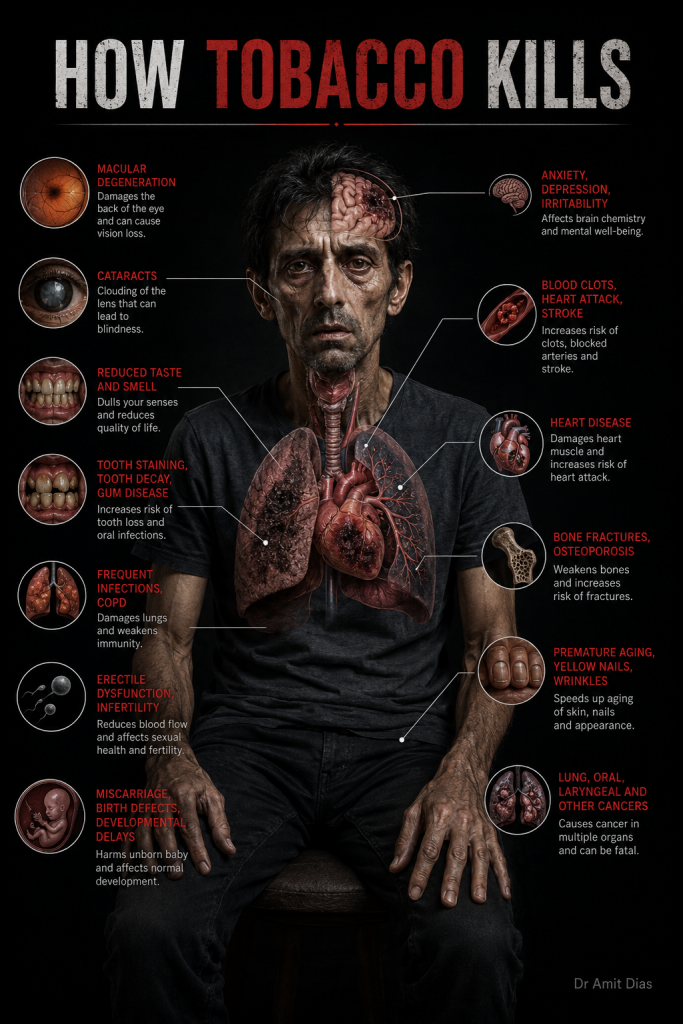
The False Glamour and Appeal of Smoking
FOR decades, tobacco companies strategically linked smoking with sophistication, independence, masculinity, rebellion, and success. Cinema, advertising, and celebrity culture often portrayed cigarettes as symbols of confidence and style.
This glamour is an illusion carefully constructed by marketing psychology.
There is nothing appealing about:
–A tracheostomy following throat cancer
–Breathlessness while climbing stairs
–Nicotine-stained teeth and fingers
–Premature aging of skin
–Dependency that controls daily behavior
–Financial burden from lifelong addiction
–Watching loved ones suffer from preventable disease
–The real image of smoking is found not in advertisements but in oncology wards, cardiac intensive care units, and pulmonary rehabilitation clinics.
Public health campaigns worldwide now focus on “unmasking” tobacco by exposing these realities. Graphic health warnings, smoke-free laws, higher taxation, advertising bans, and cessation support services are evidence-based strategies recommended by the WHO Framework Convention on Tobacco Control.
Quitting Smoking: The Best Decision for Health
THE good news is that quitting works — and benefits begin almost immediately.
Within:
–20 minutes: Heart rate and blood pressure begin to normalize.
–24 hours: Carbon monoxide levels decrease.
–Weeks to months: Lung function and circulation improve.
–1 year: Risk of coronary heart disease drops substantially.
–5–10 years: Stroke risk approaches that of a non-smoker.
–10 years: Lung cancer risk decreases significantly.
–Many smokers attempt to quit multiple times before succeeding. Relapse should not be viewed as failure but as part of the recovery process from addiction.
A Call to Action
ON this World No Tobacco Day, the message is clear: tobacco steals health, dignity, productivity, and life itself. The fight against tobacco is not only about preventing disease but about protecting future generations from addiction deliberately designed for profit.
As medical professionals, educators, policymakers, and citizens, we must continue advocating for stronger tobacco control measures, evidence-based cessation support, and public awareness grounded in science rather than marketing myths.
The cigarette does not symbolize freedom — it represents dependency. True freedom begins when an individual chooses health over addiction, life over illusion, and hope over habit.
 LETTER TO THE EDITOR FOR THE ISSUE DATED OCTOBER 17, 2026
 AZAD MAIDAN NO LONGER FREE!
 AZAD MAIDAN CRACKDOWN! Goa’s crackdown on protesters raises grave questions about democracy! By Our Special Correspondent
 INDIAN WOMEN ARE ON THE STREETS AGAIN. EVERYTHING HAS CHANGED BUT NOTHING HAS CHANGED!By Shilpa Phadke
 RBI TIGHTENS SCREWs ON ECONOMY!By Arvind Pinto
 SSR OVERRULED SIR IN GOA!
 HI MUMBAI MERI JAAN BUT…
 RAJENDRA ARLEKAR WILL REPLACE PRAMOD SAWANT?
 MENTAL HEALTH ACROSS THE LIFESPAN! By Dr Amit Dias
 WEEKEND UPDATES
 LETTER TO THE EDITOR FOR THE ISSUE DATED OCTOBER 10, 2026
 WHEN THE MACHINE OVERRIDES THE LAW!
 HAS GOA BECOME MORE PERMISSIVE? By Special Correspondent
 BILLIONAIRES MULTIPLYING AT THE COST OF THE MIDDLE CLASS!
 THE SHADOW OF VOTE THEFT: WHY CEC GYANESH KUMAR MUST RESIGN!By Dr Olav Albuquerque & Deborah Cordeiro
Goa is abuzz with excitement as vintage bike and car owners, users, collectors and fans are decking […]