Goa is abuzz with excitement as vintage bike and car owners, users, collectors and fans are decking […]
Old is Gold
October 4, 2016
Every year the month of June is observed globally as Migraine and Headache Awareness Month. In this article we try to ensure that everyone is “Headucated” and do not ignore a headache. It could be a sign of a bigger problem inside….
ACCORDING to the World Health Organization, headache disorders are among the most common disorders of the nervous system worldwide. Nearly half of all adults experience at least one headache annually, and migraine affects more than one billion people globally. WHO also identifies migraine as one of the leading causes of disability, particularly among young adults and women.
Despite its enormous impact on quality of life, productivity, and mental health, migraine is still widely misunderstood. Many people dismiss it as “just a headache,” leading to delayed diagnosis and prolonged suffering. In reality, migraine is a genuine neurological disorder that can significantly interfere with daily life, work, education, and social functioning.
The encouraging fact is that migraine is diagnosable, treatable, and manageable with modern medical care and lifestyle modifications.
What is Migraine?
MIGRAINE is a recurrent neurological condition characterized by episodes of moderate to severe headache, often associated with other symptoms such as:
• Nausea or vomiting
• Sensitivity to light (photophobia)
• Sensitivity to sound (phonophobia)
• Visual disturbances
• Dizziness
• Fatigue
• Difficulty concentrating
Migraine headaches are commonly throbbing or pulsating in nature and may affect one or both sides of the head. The attacks may last from 4 to 72 hours and can worsen with routine physical activity.
Unlike ordinary tension headaches, migraines frequently force individuals to stop normal activities and rest in a quiet dark room.
Why Does Migraine Occur?
MIGRAINE is not simply caused by stress, acidity, poor eyesight, or weakness. Current scientific understanding suggests that migraine involves abnormal brain excitability and neurovascular mechanisms involving neurotransmitters such as serotonin.
Genetics also play an important role, and many patients have a family history of migraine.
Certain triggers may precipitate attacks in susceptible individuals.
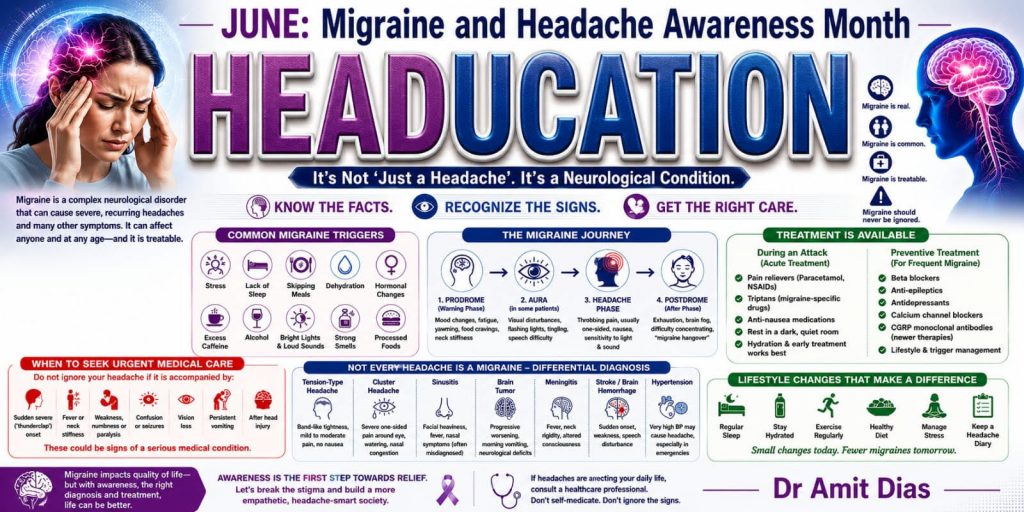
Common Migraine Triggers
Lifestyle Factors
• Sleep deprivation
• Excessive sleep
• Skipping meals
• Dehydration
• Stress and anxiety
• Excessive screen exposure
Dietary Triggers
• Excess caffeine or caffeine withdrawal
• Alcohol
• Processed foods
• Monosodium glutamate (MSG)
• Aged cheese in some individuals
Hormonal Factors
Migraine is more common in women and may worsen:
• Before menstruation
• During hormonal fluctuations
• Around menopause
Environmental Triggers
• Bright lights
• Loud sounds
• Strong smells
• Hot weather
Identifying personal triggers is often an important step in migraine management.
Stages of a Migraine Attack
Migraine may progress through different phases.
Can Migraine be Treated?
Yes. Migraine treatment has improved considerably in recent years.
Treatment depends on:
• Frequency of attacks
• Severity of symptoms
• Presence of aura
• Impact on daily functioning
• Associated medical conditions
Treatment During an Acute Attack
The aim is to stop the attack early and reduce disability.
Commonly used medicines include:
• Paracetamol
• NSAIDs such as ibuprofen or naproxen
• Anti-nausea medications
• Triptans, which are migraine-specific drugs
Patients are also advised to:
• Rest in a dark quiet room
• Stay hydrated
• Avoid excessive screen exposure
Early treatment often provides better relief.
Preventive Treatment
PATIENTS with frequent or disabling migraines may require preventive therapy.
Preventive medicines include:
• Beta blockers
• Anti-epileptic drugs
• Certain antidepressants
• Calcium channel blockers
• CGRP monoclonal antibodies, which are newer targeted therapies
Lifestyle management remains equally important.
Non-Drug Measures That Help
Scientific evidence supports several non-pharmacological measures:
• Maintaining regular sleep schedules
• Adequate hydration
• Regular exercise
• Stress reduction techniques
• Yoga and relaxation exercises
• Avoiding skipping meals
• Limiting excessive caffeine
• Maintaining a headache diary
Tracking triggers and attack frequency can help both patients and doctors optimize treatment.
Frequently Asked Questions
Is migraine curable?
MIGRAINE may not always be permanently curable, but it is highly manageable. Many patients experience substantial improvement with appropriate treatment and lifestyle modifications.
Can children develop migraine?
Yes. Migraine can occur in children and adolescents. Symptoms may include headache, vomiting, dizziness, abdominal pain, and sensitivity to light.
Can migraine cause permanent brain damage?
Most migraines do not cause permanent brain injury. However, migraine symptoms can mimic serious neurological conditions such as stroke. Persistent or unusual headaches should therefore be medically evaluated.
Is every severe headache a migraine?
No. Not all headaches are benign, and some may indicate serious underlying disease.
Warning Signs That Should Never Be Ignored
Urgent medical attention is required if headache is associated with:
• Sudden severe “thunderclap” onset
• Fever
• Neck stiffness
• Weakness or paralysis
• Confusion
• Seizures
• Vision loss
• Persistent vomiting
• Head injury
• High blood pressure emergencies
These may indicate potentially life-threatening conditions.
Migraine and Mental Health
MIGRAINE is closely linked with anxiety, depression, sleep disorders, and reduced work productivity. Chronic migraine sufferers often experience social isolation because the disorder is not visible to others.
Awareness campaigns during June help reduce stigma and encourage people to seek medical care early rather than suffering silently.
Advances in Migraine Care
Recent years have brought major advances in migraine management, including:
• CGRP-targeted therapies
• Botox therapy for chronic migraine
• Improved imaging and diagnostic tools
• Personalized preventive strategies
Modern migraine care is now far more effective than it was even a decade ago.
Key Messages
• Migraine is a genuine neurological disorder.
• It is far more than “just a headache.”
• Early diagnosis improves quality of life.
• Lifestyle modifications are essential.
• Effective treatments are available.
• Dangerous headaches must never be ignored.
Migraine and Headache Awareness Month reminds us that awareness, empathy, and timely treatment can make a major difference in the lives of those affected.
If headaches are interfering with daily life, sleep, mood, work, or studies, consult a healthcare professional rather than repeatedly self-medicating. Recognizing migraine early is the first step toward recovery and better quality of life.
 LETTER TO THE EDITOR FOR THE ISSUE DATED OCTOBER 24, 2026
 THERANOS MULTI-BILLION US PATHOLOGY COMPANY EXPOSED!
 INDIA’S PATHOLOGY LABORATORY SCANDAL! By Our Special Correspondent
 MUKESH, ADANI CONTROL MODI?By Our Special Correspondent
 “FRANCE KE SCHOOL THIK KARO”By Paris Correspondent
 INTEGRITY MUST BE CONDiTION FOR POWER!By Ranadhir Mukhopadhyay
 A PARADIGM SHIFT: POWER MOVES FROM POLITICS TO TECHNOLOGY AND TACTICS! By Arvind Pinto
 HI MUMBAI, MERI JAAN BUT…
 VILLAINOUS MUSK, ALTMAN, ZUCKERBERG, HOLMES!
 OPTOGENETICS AND THE RAY OF HOPE: LIGHT MEETS THE BRAIN! By Dr Amit Dias
 WEEKEND UPDATES
 LETTER TO THE EDITOR FOR THE ISSUE DATED OCTOBER 17, 2026
 AZAD MAIDAN NO LONGER FREE!
 AZAD MAIDAN CRACKDOWN! Goa’s crackdown on protesters raises grave questions about democracy! By Our Special Correspondent
 INDIAN WOMEN ARE ON THE STREETS AGAIN. EVERYTHING HAS CHANGED BUT NOTHING HAS CHANGED!By Shilpa Phadke
Goa is abuzz with excitement as vintage bike and car owners, users, collectors and fans are decking […]