Goa is abuzz with excitement as vintage bike and car owners, users, collectors and fans are decking […]
Old is Gold
October 4, 2016
THE India–Myanmar border is currently at the heart of one of the most intricate geopolitical and security challenges in South Asia. Spanning an impressive 1,643 kilometres through the north-eastern states of Arunachal Pradesh, Nagaland, Manipur, and Mizoram, this border is not just a simple line on a map (see photo). Historically, it has served more as a vibrant socio-cultural tapestry where communities thrive, drawing on ethnic, linguistic, and familial connections that cross political divides. Among these communities are the Naga and Kuki–Chin people, whose ancestral lands straddle both India and Myanmar.
For generations, the lives of these communities have been shaped by their shared heritage, fostering robust local economies, trade routes, and deep social bonds that reflect their intertwined narratives. This unique historical backdrop has been further supported by arrangements like the Free Movement Regime (FMR), which recognises the area’s distinct cultural identity and the fundamental human connections that defy borders.
DELICATE EQUILIBRIUM
TODAY, however, this delicate equilibrium is under severe strain. Three interconnected developments have transformed the India–Myanmar frontier into a zone of strategic uncertainty: first, Myanmar’s prolonged civil war following the 2021 military coup; second, the outbreak of ethnic violence in Manipur since 2023; and third, China’s expanding geopolitical presence in Myanmar.
Together, these developments have disrupted regional connectivity, intensified security concerns, weakened economic prospects, and complicated India’s broader strategic objectives in Southeast Asia.
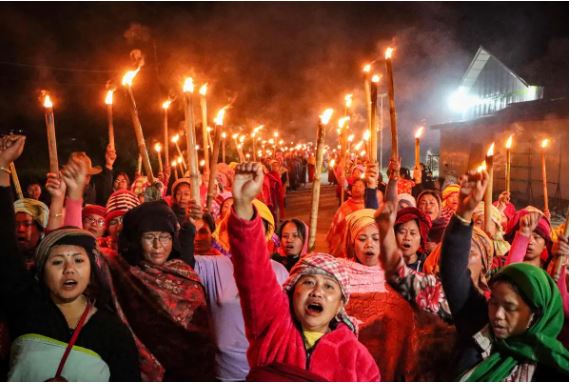
The roots of the present crisis lie partly in the historical interconnectedness of border communities. The Kuki–Zo populations of Manipur share deep ethnic and cultural ties with communities living in Myanmar’s Chin State. Colonial-era boundaries divided these populations without severing their social and familial links. Consequently, instability on one side of the border inevitably affects the other. Yet it is important to recognise that the ongoing conflict in Manipur is fundamentally rooted in domestic issues. Longstanding disputes involving land rights, political representation, identity, and competing claims between the Meitei and Kuki communities have created deep social fault lines. Demands for Scheduled Tribe status by sections of the Meitei community, along with the resulting anxieties among tribal groups, have further intensified tensions. The conflict in Myanmar did not create these divisions, but it has amplified them by strengthening cross-border solidarities, increasing insecurity, complicating governance, and providing a wider geopolitical context within which local grievances are interpreted.
POROUS FRONTIERS
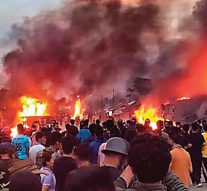
MYANMAR’S civil war has added another layer of complexity. Since the military takeover in 2021, large parts of Chin State and the Sagaing Region have witnessed sustained fighting between the military junta and resistance forces. The resulting humanitarian crisis has pushed refugees into India, particularly into Mizoram and Manipur (see photo). While humanitarian considerations have compelled local communities and state governments to offer support, Indian security agencies remain concerned about the movement of arms, militants, and informal networks across the porous frontier.
The erosion of state authority in adjoining Myanmar territories has also disrupted cross-border trade and weakened the effectiveness of border management mechanisms. As instability deepens, the border increasingly becomes a conduit not only for displaced populations but also for illicit activities that challenge governance and security.
At the same time, China has steadily expanded its influence in Myanmar through infrastructure investments, economic corridors, energy pipelines, and port development projects. Beijing’s strategy links Yunnan Province with Myanmar’s coast on the Bay of Bengal, providing China with enhanced access to the Indian Ocean while simultaneously deepening its economic and political leverage within Myanmar. Projects associated with the Kyaukphyu corridor, together with road, rail, and industrial infrastructure, demonstrate a level of continuity and execution that contrasts sharply with delays affecting several Indian initiatives. As a result, China’s presence is increasingly shaping the strategic environment in India’s eastern neighbourhood.
These developments have generated a series of interrelated policy challenges for India. The first concerns strategic connectivity. Key projects intended to strengthen India’s engagement with Southeast Asia, including the Kaladan Multi-Modal Transit Transport Project and the India–Myanmar–Thailand Trilateral Highway, have suffered repeated delays due to instability in Myanmar and logistical constraints. These projects are central to India’s Act East Policy, which seeks to integrate the Northeast with ASEAN markets and strengthen India’s role in the Indo-Pacific. Continued delays risk undermining the economic and strategic rationale of this policy while allowing competing regional actors to consolidate their influence.
The other challenge arises from the intersection of domestic security and international relations. Cross-border ethnic affiliations among the Naga and Kuki–Chin communities blur the distinction between internal and external dimensions of security. Increased securitisation, fencing, and restrictions on movement may address immediate concerns, but they cannot fully resolve the deeper social and political dynamics that sustain instability. The persistence of insurgent networks, informal trade channels, and ethnic solidarities means that security policies must be complemented by political dialogue and regional cooperation.
The economic consequences are equally significant. Restrictions on the Free Movement Regime and the construction of border fencing have reduced both formal and informal trade, adversely affecting communities that depend heavily on cross-border economic activity. Border regions, already among the least developed parts of the country, face declining investment opportunities and shrinking livelihood options. Economic marginalisation, if left unaddressed, could reinforce existing grievances and make communities more vulnerable to instability and radicalisation.
Many indigenous communities view border fencing and movement restrictions as disruptions to their ancestral homelands and social networks, leading to weakened trust in public institutions and resistance to government initiatives. In areas with a history of insurgency, economic hardship combined with political alienation increases the risk of unrest and undermines state legitimacy.
The continuing crisis along the India–Myanmar border, particularly in the context of the prolonged violence in Manipur, exposes a deeper policy failure that extends beyond security concerns. Over the past two years, the Central Government’s response has largely been characterised by administrative indifference, governance deficits, and a tendency to deny or downplay the problem’s magnitude. Such an approach may offer temporary political convenience, but it cannot provide a durable solution to a crisis that is simultaneously social, economic, geopolitical, and humanitarian.
The India–Myanmar frontier is not merely a line to be defended because it represents a complex interface of connectivity, culture, commerce, and strategic competition. The ongoing conflict in Manipur, instability from Myanmar’s civil war, and China’s growing influence have changed the security landscape. Current policy responses mainly focus on securitisation, fencing, and movement restrictions. While such measures are important, they cannot replace the need for political vision, community engagement, and developmental intervention.
RESTORE TRUST
THE absence of a coherent political initiative to restore trust among communities in Manipur has allowed divisions to deepen and instability to persist. Similarly, the abrupt termination of long-standing arrangements, such as the Free Movement Regime, without adequate consultation or compensatory mechanisms, has exacerbated economic hardship and alienation among border populations whose lives have historically depended on cross-border interaction. Governance cannot be reduced to policing alone; it must also address grievances, create opportunities, and build confidence.
A more balanced and forward-looking strategy is urgently required. In the short term, the government should reform and modernise the Free Movement Regime through a calibrated “FMR 2.0” framework while simultaneously promoting dialogue, reconciliation, and confidence-building measures in Manipur. In the medium term, accelerated investment in transport infrastructure and the establishment of Border Economic Zones can revive economic activity, generate employment, and strengthen local resilience. In the longer term, India must deepen engagement with Myanmar, strengthen regional cooperation, and integrate developmental, diplomatic, and security objectives into a coherent border strategy.
THE central lesson is clear: the India–Myanmar border cannot be managed through securitisation alone. Sustainable stability will depend upon balancing security with inclusion, infrastructure with local participation, and geopolitical competition with the human realities of borderland communities. Reframing the frontier as a strategic gateway rather than a defensive barrier is essential if India is to preserve stability in the Northeast, strengthen its regional influence, and realise the full promise of its Act East vision.
(The author is a Fellow at the Tapovan- Centre for Contemporary Research, a policy think tank in Goa.)
 LETTER TO THE EDITOR FOR THE ISSUE DATED OCTOBER 24, 2026
 THERANOS MULTI-BILLION US PATHOLOGY COMPANY EXPOSED!
 INDIA’S PATHOLOGY LABORATORY SCANDAL! By Our Special Correspondent
 MUKESH, ADANI CONTROL MODI?By Our Special Correspondent
 “FRANCE KE SCHOOL THIK KARO”By Paris Correspondent
 INTEGRITY MUST BE CONDiTION FOR POWER!By Ranadhir Mukhopadhyay
 A PARADIGM SHIFT: POWER MOVES FROM POLITICS TO TECHNOLOGY AND TACTICS! By Arvind Pinto
 HI MUMBAI, MERI JAAN BUT…
 VILLAINOUS MUSK, ALTMAN, ZUCKERBERG, HOLMES!
 OPTOGENETICS AND THE RAY OF HOPE: LIGHT MEETS THE BRAIN! By Dr Amit Dias
 WEEKEND UPDATES
 LETTER TO THE EDITOR FOR THE ISSUE DATED OCTOBER 17, 2026
 AZAD MAIDAN NO LONGER FREE!
 AZAD MAIDAN CRACKDOWN! Goa’s crackdown on protesters raises grave questions about democracy! By Our Special Correspondent
 INDIAN WOMEN ARE ON THE STREETS AGAIN. EVERYTHING HAS CHANGED BUT NOTHING HAS CHANGED!By Shilpa Phadke
Goa is abuzz with excitement as vintage bike and car owners, users, collectors and fans are decking […]