Goa is abuzz with excitement as vintage bike and car owners, users, collectors and fans are decking […]
Old is Gold
October 4, 2016
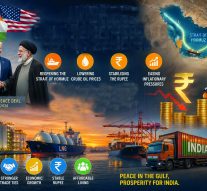
THE landmark US–Iran peace deal signed in June 2026 is set to reshape India’s energy landscape: reopening the Strait of Hormuz, lowering crude oil prices, stabilising the rupee, and easing inflationary pressures. For India, which sources nearly half its crude oil and most of its LPG and LNG from West Asia, this breakthrough offers immediate relief and long-term opportunities in energy diversification and trade.
The Peace Deal
The D- day for the signing ceremony has been fixed. June 19, 2026 at Geneva in Switzerland; Pakistan acted in the key role as mediator, something that India dislikes since its neighbour has taken the initiative. The US and Iran have decided to end their 107 day conflict that has disrupted global energy supplies and has effectively slowed down the global GDP. The Memorandum of Understanding that has been released talks of an end to hostilities, the re-opening of the Strait of Hormuz for toll free shipping. The US on its part will lift the naval blockade, begin a 60-day period of negotiation on Iran’s nuclear program. Both sides pledge respect for the sovereignty and non-interference, with guarantees for Lebanon’s territorial integrity.
FURTHER, the US has proposed an investment vehicle of $300 billion to support Iran’s energy, transport and manufacturing sectors. Iran would be able to sell its oil once again.
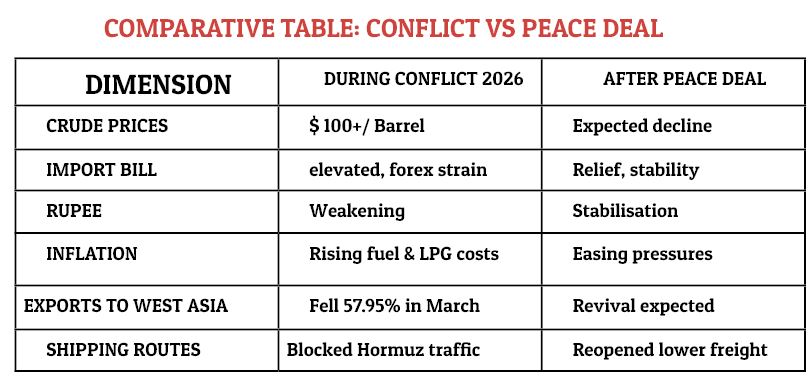
The immediate impact on this cessation will be the reopening of the Straits of Hormuz, a chokepoint for global energy supplies in terms of oil and gas shipments. One of the best things that will happen for India as also for the world will be the opening of the Straits of Hormuz. For 50% of our crude comes from West Asia and 70% of our liquified petroleum gas is sourced from this zone. Further, 90% of our liquid natural gas is imported from this area.
India’s Energy Dependence
IN a growing economy such as India, energy or fossil fuels are the key drivers in our growth strategy. With our fuel sourced mostly from the Gulf, any disruption in this area, increases the price of crude, consequently directly impacting much of our economy. Further the death of a couple of Indian seafarers, has created a scare in the shipping fraternity, since Indians have become a large contingent in the shipping fraternity, besides the remittances that these seafarers send home.
The news of the peace deal had an immediate impact on the stock markets here in India. The Sensex rose by 2.30% while the Nifty rose by 2%. Crude which was over $100 a barrel dropped to $84, even the rupee appreciated with the fall in crude prices. For the reduction in crude prices will effectively lower India’s import bill and the ease of fuel and LPG costs will ease inflation that has hit both households and small business. Moreover, during the conflict in West Asia, exports to this region fell by 58%. Peace in this region is expected to revive exports, and manpower to the area, bring renewed business opportunities between India and the Gulf.
Peace in the region will re-start shipping routes. This will help the smooth flow of crude and LPG supplies from the area. For the present there will be no levies of toll that will be charged for passage from the Gulf of Hormuz. With peace there will also be a reduction in the insurance charges, a reduction in the shipping rates and the increased safety of our mariners. India will now have time to look to diversify its sources of fuel, Venezuela has already offered the country oil, look to new markets as also ensure that our risks are spread rather than focussed on the trade with the Gulf. For unless India diversifies or builds its strategic reserves, it will be vulnerable in another time of conflict. For the contours of this peace proposal is built on the premise that both the US and Iran agree to abide by the accord
The Need of the Hour
INDIA has a respite from the rising costs and the economy crisis that developed due to the prolonged conflict. This palm of peace bring hope to our country. What should be our outlook. India has need for energy diversification. The country is pushing towards renewable energy sources, but this is still a long way off. India’s solar program envisages a target of 500 GW by the year 2030. Would it fulfil this target? Unlikely, since banks are reluctant to finance such projects, the solar cell production is dependent on the import of raw material from other countries. India still has a large dependence on coal and fossil fuels. Today the country is looking at the import of crude and LNG from African and South American countries to ensure that we are not caught in the lurch in the case of a future gulf conflict.
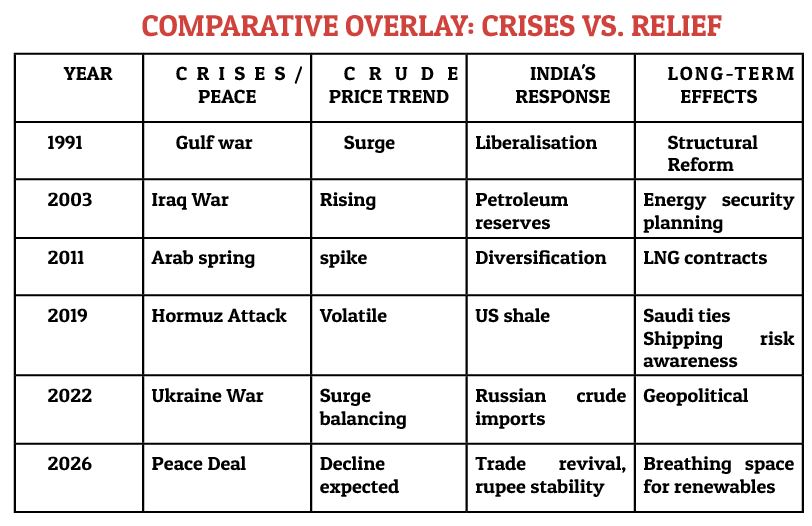
India’s Petroleum Economy Through Gulf Crises (1990–2026)
A look at the history of dependence on the Middle East supply of crude indicates that the country has always been impacted during any gulf war.
 LETTERS TO THE EDITOR FOR ISSUE DATED SEPTEMBER 12, 2026
 GOAN TEACHERS ARE CONTRACT LABOR!
 THE COLOUR IS PRESTIGIOUS! THE PROCESS MUST BE EQUALLY SO!
 DOGS ATTACK GOANS, OWNERS GET ACQUITTED!By Dr Olav Albuquerque & Deborah Cordeiro
 CYBER FRAUD: A THREAT TO FINANCIAL SECURITY & MENTAL WELL-BEING! By Adv Vinayak (Mama) D Porob
 RUPEE IN FREE FALL: WHY THE SLIDE MATTERS MORE THAN THE NUMBER! By Arvind Pinto
 SHRAVAN BYE-BYE, CHOVOTH WELCOME!
 HUSBANDS SHOULD KNOW HOW TO COOK, BE WILLING TO WASH VESSELS!
 HOLD ON TO LIFE: CHANGING THE NARRATIVE ON SUICIDE! By Dr Amit Dias
 WEEKEND UPDATESLETTER TO THE EDITOR FOR THE ISSUE DATED SEPTEMBER 05, 2026
 WHEN A MOUNTAIN BECAME A RIVER!By Ranadhir Mukhopadhyay
 REAL GROUP TURNS 80!
 WHEN ‘I’LL MARRY YOU’ IS A LIE! Why Goa’s courts are failing women…By Dr Olav Albuquerque & Deborah Cordeiro
 WHEN THE LEGAL FRATERNITY TOOK TO THE FIELD IN GOA! By Adv Vinayak (Mama) D Porob
Goa is abuzz with excitement as vintage bike and car owners, users, collectors and fans are decking […]