Goa is abuzz with excitement as vintage bike and car owners, users, collectors and fans are decking […]
Old is Gold
October 4, 2016

THE right to ask inconvenient questions to those in power is a basic human right, intrinsically coupled with the right to dissent when such accountability is stymied. In a functioning democracy, the state derives its legitimacy from the citizens; it does not rule over them as subjects. However, a dangerous rhetorical trend has emerged among political elites — the systematic dehumanisation of citizens who dare to protest.
Coming close on the heels of controversial public remarks where protesting students were metaphorically compared to pests, Goa BJP vice president and former MP, Narendra Sawaikar, openly labelled protesting youth as “termites.” This derogatory framing has rightly sparked a fierce wave of agitation across Goa, the 5th most literate state in India.
The ruling establishment opted to stand by Sawaikar’s statement, triggering an immediate and intense backlash across the state. Opposition parties and youth organisations hit the streets, accusing the government of harbouring absolute contempt for a generation that is merely demanding institutional transparency. Rather than apologising for the demeaning remark, advocate Sawaikar deleted the controversial social media post but stubbornly defended it under the guise of personal liberty.
“My post was simple. I expressed my feelings. Anybody has the right to do that. Everybody has the freedom to express their views. If somebody chooses to attribute a different motive to it or give it a political colour, then that is their interpretation,” Sawaikar asserted. Further compounding the arrogance, BJP spokesperson Sidharth Kuncalienkar stated that the party had no reason to issue an apology. Kuncalienkar claimed the remarks were simply misinterpreted, double-downing on the hostile rhetoric.
This outright refusal to express remorse has added immense fuel to the political campaign against the ruling dispensation. What political figures routinely fail to grasp is that the right to freedom of speech and expression under Article 19(1)(a) of the Constitution is not absolute. It is strictly hemmed in by reasonable restrictions under Article 19(2), prominent among which is “public order.”
Speech that strips citizens of their human dignity and incites massive public unrest across a state can cross the threshold into criminal intimidation and provocation, rendering the speaker liable to an FIR under the Bharatiya Nyaya Sanhita (BNS), which has replaced the old Indian Penal Code (IPC).
The Context: Cockroaches & Termites at Jantar Mantar
TO fully comprehend the depth of this political standoff, one must look at the historical and national context of these protests. The “termite” backlash in Goa did not emerge in a vacuum; it directly connected with the ongoing anger surrounding the national NEET examination scams and paper leaks.
In New Delhi, students and youth activists converged at Jantar Mantar under the satirical banner of the Cockroach Janata Party (CJP). This protest style was a direct, creative response to descriptions of student activists as “cockroaches”— insects that are viewed as a nuisance to be exterminated. At Jantar Mantar, the students raised the slogan: “Cockroaches with the termites! Save the nation!” By adopting the identity of the very pests the politicians compared them to, the youth highlighted the systemic rot within the government which is responsible for the paper leaks. This national roar of resistance found its echo in Panaji’s Azad Maidan, where local youth began sporting badges and banners stating: “I am a termite.”
THE historical usage of words like “termites” by political leaders to describe groups of people has dark precedents in global history. Stripping a demographic of their human identity by calling them insects — whether cockroaches or termites — is a classic authoritarian tool used to justify state-sponsored crackdowns, disregard legitimate grievances, and silence dissent.
Authoritarian Rule vs. The Rule of Law
HUNDREDS of students, civic groups, and human rights activists gathered at the historic Azad Maidan in Panaji to confront Sawaikar’s insulting remarks. The law and order situation in Goa has reached a highly ironic state. While the administration is quick to file criminal cases against peaceful citizens organising candlelight processions, it remains completely passive when ruling party politicians insult the public in broad daylight on social media.
A peaceful candlelight march is treated as a law and order threat, yet structural financial malpractices, educational scams, and vitriolic hate speech by politicians are shielded under executive privilege. This double standard exposes a governance model that prefers authoritarian compliance over the rule of law. When state machinery is weaponized to protect political elite while prosecuting the youth, the democratic fabric of society begins to fray.
Conclusion: The Ballots Will Speak
HISTORY has repeatedly demonstrated that when a regime becomes blinded by the arrogance of power, its downfall is accelerated by the very citizens it chooses to suppress. The youth of Goa are the organic future of this land. They are not an unthinking colony of pests to be cleared away; they are conscious, literate citizens demanding their constitutional right to clean governance, fair examinations, and employment.
The powerful message emanating from Azad Maidan is clear: the youth will not tolerate a political culture that replaces civil dialogue with dehumanising insults. Power is transient, but the citizenry remains. If the current establishment refuses to listen to the voices on the streets, the youth will undoubtedly demonstrate the ultimate power of their democratic rights at the ballot box in the coming days. The Goan Observer has always stood firmly for fearless journalism, and today it proudly amplifies this vital warning.
 LETTER TO THE EDITOR FOR THE ISSUE DATED OCTOBER 17, 2026
 AZAD MAIDAN NO LONGER FREE!
 AZAD MAIDAN CRACKDOWN! Goa’s crackdown on protesters raises grave questions about democracy! By Our Special Correspondent
 INDIAN WOMEN ARE ON THE STREETS AGAIN. EVERYTHING HAS CHANGED BUT NOTHING HAS CHANGED!By Shilpa Phadke
 RBI TIGHTENS SCREWs ON ECONOMY!By Arvind Pinto
 SSR OVERRULED SIR IN GOA!
 HI MUMBAI MERI JAAN BUT…
 RAJENDRA ARLEKAR WILL REPLACE PRAMOD SAWANT?
 MENTAL HEALTH ACROSS THE LIFESPAN! By Dr Amit Dias
 WEEKEND UPDATES
 LETTER TO THE EDITOR FOR THE ISSUE DATED OCTOBER 10, 2026
 WHEN THE MACHINE OVERRIDES THE LAW!
 HAS GOA BECOME MORE PERMISSIVE? By Special Correspondent
 BILLIONAIRES MULTIPLYING AT THE COST OF THE MIDDLE CLASS!
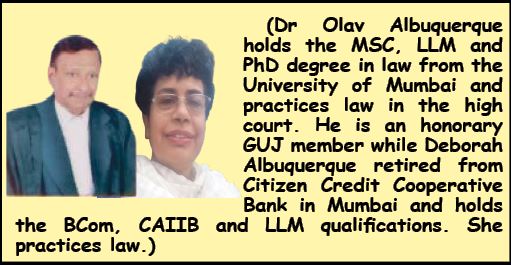
 THE SHADOW OF VOTE THEFT: WHY CEC GYANESH KUMAR MUST RESIGN!By Dr Olav Albuquerque & Deborah Cordeiro
Goa is abuzz with excitement as vintage bike and car owners, users, collectors and fans are decking […]