Goa is abuzz with excitement as vintage bike and car owners, users, collectors and fans are decking […]
Old is Gold
October 4, 2016
Your Brain: Your Power
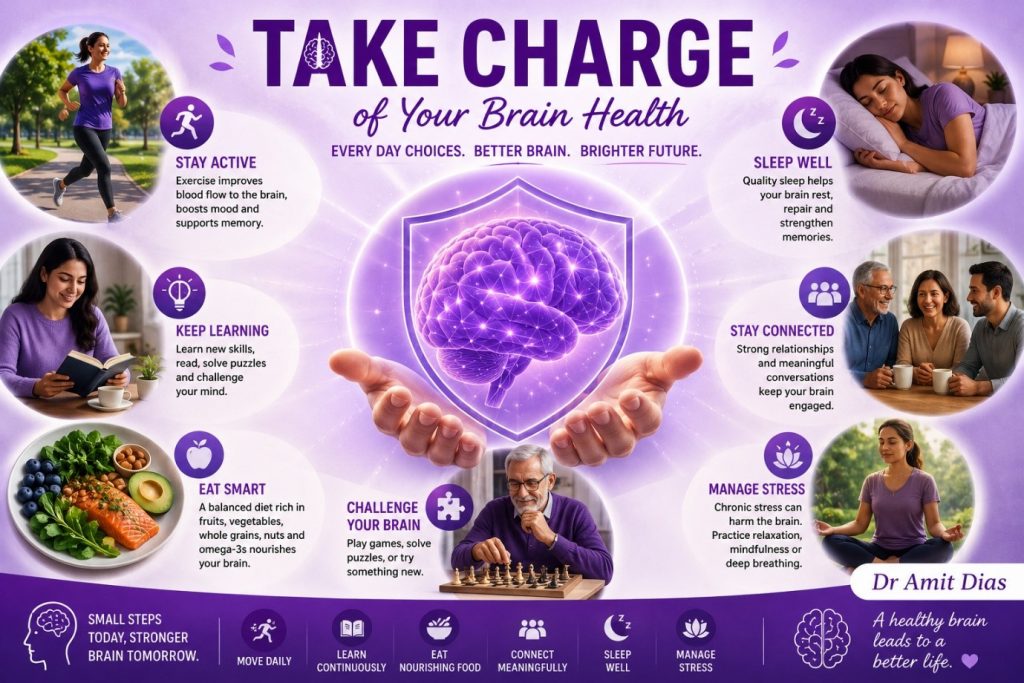
Every June, the world observes Alzheimer’s and Brain Awareness Month, a global initiative dedicated to promoting brain health, raising awareness about dementia, encouraging early detection, supporting research, and inspiring people to adopt healthier lifestyles. The theme for 2026, “Take Charge of Your Brain Health,” carries a simple yet profound message: the future of our brain health is influenced by the choices we make today.
We often spend time caring for our heart, monitoring our blood sugar, and maintaining physical fitness. Yet, we rarely pause to think about the organ that makes us who we are. The brain is the command centre of our body. It stores our memories, shapes our personality, drives our emotions, and enables every thought, movement, and decision we make. As the saying goes, “Everything you do begins with your brain.”
With increasing life expectancy across the world, maintaining brain health has become one of the most important public health priorities of our time.
Remembering the Man Behind Alzheimer’s Disease
Brain Awareness Month is also an opportunity to remember Dr Alois Alzheimer, whose birthday is observed on 14 June. More than a century ago, this German psychiatrist and neuropathologist made a discovery that transformed our understanding of memory disorders.
In 1901, Dr Alzheimer began studying a patient named Auguste Deter, who exhibited progressive memory loss, confusion, behavioural changes, and difficulty performing everyday tasks. After her death, he examined her brain and identified unusual protein deposits that are now recognized as amyloid plaques and neurofibrillary tangles —hallmarks of Alzheimer’s disease.
Neurons that fire together, wire together.
Dementia: More Than Just Forgetfulness
MANY people mistakenly believe that dementia is simply a normal part of ageing. It is not. Dementia is a syndrome characterized by a decline in memory, thinking, reasoning, communication, and the ability to perform daily activities. Alzheimer’s disease accounts for nearly two-thirds of dementia cases worldwide.
The impact extends far beyond the individual. Dementia affects families, caregivers, healthcare systems, and communities. It can gradually rob a person of treasured memories, independence, and confidence.
Can Lifestyle Influence Brain Health?
ABSOLUTELY, yes! The evidence is becoming increasingly clear: what is good for the heart is also good for the brain. Dementia is one of the NCDs (non-communicable diseases) and influenced by the same set of risk factors.
Researchers have identified several modifiable risk factors associated with dementia, including physical inactivity, obesity, diabetes, hypertension, smoking, excessive alcohol consumption, poor sleep, social isolation, and unmanaged stress.
The Brain That Never Stops Changing
FOR many years, scientists believed that the adult brain was largely fixed and incapable of significant change. Once brain cells were lost, they were thought to be gone forever.
Modern neuroscience has completely changed that understanding.
One of the most exciting discoveries of recent decades is the concept of neuroplasticity—the brain’s remarkable ability to reorganize itself by creating, strengthening, and modifying neural connections throughout life.
Neuroplasticity: The Science of Rewiring Your Brain
IMAGINE your brain as a vast city connected by millions of roads. Frequently used roads become wider, faster, and more efficient. Roads that are neglected gradually deteriorate. Neural pathways work in a similar manner.
When we repeatedly practice a skill, learn something new, or engage in stimulating activities, the connections between neurons become stronger. This process improves memory, learning, and cognitive performance. The more we challenge our brains, the stronger and more adaptable they become.
This is why lifelong learning remains one of the most powerful investments in healthy ageing. The Memory Café initiative in Goa is one such amazing example for a thriving community of seniors, working together with joyful cognitive stimulation.
Exercise: The fertilizer for the Brain
Physical activity increases blood flow to the brain, delivering oxygen and nutrients essential for healthy brain function. It also stimulates the release of Brain-Derived Neurotrophic Factor (BDNF), often referred to as “fertilizer for the brain” because it promotes the growth and survival of neurons.
The good news is that exercise does not have to be complicated. Walking, swimming, cycling, dancing, yoga, gardening, and even active household work can contribute to brain health. The goal is to move regularly and make physical activity a lifelong habit.
Use It or Lose It: Why Mental Activity Matters
JUST as muscles become weaker when they are not used, the brain also benefits from regular exercise. Mental stimulation helps build what scientists call cognitive reserve —the brain’s ability to cope with age-related changes and disease.
Reading books, solving puzzles, playing chess, learning a language, writing stories, or taking up a musical instrument challenge the brain and encourage the formation of new neural networks.
Everyday Brain Workouts That Actually Work
KEEPING the brain active does not require expensive gadgets or specialized training programs. Simple activities at home can stimulate multiple areas of the brain.
Learn a new recipe and cook it from memory. Memorize a poem or song. Solve a crossword puzzle with your morning tea. Re-arrange furniture and remember where everything is located. Try brushing your teeth with your non-dominant hand. Learn a few words in a new language every week. Even just changing your daily routine can stimulate new neural pathways.
The objective is not perfection but engagement. Every challenge sends a message to the brain: stay active, stay adaptable, keep growing.
The Social Brain: Why Connections Matter
HUMANS are social animals … they are wired for connection!!
Meaningful social interactions activate multiple brain regions responsible for memory, language, emotional processing, attention, and decision-making. Research has shown that loneliness and social isolation are associated with a higher risk of cognitive decline.
Sleep: The Brain’s Night Shift
MANY people consider sleep a period of inactivity. In reality, the brain remains remarkably busy during sleep.
During the night, memories are consolidated, learning is strengthened, and waste products accumulated during the day are cleared from brain tissue.
The best time to start protecting your brain was twenty years ago. The second-best time is today.
Know the Warning Signs—Don’t Ignore Them
OCCASIONAL forgetfulness is a normal part of life. However, persistent memory problems should never be dismissed as “just ageing.”
Warning signs include forgetting recent events, repeatedly asking the same questions, difficulty performing familiar tasks, confusion about time or place, problems finding words, personality changes, and withdrawal from social activities.
Early recognition and medical evaluation can make a significant difference. Timely intervention helps individuals and families plan, access support, and maintain quality of life.
Building a Brain-Healthy Future
THE message of Alzheimer’s and Brain Awareness Month is not one of fear but of empowerment.
Every walk you take improves blood flow to your brain. Every new skill you learn strengthens neural connections. Every book you read exercises memory and imagination. Every meaningful conversation enriches your cognitive reserve.
 LETTERS TO THE EDITOR FOR ISSUE DATED SEPTEMBER 12, 2026
 GOAN TEACHERS ARE CONTRACT LABOR!
 THE COLOUR IS PRESTIGIOUS! THE PROCESS MUST BE EQUALLY SO!
 DOGS ATTACK GOANS, OWNERS GET ACQUITTED!By Dr Olav Albuquerque & Deborah Cordeiro
 CYBER FRAUD: A THREAT TO FINANCIAL SECURITY & MENTAL WELL-BEING! By Adv Vinayak (Mama) D Porob
 RUPEE IN FREE FALL: WHY THE SLIDE MATTERS MORE THAN THE NUMBER! By Arvind Pinto
 SHRAVAN BYE-BYE, CHOVOTH WELCOME!
 HUSBANDS SHOULD KNOW HOW TO COOK, BE WILLING TO WASH VESSELS!
 HOLD ON TO LIFE: CHANGING THE NARRATIVE ON SUICIDE! By Dr Amit Dias
 WEEKEND UPDATESLETTER TO THE EDITOR FOR THE ISSUE DATED SEPTEMBER 05, 2026
 WHEN A MOUNTAIN BECAME A RIVER!By Ranadhir Mukhopadhyay
 REAL GROUP TURNS 80!
 WHEN ‘I’LL MARRY YOU’ IS A LIE! Why Goa’s courts are failing women…By Dr Olav Albuquerque & Deborah Cordeiro
 WHEN THE LEGAL FRATERNITY TOOK TO THE FIELD IN GOA! By Adv Vinayak (Mama) D Porob
Goa is abuzz with excitement as vintage bike and car owners, users, collectors and fans are decking […]